

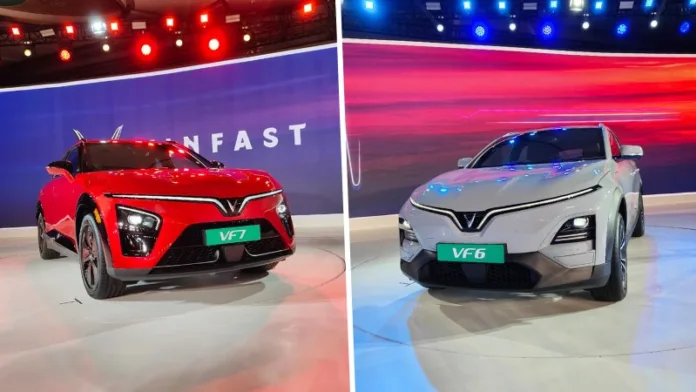

Imagine this: A company signs an agreement with a state government, and just 50 days later, bulldozers are already moving earth for a massive factory. Sounds impossible? Welcome to VinFast’s India story—a tale of lightning-speed execution that’s rewriting the rules of automotive manufacturing.
Table of Contents
The Speed That Stunned Everyone
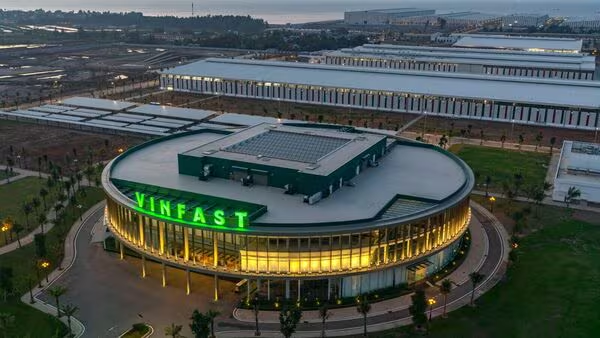
On January 6, 2024, VinFast signed a memorandum of understanding with Tamil Nadu. By February 25, 2024, Chief Minister M.K. Stalin was breaking ground at their Thoothukudi plant. That’s faster than most companies can finish their paperwork.
This Vietnamese EV manufacturer isn’t just entering India—they’re sprinting in with a ₹16,000 crore commitment that signals serious intent. And here’s the kicker: they’re planning to open the factory in the first half of 2025, six months ahead of the original schedule.
Why Tamil Nadu? The Strategic Masterstroke
VinFast didn’t throw a dart at a map. They chose Tamil Nadu with surgical precision. CEO Pham Sanh Chau highlighted three compelling reasons: a skilled workforce, progressive government policies for EVs, and an established manufacturing ecosystem.
VinFast India Investment Breakdown:
| Investment Phase | Amount | Timeline | Purpose |
|---|---|---|---|
| Phase 1 | ₹4,000 crore | 2024-2029 (5 years) | Initial manufacturing setup |
| Total Commitment | ₹16,000 crore | Long-term | Complete ecosystem development |
| Factory Size | 400 acres | 2025 opening | Integrated EV facility |
| Employment | 3,500 jobs | Upon completion | Direct employment |
This represents the largest automotive investment in southern Tamil Nadu’s history—not just another factory announcement, but a game-changing commitment to India’s EV revolution.
The Global Manufacturing Footprint
VinFast isn’t putting all their eggs in one basket. Their India plant joins an impressive global network that showcases their manufacturing prowess.
VinFast’s Global Manufacturing Strategy:
| Location | Status | Capacity | Special Feature |
|---|---|---|---|
| Hai Phong, Vietnam | Operational (2019) | 950,000 units/year by 2026 | 90% automation, built in 21 months |
| North Carolina, USA | Construction started July 2023 | 150,000 units/year | Phase 1: $2 billion investment |
| Thoothukudi, India | Construction started Feb 2024 | 150,000 units/year | Opens H1 2025 (6 months early) |
| Indonesia | Planned | TBA | Future expansion |
The speed at which VinFast builds is legendary. Their main Vietnam facility—spanning 828 acres—went from groundbreaking to producing cars in just 21 months. That’s not just fast; that’s revolutionary.

What’s Coming to Indian Roads?
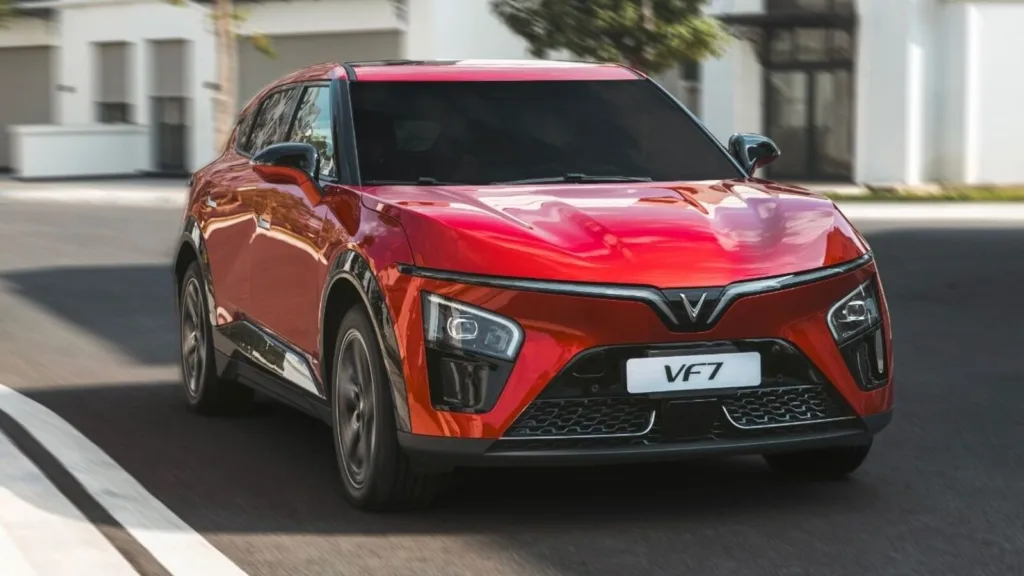
VinFast plans to launch with two completely built import models before local manufacturing kicks in. The VF e34 electric crossover was already spotted testing on Indian roads in June 2024, directly competing with the Tata Curvv EV, Hyundai Creta EV, and Maruti eVX.
The VF 5 crossover hatchback will follow, targeting urban buyers seeking compact electric mobility. There’s also buzz about the VF 3 electric SUV, whose design was patented in India—a clear signal that VinFast is thinking beyond just two models.
More Than Just a Factory
VinFast’s vision extends far beyond manufacturing cars. They’re building an entire ecosystem that includes:
Nationwide dealership network to establish brand presence across India
Charging infrastructure in collaboration with Tamil Nadu government
Component sourcing hub leveraging India’s robust automotive supply chain
Export base for South Asian, Middle Eastern, and African markets
The strategic location in Thoothukudi, with its proximity to the port, isn’t coincidental. It’s designed for “Make in India, Make for the World.”
The Double Play: Andhra Pradesh Enters the Picture
Not content with one facility, VinFast CEO Pham Sanh Chau met with Andhra Pradesh Chief Minister N. Chandrababu Naidu in July 2024, proposing another ₹4,000 crore investment for EV and battery manufacturing plants. This shows VinFast sees India not as a market to test but as a cornerstone of their global strategy.
The Economic Ripple Effect
Minister Dr. T.R.B. Rajaa called it perfectly: VinFast’s entry reaffirms Tamil Nadu’s role as a global automotive innovation and manufacturing hub. But the impact goes deeper:
- 3,500 direct jobs in Thoothukudi alone
- Technical skill development for local talent
- Supply chain opportunities for Indian component manufacturers (14 suppliers attended Automechanika Ho Chi Minh City 2023 seeking Vietnam contracts)
- Green transportation acceleration targeting 30% of new cars to be electric
What Makes VinFast Different?
In a country where promises often take years to materialize, VinFast’s execution speed stands out. From MoU to groundbreaking in 50 days. From construction start to planned opening in less than a year. This isn’t typical automotive industry pace—it’s startup velocity applied to heavy manufacturing.
Their main Vietnam facility boasts 90% automation, setting quality and efficiency benchmarks. They’re bringing that same technological sophistication to India, not just setting up another assembly line.
The Road Ahead: Challenges and Opportunities
India’s EV market saw sales jump 42% year-over-year to 1.67 million units in FY2024. The momentum is undeniable. But VinFast faces the challenge of brand recognition. In Vietnam, they’re the leading EV manufacturer. In India, they’re the new kid on the block.
That’s where their dealership network and competitive pricing strategy become crucial. VinFast’s mission is clear: make electric mobility widely accessible, not just premium offerings for the wealthy.
The Bottom Line
VinFast’s India manufacturing push isn’t just about building cars—it’s about building bridges between two rising Asian economies. It’s about proving that sustainable transportation can be manufactured at scale, create thousands of jobs, and still be accessible to the middle class.
As the first half of 2025 approaches, watch Thoothukudi. What’s happening there represents more than a factory opening. It’s the beginning of a new chapter in India’s EV story, written by a company that moves at the speed of ambition.
The future of Indian electric mobility is being built—400 acres at a time.

