

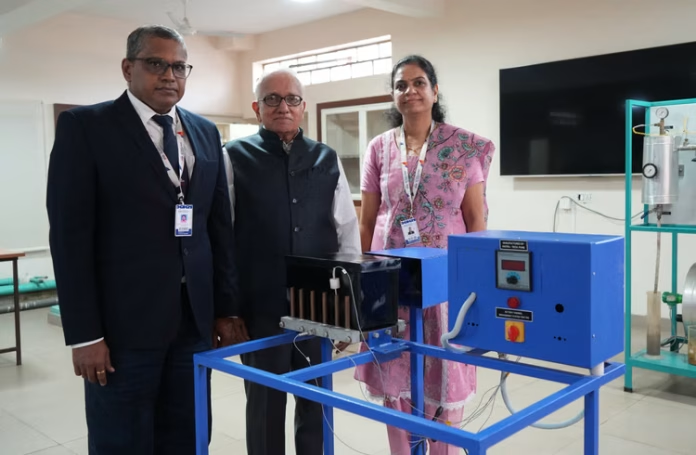

Researchers at MIT World Peace University (MIT-WPU) in Pune have achieved a breakthrough in electric vehicle technology by developing an indigenous passive cooling system for EV batteries. This innovation could significantly reduce costs, improve reliability, and enhance the safety of electric vehicles manufactured in India.
Table of Contents
Understanding the Innovation
Battery thermal management remains one of the biggest challenges in electric vehicle engineering. Overheating degrades battery performance, reduces lifespan, and poses safety risks. While conventional active cooling systems use pumps, fans, and refrigerants, MIT-WPU’s passive solution relies on smart material properties and thermal design—requiring no external power or moving parts.
| Innovation Details | Information |
|---|---|
| Developer | MIT World Peace University, Pune |
| Technology | Passive cooling system |
| Application | EV battery thermal management |
| Advantage | No external power required |
| Benefits | Cost reduction, improved reliability |
| Significance | Indigenous technology development |
| Impact | Safer, more affordable EVs |
How Passive Cooling Works
Unlike active systems that consume energy to cool batteries, passive cooling leverages natural heat dissipation through advanced materials, heat sinks, phase-change materials, and optimized airflow design. The MIT-WPU system intelligently manages heat without mechanical intervention, maintaining optimal battery temperatures across varied operating conditions.
This approach eliminates energy-draining compressors and complex refrigerant circuits, directly translating to improved overall vehicle efficiency. Every watt saved on cooling means extended driving range—a critical consideration for electric vehicle buyers.
Why This Matters for India’s EV Industry
India’s extreme climate presents unique thermal management challenges. Summers exceeding 45°C in many regions push conventional cooling systems to their limits, while humidity and dust complicate maintenance. A robust passive system designed for Indian conditions could outperform imported active cooling technologies.
Manufacturing simplicity is another advantage. Passive systems require fewer components, reducing production costs and supply chain dependencies. For India’s ambitious EV manufacturing goals, such indigenous innovations support self-reliance while improving competitiveness.
Commercial Viability and Next Steps
As reported by Autocar Professional, the MIT-WPU team is now working toward commercialization through industry partnerships. Successful implementation could see this technology integrated into budget and mid-range electric vehicles where cost optimization is paramount.
Indian EV manufacturers like Tata Motors, Mahindra Electric, and emerging startups could benefit enormously from locally developed thermal management solutions. Reduced import dependence and lower component costs would strengthen India’s position in the global EV supply chain.
Academic-Industry Collaboration
This development exemplifies the potential of India’s academic institutions to contribute meaningfully to industrial challenges. MIT-WPU’s research addresses real-world problems faced by automakers, creating intellectual property that can be licensed, commercialized, and exported.
Such collaborations between universities and industry accelerate innovation while providing students hands-on experience with cutting-edge automotive technology. The passive cooling system could be just the beginning of more breakthrough solutions emerging from Indian research labs.
The Broader Impact
Beyond immediate commercial applications, MIT-WPU’s passive cooling system contributes to global sustainability goals. Simpler, more reliable battery thermal management reduces electronic waste, improves battery longevity, and enhances vehicle safety—all crucial for widespread EV adoption.
For Indian consumers, this innovation promises more affordable electric vehicles without compromising safety or performance. As battery technology evolves and costs decline, indigenous innovations like passive cooling systems will play vital roles in making electric mobility accessible to millions.
MIT-WPU’s achievement proves that India isn’t just consuming EV technology—it’s creating it. From research labs in Pune to roads across the nation, such innovations are driving India’s transformation into a global electric vehicle powerhouse.

