

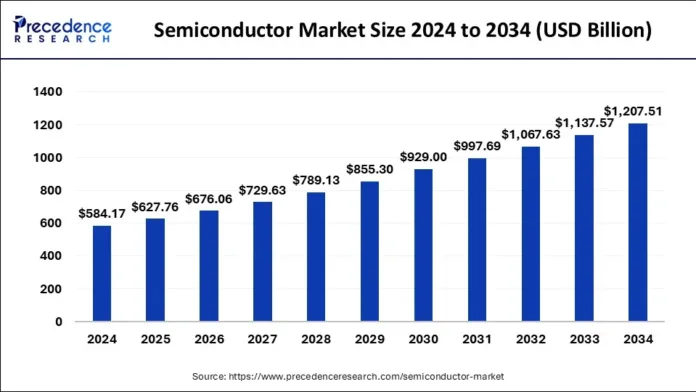

The global electric vehicle semiconductors market is poised for unprecedented expansion as Silicon Carbide (SiC) and Gallium Nitride (GaN) technologies revolutionize power electronics. A comprehensive market analysis covering 2025-2034 reveals massive investment opportunities as these advanced semiconductors become the backbone of next-generation electric vehicles.
Table of Contents

Semiconductors Market Overview and Growth Drivers
Wide bandgap semiconductors like SiC and GaN are fundamentally transforming EV power systems by delivering superior efficiency, higher power density, and better thermal performance compared to traditional silicon-based components. This technological leap directly translates to extended driving range, faster charging, and reduced vehicle weight.
| Market Aspect | Details |
|---|---|
| Analysis Period | 2025-2034 |
| Key Technologies | Silicon Carbide (SiC), Gallium Nitride (GaN) |
| Application | EV power electronics and inverters |
| Primary Benefits | Higher efficiency, faster charging, extended range |
| Investment Focus | Manufacturing capacity, R&D expansion |
| Market Drivers | Global EV adoption, efficiency demands |
| Competitive Landscape | Intensifying among semiconductor giants |
Why Silicon Carbide and Gallium Nitride Matter
Silicon Carbide semiconductors enable EV inverters to operate at higher voltages and temperatures while minimizing energy losses. This efficiency gain means more battery power reaches the wheels rather than being wasted as heat—directly extending driving range by 5-10% compared to conventional silicon systems.
Gallium Nitride excels in high-frequency switching applications, making onboard chargers smaller, lighter, and faster. GaN-based chargers can replenish EV batteries significantly quicker while occupying less space and adding minimal weight to vehicles.
Investment Opportunities Emerging
As reported by Research and Markets via Business Wire, the semiconductor industry is witnessing massive capacity expansions to meet surging EV demand. Major players are investing billions in SiC and GaN fabrication facilities, creating opportunities across the supply chain from raw materials to finished components.
For investors and industry stakeholders, this represents a strategic inflection point. Companies establishing manufacturing dominance in wide bandgap semiconductors today will likely control critical elements of tomorrow’s electric vehicle ecosystem.
Competitive Intelligence and Market Dynamics
Global semiconductor giants are racing to capture market share in this high-growth segment. Vertical integration strategies, strategic partnerships with automakers, and technology licensing agreements are reshaping competitive dynamics. The winners will be those who can scale production while maintaining quality and managing costs.
Regional dynamics also play crucial roles. Countries with established semiconductor manufacturing infrastructure and supportive industrial policies are attracting disproportionate investment, creating semiconductor hubs that will anchor future EV production ecosystems.
Implications for India’s EV Industry
India’s ambitious electric vehicle targets make semiconductor supply chain development critical. While currently dependent on imports for advanced power electronics, opportunities exist for domestic manufacturing through technology partnerships and incentive programs.

The India Semiconductor Mission and Production Linked Incentive schemes aim to establish local fabrication capabilities. Success in attracting SiC and GaN manufacturing would significantly strengthen India’s EV self-reliance while creating high-value employment.
Technology Evolution Through 2034
The next decade will see continuous advancement in semiconductor materials, manufacturing processes, and integration techniques. Beyond SiC and GaN, emerging ultra-wide bandgap materials promise even greater performance, though commercial viability remains years away.
For automakers, the message is clear: partnering with semiconductor suppliers and securing long-term supply agreements is as strategic as battery procurement. Power electronics increasingly differentiate vehicle performance, making semiconductor technology a competitive battleground.
The Bottom Line
The EV semiconductors market represents convergence of two transformative industries—automotive electrification and advanced materials science. As vehicles become increasingly defined by their electronics, companies mastering SiC and GaN technologies will wield enormous influence over the future of mobility.
For investors, industry players, and policymakers, understanding these semiconductor trends isn’t optional—it’s essential for navigating the electric vehicle revolution through 2034 and beyond.

