

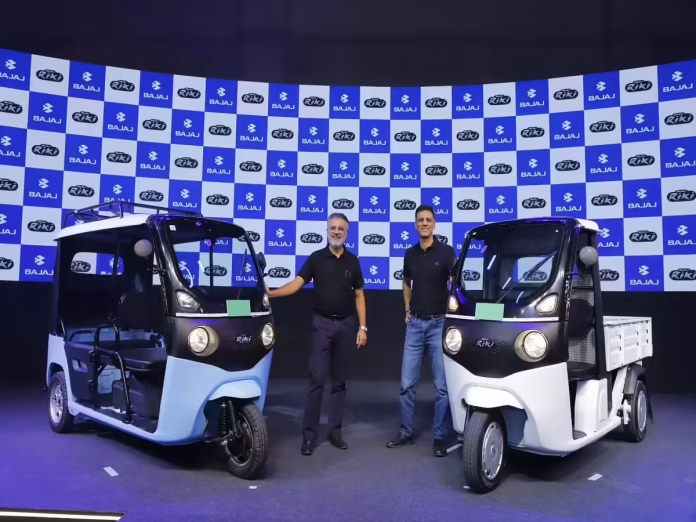

Bajaj Auto has entered India’s rapidly expanding e-rickshaw segment with the launch of Bajaj Riki, introducing engineering excellence to a market long dominated by unorganized players. The Riki P4005 carries a price tag of ₹1,90,890 ex-showroom, while the cargo-focused C4005 is priced at ₹2,00,876 ex-showroom, positioning these vehicles competitively for fleet operators and individual drivers.
Table of Contents
Addressing Last-Mile Mobility Challenges
India’s last-mile connectivity infrastructure faces persistent challenges, with approximately 45,000 e-rickshaws added monthly to support metros, suburban rail, and city bus routes. However, the existing landscape suffers from inconsistent build quality, poor durability, and inadequate safety systems across models lacking structured engineering inputs.
Samardeep Subandh, President of Intra-City Business Unit at Bajaj Auto, emphasized that Riki brings trusted 3W engineering into the electric rickshaw segment, engineered to increase driver earnings, enhance passenger safety, and deliver reliability that India’s last-mile ecosystem urgently needs.
| Model | Bajaj Riki P4005 | Bajaj Riki C4005 |
|---|---|---|
| Price (Ex-showroom) | ₹1,90,890 | ₹2,00,876 |
| Battery Capacity | 5.4 kWh | 5.4 kWh |
| Range | 149 km | 164 km |
| Application | Passenger transport | Cargo transport |
| Gradability | Standard | 28% |
| Charging Time | 4.5 hours (fast charge) | 4.5 hours (fast charge) |
| Warranty | 3 years (battery) | 3 years (battery) |
Engineering Excellence Meets Practicality
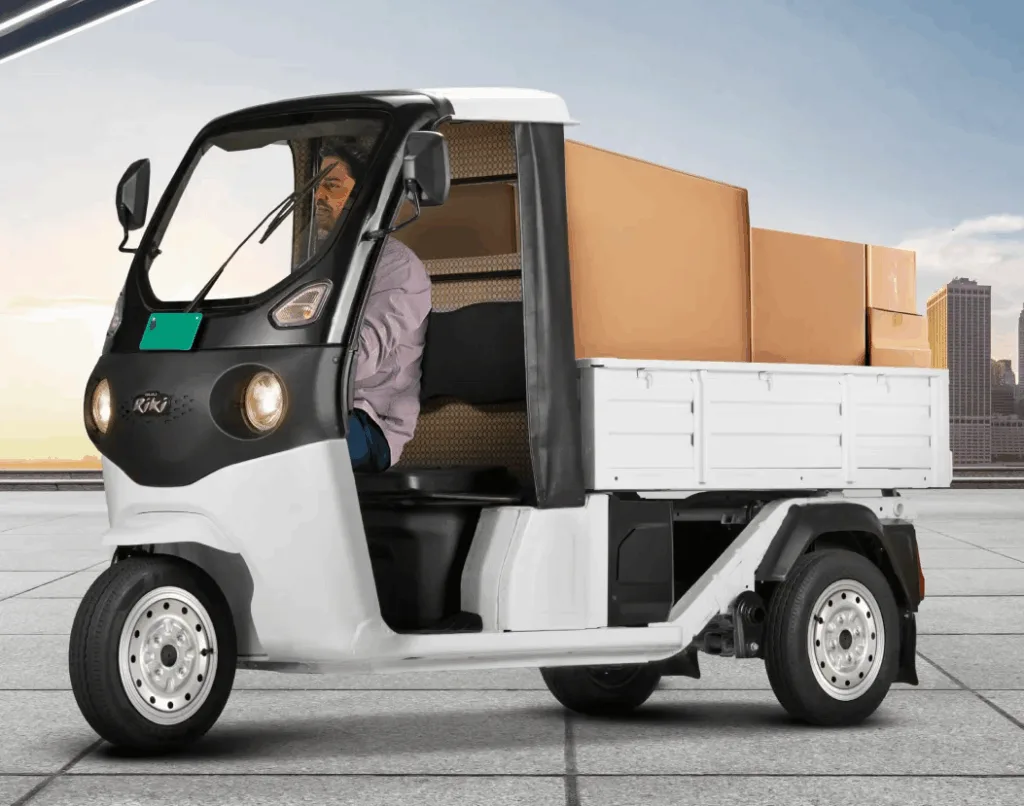
The Riki forms part of the P40 series, with P4005 operating with a 5.4 kWh battery supporting a listed range of 149 km, while the C4005 carries a certified range of 164 km for commercial loads. The cargo variant includes designated tray sizing suited for routine transport tasks, addressing diverse commercial requirements.
Monocoque chassis construction provides single-piece frame architecture, while independent suspension supports varied road profiles. Hydraulic braking systems ensure reliable deceleration—a critical safety upgrade over mechanical systems common in unorganized segments. Fast charging capability enables turnaround within 4.5 hours, maximizing operational uptime for drivers dependent on daily earnings.

Strategic Market Expansion
Pilot projects were undertaken across Patna, Moradabad, Guwahati, and Raipur, with data informing rollout plans. Bajaj plans Phase 1 expansion across more than 100 towns spanning Uttar Pradesh, Bihar, Madhya Pradesh, Chhattisgarh, and Assam—regions with high demand concentration for last-mile connectivity solutions.
The company’s extensive three-wheeler service network provides operational continuity that independent e-rickshaw manufacturers struggle to match. For operators, this translates to reduced downtime and consistent maintenance support—factors directly impacting daily income potential.
For comprehensive insights into India’s electric three-wheeler revolution, explore our coverage on commercial EV adoption trends and charging infrastructure development. Learn more about Bajaj Auto’s electric mobility initiatives at Bajaj’s official website.
Frequently Asked Questions
Q1: What is the price of Bajaj Riki electric rickshaw?
The Bajaj Riki P4005 passenger variant is priced at ₹1,90,890 ex-showroom, while the C4005 cargo variant costs ₹2,00,876 ex-showroom.
Q2: What is the range of Bajaj Riki e-rickshaw?
The Riki P4005 offers a range of 149 km, while the cargo-focused C4005 provides 164 km on a single charge with a 5.4 kWh battery.
Q3: What are the key features of Bajaj Riki?
Key features include monocoque chassis construction, independent suspension, hydraulic brakes, 4.5-hour fast charging, and a 3-year battery warranty.

