

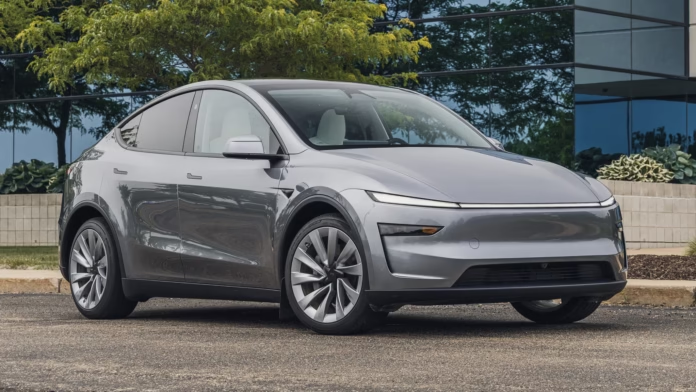

Tesla Model Y India expects buyers to recover roughly one-third of the Model Y’s ₹60 lakh price through fuel and maintenance savings within four to five years, the company’s General Manager Sharad Agarwal said on Wednesday. This total cost of ownership (TCO) argument represents Tesla’s strategic pitch to overcome the sticker shock from India’s steep import tariffs, positioning the premium electric SUV as a financially viable option despite its ₹60 lakh entry price.
| Tesla Model Y India TCO Analysis | Details |
|---|---|
| Purchase Price | ₹59.89 lakh (RWD) to ₹67.89 lakh (Long Range RWD) |
| Expected Savings (4-5 years) | ₹20 lakh (~33% of vehicle price) |
| Savings Components | Fuel costs + Maintenance costs |
| Home Charging Cost | One-tenth of petrol prices |
| Current Sales (Sep-Oct 2025) | 104 units delivered |
| Total Bookings (Early November) | ~600 orders |
| 2025 Registrations | 118 vehicles |
| US Price Comparison | 70% higher than US market due to import tariffs |
| India Import Tariff | 100% on fully built units |
| Battery Options | 60 kWh (500 km range), 75 kWh (622 km range) |
| Power Output | ~295 hp (single electric motor) |
Table of Contents
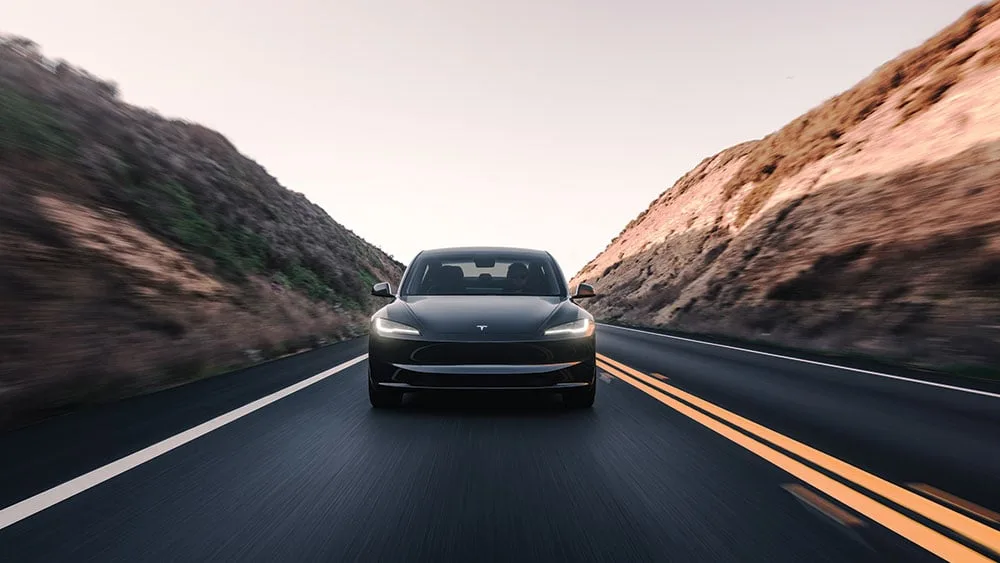
Comprehensive TCO Pitch: ₹20 Lakh Savings Over 4-5 Years
Indian customers can save around 2 million rupees while buying a Model Y in terms of maintenance and petrol costs, Agarwal said at an event in Gurugram city, neighbouring Delhi. This substantial savings projection forms the core of Tesla’s value proposition to Indian consumers grappling with the Model Y’s premium pricing.
“Plus it has a high resale value. The cost of home charging is one tenth of petrol prices,” he added. The resale value argument addresses another critical concern for Indian car buyers who typically view vehicles as long-term investments and carefully consider depreciation when making purchase decisions.
Breaking Down the Savings: Fuel and Maintenance Economics
The ₹20 lakh savings projection derives from two primary components. On the fuel side, home charging costs represent approximately one-tenth of petrol expenses, translating to dramatic operational cost reductions for daily commuters and frequent drivers. For a vehicle covering 20,000 km annually at average Indian driving patterns, the fuel cost differential alone could amount to ₹1.5-2 lakh per year compared to equivalent premium ICE SUVs.
Maintenance savings contribute significantly to the TCO advantage. Electric vehicles eliminate oil changes, transmission servicing, spark plug replacements, exhaust system maintenance, and numerous other routine services required by internal combustion engines. Tesla’s simplified drivetrain with fewer moving parts reduces wear-and-tear expenses and extends service intervals dramatically compared to conventional vehicles.
Import Tariff Impact: 70% Price Premium Over US Market
Tesla entered India in July and priced its Model Y about 70% higher than the cost of the car in the United States due to high taxes. India has 100% import tariffs on cars, which the firm’s chief Elon Musk has called among the steepest in the world.
This tariff burden fundamentally constrains Tesla’s pricing flexibility in India. The same Model Y variant selling for approximately $45,000 in the United States (before incentives) costs Indian buyers around $67,000-71,000, creating a massive price gap that no amount of operational savings can fully bridge for most consumers.
Modest Sales Performance Despite TCO Arguments
According to the Federation of Automobile Dealers Associations (FADA), Tesla sold 104 vehicles across September and October. The company has registered 118 cars in India so far in 2025, including 40 in October.
These numbers suggest Tesla’s TCO pitch has gained limited traction in India’s price-sensitive market. Tesla has opened showrooms in Mumbai and Delhi and, by early November, had reportedly secured around 600 bookings in India. While 600 bookings represent genuine interest, the conversion rate and actual deliveries remain far below Tesla’s initial expectations for the Indian market.
Technical Specifications: Range and Performance
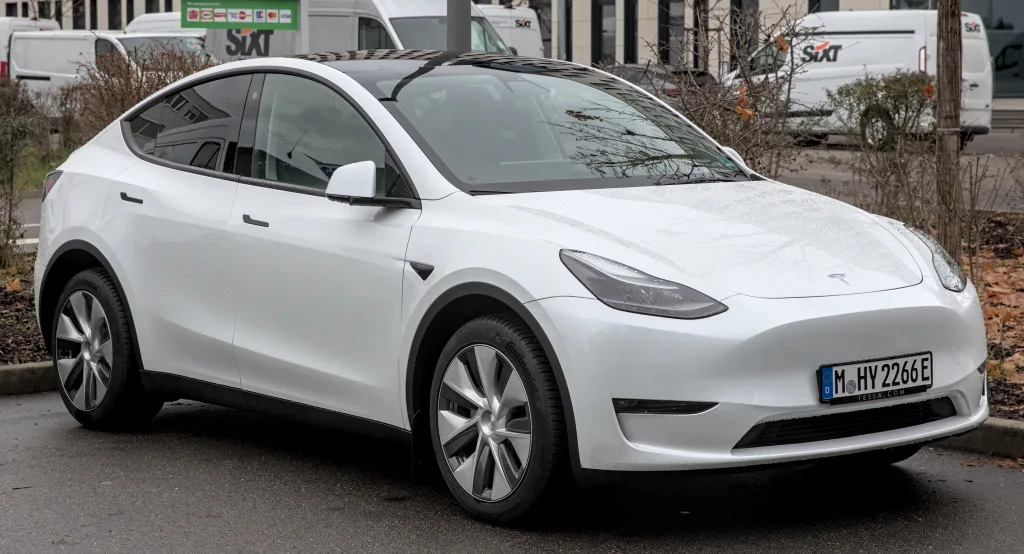
The Tesla Model Y RWD is now available in India with 60 kWh and 75 kWh battery options, powered by a single electric motor producing around 295 hp. The 60 kWh version offers a WLTP range of 500 km per charge, while the Long Range RWD can travel up to 622 km on a single charge.
These specifications position the Model Y competitively against luxury electric SUVs in India’s emerging premium EV segment. The 622 km range particularly addresses range anxiety concerns that have historically deterred Indian buyers from considering electric vehicles.
Limited Retail Footprint and Service Network
Tesla’s current operational presence remains minimal compared to established automotive brands. With just two showrooms in Mumbai and Delhi, and deliveries restricted to four cities (Delhi, Mumbai, Gurugram, and Pune), Tesla’s physical accessibility lags far behind competitors offering extensive dealership networks across multiple cities.
This limited footprint exacerbates concerns about service accessibility, spare parts availability, and long-term ownership support—critical considerations for Indian buyers investing in premium vehicles.
No Local Manufacturing Commitment
For now, it has only committed to retailing its cars locally and has not indicated whether it plans to assemble vehicles in the country. This absence of local manufacturing commitment means Tesla cannot access preferential tariff structures available for domestically produced vehicles, keeping prices permanently elevated compared to locally assembled competitors.
Market Reality: TCO vs. Upfront Affordability
While Tesla’s TCO argument holds mathematical validity, it confronts a fundamental market reality: most Indian car buyers prioritize upfront affordability over lifecycle cost calculations. The ₹60 lakh entry price positions the Model Y in the luxury segment where buyers typically can absorb higher operating costs and value brand prestige, performance, and features over savings optimization.
For India’s mainstream buyers who would benefit most from EV operational savings, the Model Y remains financially inaccessible regardless of long-term TCO advantages. Domestic manufacturers like Tata Motors and Mahindra successfully leverage TCO arguments with EVs priced at ₹15-25 lakh—price points where operational savings meaningfully impact purchase decisions.
Competitive Landscape: Luxury EV Alternatives
The Model Y competes against BYD Sealion 7, Kia EV6, BMW iX1, Mercedes-Benz EQA/EQB, and upcoming luxury EVs from established manufacturers. Many competitors offer locally assembled options with lower import duty burdens, creating price advantages while delivering comparable technology, range, and features.
BYD, Tesla’s closest global rival, has demonstrated stronger initial traction in India despite also importing vehicles, suggesting that aggressive pricing—even with CBU imports—can partially overcome tariff challenges when positioned appropriately for the Indian market.
For more updates on Tesla India market performance and luxury EV segment analysis, stay connected with our comprehensive industry coverage.
Official Links:

