

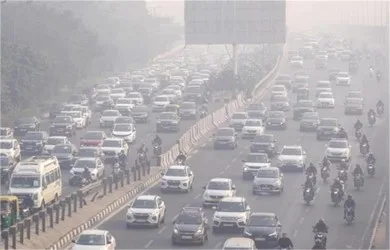

In a decisive response to Delhi’s worsening air quality crisis, the Prime Minister’s Office (PMO) has directed all states and union territories to speed up the transition to electric vehicles (EVs) and improve charging infrastructure, with the decision taken during a high-level meeting on Tuesday, chaired by the Principal Secretary to the Prime Minister.
Table of Contents
High-Level Meeting Details
| Aspect | Details |
|---|---|
| Meeting Date | November 25, 2025 (Tuesday) |
| Chaired By | Principal Secretary to PM |
| Attendees | 8 department secretaries |
| States Present | Delhi, Rajasthan, Haryana, Punjab, UP |
| Key Focus | EV transition & charging infrastructure |
| Air Quality Status | “Very Poor” for 2 weeks |
| Transport Contribution | 14-20% of pollution (Nov 1-22) |
Delhi’s Alarming Vehicle Statistics
At the meeting, the principal secretary expressed concerns that the capital city holds more than half of all vehicles in the entire National Capital Region and that 37% of vehicles in Delhi-NCR still belong to the outdated BS I to BS III emission norms.
Out of 2.97 crore vehicles registered in the National Capital Region, 1.57 crore are concentrated in Delhi—a city occupying just 2.7% of the region’s land. This disproportionate concentration creates severe pollution challenges.
Slow EV Adoption Numbers
Data reveals that only 4,419 electric two-wheelers were registered in October in Delhi, taking the total for this year to 31,447, while in contrast, petrol-run two-wheelers saw over double the registrations at 78,114 in October alone.
These figures highlight the significant gap between EV adoption goals and ground reality, prompting the PMO’s urgent intervention.
Key Directives Issued
One of the decisions made during the meeting was to review and amend EV policies to speed the transition across two- and three-wheelers, cars, buses, and commercial vehicles, with clear timelines and implementation mechanisms.
States were also instructed to promptly notify cab and bike aggregator policies and create a unified monitoring platform, ensuring coordinated action across the National Capital Region.
The Ministry of Road Transport and Highways (MoRTH) has been instructed to expedite a scientific study on pollution from vehicles that run on fossil fuel, providing evidence-based policy recommendations.
Alarming Pollution Levels
Official data shows average PM10 levels in the capital region were around 295 ug/m3 between October 15 and November 25, while PM2.5 levels were at 171 ug/m3.
The World Health Organization recommends safe standards of PM2.5 (24 hours) not exceeding 15 ug/m3 and PM10 not exceeding 45 ug/m3—meaning Delhi’s pollution levels are approximately 11 times and 7 times higher than WHO safety limits respectively.
Transport Sector’s Major Role
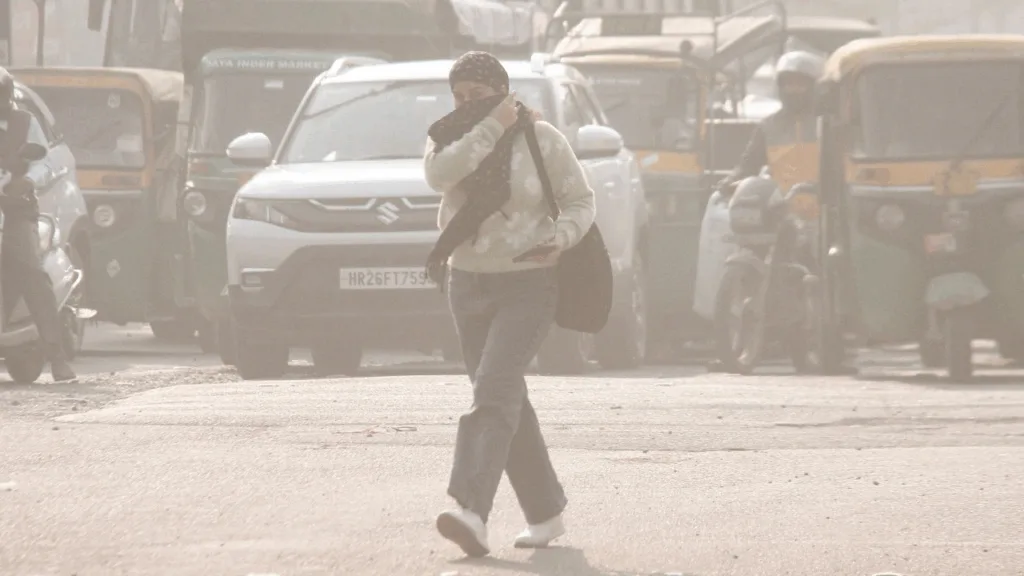
The transport sector has been a major contributor to air pollution this season, accounting for 14-20% between November 1 and November 22. This makes vehicular emissions one of the primary targets for pollution control measures.
The Centre for Science and Environment estimates that half of winter particulate pollution can originate from vehicles alone, underscoring the critical importance of transitioning to cleaner transportation.
Farm Fire Decline Shows Progress
In comparison, farm fire incidents have declined this season, with 27,720 cases detected in Punjab, Haryana, Uttar Pradesh, Rajasthan, and Madhya Pradesh—a five-year low compared to previous years.
This is far below the 85,915 fires recorded in 2021, indicating that stubble burning, while still a concern, is becoming less dominant as a pollution source compared to vehicular emissions.
Technology-Backed Enforcement
With the Commission for Air Quality Management identifying transport pollution as the single biggest contributor, the PMO instructed NCR states to deploy ANPR, RFID and ITMS systems to crack down on non-compliant vehicles and enforce emission norms in real time.
These technology solutions will enable automated detection and enforcement against pollution-violating vehicles, moving beyond manual inspection systems.
PMO’s Direct Oversight
Officials also indicated that the PMO is now directly overseeing pollution sources, and further actions are likely soon. This high-level attention signals the government’s seriousness about addressing Delhi’s air quality crisis.
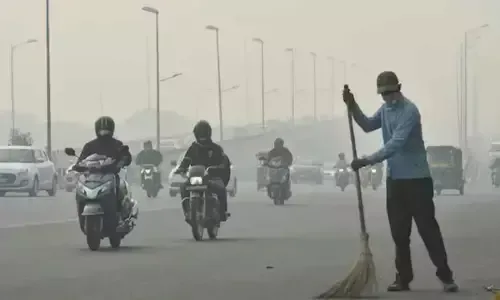
The task force meeting came just as Delhi imposed Stage 2 of GRAP and its Air Quality Index surged past 350, with a mix of vehicular emissions and stubble smoke pushing the city’s AQI into the “severe” zone between November 11 and 13.
Infrastructure Expansion Required
The PMO also pressed for rapid expansion of Delhi’s electric vehicle ecosystem, calling for faster installation of EV charging stations, smoother subsidy disbursements, and measures to reduce the capital’s dependence on petrol and diesel vehicles.
Officials acknowledged that EV adoption remains “far from adequate”, despite incentive schemes, and called for revised policies with clear timelines across two-wheelers, cars, buses and commercial fleets.
Emergency Measures Active
As the Delhi-NCR is currently recording an Air Quality Index (AQI) in the “very poor” range (above 353 value), the Commission for Air Quality Management (CAQM) had recently issued a notification that only Stage 3 of the Graded Response Action Plan (GRAP) is active.
All public and private offices in the capital have been instructed to implement staggered working hours and ensure that at least half their employees work from home as part of broader strategy aimed at easing congestion and reducing daily vehicular emissions.
Critical Transformation Needed
Centre warns Delhi, UP, Haryana, Punjab and Rajasthan to deliver “visible, result-oriented” action as winter pollution spirals into crisis. The PMO’s intervention represents the sharpest action this season, combining enforcement, infrastructure development, and policy reforms.
The question remains whether this comprehensive approach will finally break Delhi-NCR’s recurring pollution cycle or if the region needs even more aggressive measures to ensure breathable air for its residents.
For comprehensive coverage of India’s EV policy developments and air quality initiatives, visit India EV News. For updates on Delhi’s pollution control measures, follow NewsBytes.

