

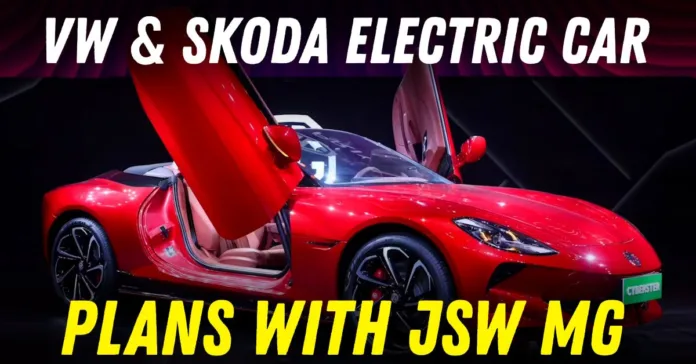

In a development that could reshape India’s automotive landscape, JSW-MG Motor India and Skoda Auto Volkswagen India are exploring a potential partnership centered on sharing platforms, powertrains, and investment as both companies navigate the challenges of electric vehicle development and rising costs. These early-stage discussions represent a strategic pivot for Volkswagen Group’s struggling Indian operations.
Table of Contents
Partnership Overview
| Aspect | Details |
|---|---|
| Companies Involved | Skoda-VW India, JSW-MG Motor, SAIC |
| Discussion Stage | Early exploratory talks |
| Focus Areas | Platform sharing, powertrains, investment |
| Investment Reduced | $1 billion → $700 million |
| Target Launch | Mid-2027 onwards |
| VW Market Share | ~2% in India |
| Strategic Purpose | Cost-sharing, localization, scale |
Why This Partnership Matters
The German parent of Volkswagen is unwilling to invest billions in a market where it holds only about a 2% share, leading to a reduction of the initial $1 billion investment plan to approximately $700 million. This cost rationalization signals Volkswagen’s pragmatic approach to India’s competitive automotive market.
Industry executives confirm that both parties have signaled interest in exploring strategic alignment, though they emphasize these are preliminary conversations rather than formal negotiations, aimed at determining whether there is sufficient strategic fit to advance the partnership idea.
Three-Way Collaboration Structure
One scenario being examined involves a three-way JSW–SAIC–Skoda-VW structure, carrying clear strategic logic since Skoda-VW and SAIC already have a long-standing partnership in China, which would make technology exchange and model sourcing more seamless.
SAIC is open to collaborative structures to secure its long-term presence in India, especially as regulatory and geopolitical pressures continue to mount. This arrangement leverages existing relationships while addressing India-specific market challenges.
JSW’s Broader Automotive Strategy
While building out its joint venture with MG Motor India, JSW is independently establishing JSW Auto, a separate entity aimed at launching its own electric car brand by 2027-28. This dual-track approach positions JSW as both a manufacturing partner and an emerging automotive brand.
Strategic Benefits for All Parties
If the JSW–MG–SAIC–Skoda-VW framework moves forward, it would represent one of the most unusual cross-continental collaborations in India’s automotive sector, combining European engineering expertise, Chinese electrification capabilities, and Indian industrial scale and market access under one umbrella.
The collaboration would provide:
- Shared development costs across multiple manufacturers
- Broader product portfolios leveraging combined strengths
- Enhanced manufacturing scale for competitive pricing
- Technology transfer from established Chinese EV platforms
- Market access to India’s rapidly growing EV segment
Market Context and Pressures
India’s stricter carbon-emission norms effective from 2027 create a compressed timeline for Volkswagen’s transition, with the 2028 EV launch window leaving limited margin for development delays or partnership negotiations.
Volkswagen’s nearly 2 percent market share in India is a significant disappointment for the German automotive giant, which has operated in the country for approximately two decades, reflecting challenges including intense competition from established domestic players and difficulties adapting global products to Indian consumer preferences.
Why Mahindra Talks Failed
Previous partnership discussions between Skoda-Volkswagen and Mahindra & Mahindra collapsed due to divergent strategic priorities and valuation disagreements. The failed negotiations prompted Volkswagen to explore alternative partnerships with JSW and potentially Tata Motors.
Platform Strategy
The Volkswagen Group’s Indian subsidiary abandoned the costly MQB A0 37 platform in favor of the more versatile CMP21 architecture, projected to support a range of internal combustion, hybrid and electric SUVs, though the project’s estimated investment exceeds Euro 1 billion.
The CMP21 platform development continues despite awaiting final approval, ensuring readiness for the planned mid-2027 launch window. A successful partnership would be crucial for securing necessary funding and market viability.
What’s Next?
Klaus Zellmer, global CEO of Skoda Auto, acknowledged the ongoing search for a partner, stating “Partnerships remain a strategic option to combine cultural alignment with business goals. The train has not left the station yet”.
Both companies have declined official comments on the discussions, maintaining that these remain exploratory conversations. Industry observers are monitoring whether these early interactions will evolve into substantive negotiations that could redefine India’s EV manufacturing landscape.
For comprehensive coverage of India’s evolving automotive partnerships and EV developments, stay updated with India EV News. For detailed insights into Skoda-Volkswagen’s India strategy, visit Skoda Auto India’s official website.

