


Imagine India’s electric vehicle Tsuyo ambitions getting a massive power boost—literally. That’s exactly what’s happening in Karnataka, where a homegrown startup is about to change the game for commercial EVs.
Table of Contents
The Big Announcement That’s Turning Heads
At the Bengaluru Tech Summit 2025, Tsuyo Manufacturing signed a Letter of Intent with Karnataka’s government to establish a cutting-edge EV powertrain manufacturing plant and dedicated testing track in Dharwad. This isn’t just another factory—it’s a ₹250 crore investment that’s set to revolutionize India’s commercial electric vehicle sector.
Why Dharwad? Why Now?
Karnataka’s IT and Biotechnology Minister Priyank Kharge emphasized that this fits perfectly into the state’s Local Economy Accelerator Program (LEAP), which aims to decentralize growth and promote advanced manufacturing in tier-2 and tier-3 cities. While everyone’s eyes are on Bengaluru, Dharwad is quietly positioning itself as India’s next manufacturing powerhouse.
What Makes This Plant Special?
| Component Type | Power Range | Applications |
|---|---|---|
| Electric Motors | 30 kW – 350 kW | Heavy-duty commercial vehicles |
| Motor Types | IPMSM, AC Induction, SRM, SynRM, Axial Flux | Diverse EV platforms |
| Integrated Systems | 2-in-1 & 3-in-1 Powertrains | Electric buses, trucks, mining equipment |
| Manufacturing Capacity | 0.5 kW – 600 kW | From light to ultra-heavy vehicles |
The facility will manufacture multiple categories of electric motors including IPMSM, AC induction motors, SRM, SynRM, and axial flux motors, along with e-drives, e-axles, and automatic transmissions—everything needed to electrify India’s toughest commercial vehicles.
The Numbers Tell a Powerful Story
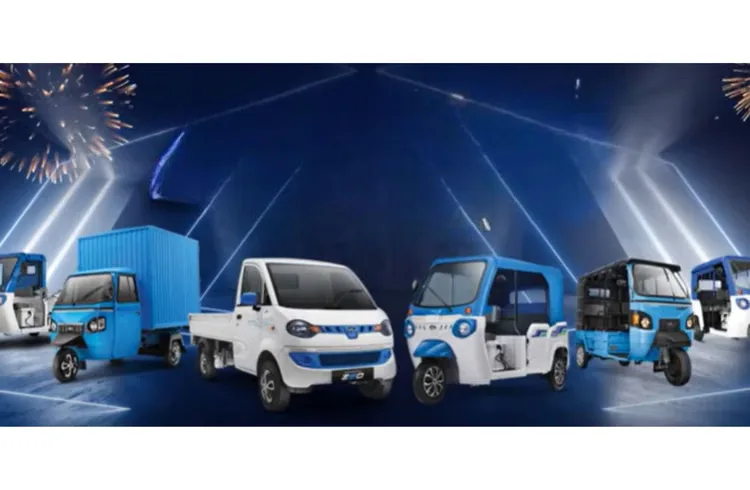
Here’s what’s truly impressive: Tsuyo already supplies major players like Mahindra and Tata, and has delivered over 1.5 lakh units since its founding in 2020. That’s not a startup finding its feet—that’s a company scaling rapidly.
The Karnataka facility is expected to generate 700 jobs, injecting economic vitality into Dharwad’s growing industrial ecosystem.
Powering India’s Heavy Haulers
While most EV discussions center on cars and two-wheelers, Tsuyo is tackling the harder problem: electrifying the workhorses of India’s economy. The plant will focus on heavy-duty applications such as electric buses, trucks, mining vehicles, and construction equipment.
Think about it—these are the vehicles that consume the most fuel, produce the most emissions, and have the longest operational hours. Electrifying them isn’t just good for the environment; it’s transformational for operating costs.
The PLI Advantage
Here’s the business genius behind this move: By providing advanced powertrain solutions locally, manufacturers can leverage Production Linked Incentive (PLI) benefits while supporting India’s goal of self-reliance in the EV industry, as Tsuyo CEO Vijay Kumar noted.
This means Indian commercial vehicle manufacturers can now access world-class powertrain technology without importing components, qualifying for government incentives that make EVs more economically viable.
What’s Under the Hood?
Beyond manufacturing, the plant will include a dedicated testing track—a critical piece of infrastructure that allows real-world validation before products hit the market. This comprehensive approach—manufacturing, testing, and validation all in one location—makes it one of India’s most comprehensive ecosystems for commercial EV powertrains.
The Bigger Picture
Tsuyo recently secured ₹40 crore in pre-Series A funding led by Avaana Capital, and is eyeing expansion into Southeast Asia, Japan, Korea, and Europe. The Karnataka plant isn’t just about domestic production—it’s positioning India as a global hub for commercial EV technology.
With ISO 9001, ISO 14001, and IATF 16949 certifications, Tsuyo is building credibility that matches international standards.
The Road Ahead
As India pushes toward electrification, the missing piece has always been robust, affordable powertrains for commercial vehicles. Tsuyo’s Karnataka facility fills that gap precisely when the market needs it most.
This isn’t about replacing a few passenger cars—it’s about electrifying entire fleets of buses, delivery trucks, and construction equipment. It’s about proving that India can manufacture the high-power systems needed for serious commercial applications.
And with Dharwad emerging as a manufacturing destination under Karnataka’s LEAP program, we’re witnessing the decentralization of India’s EV revolution—spreading opportunities beyond metro cities into communities ready to build the future.
The question isn’t whether commercial vehicle electrification will happen. The question is: will India lead it or follow? With investments like Tsuyo’s ₹250 crore plant, the answer is becoming crystal clear.

