


Picture an entrepreneur flying 4,000 miles to California, test-driving a Tesla, then returning home only to discover he can’t legally import it. So what does he do? He finds someone who already smuggled one in and buys it secondhand. When the car won’t charge at his friend’s beach house, they improvise—literally sticking a fork in the ground to create a makeshift electrical ground.That was 2019 in Peru. Today? That same country is experiencing an electric vehicle revolution—except Tesla still doesn’t have an official presence there. And Peru isn’t alone.
South America’s EV market penetration doubled in 2024 to around 4%, and it’s accelerating fast. The surprising twist? This transformation is happening almost entirely without Tesla—the world’s most famous EV maker.
Table of Contents
The Numbers Tell an Incredible Story
Latest figures show EV market share hitting 10.6% in Chile (September 2024), 9.4% in Brazil (August 2024), and an astounding 28% in Uruguay—all record highs for the region.
| Country | EV Market Share | Period | Key Milestone |
|---|---|---|---|
| Uruguay | 28% | Q3 2024 | Highest in Latin America |
| Chile | 10.6% | September 2024 | Breaking the 10% barrier |
| Brazil | 9.4% | August 2024 | 125,000+ EVs registered in 2024 |
| Colombia | 7%+ | 2024 | Rapid infrastructure expansion |
| Peru | 5.4% (hybrids + EVs) | Jan-Sept 2024 | 44% year-over-year growth |
| Argentina | Rising | Q4 2024 | BYD launched October 2024 |
For context: In Europe and China, half of new cars registered by mid-2025 were EVs (56% and 51% respectively), while Japan and the U.S. rates were closer to 2% and 10%. South America is catching up fast—and doing it differently.
Why Tesla Is Missing This Gold Rush
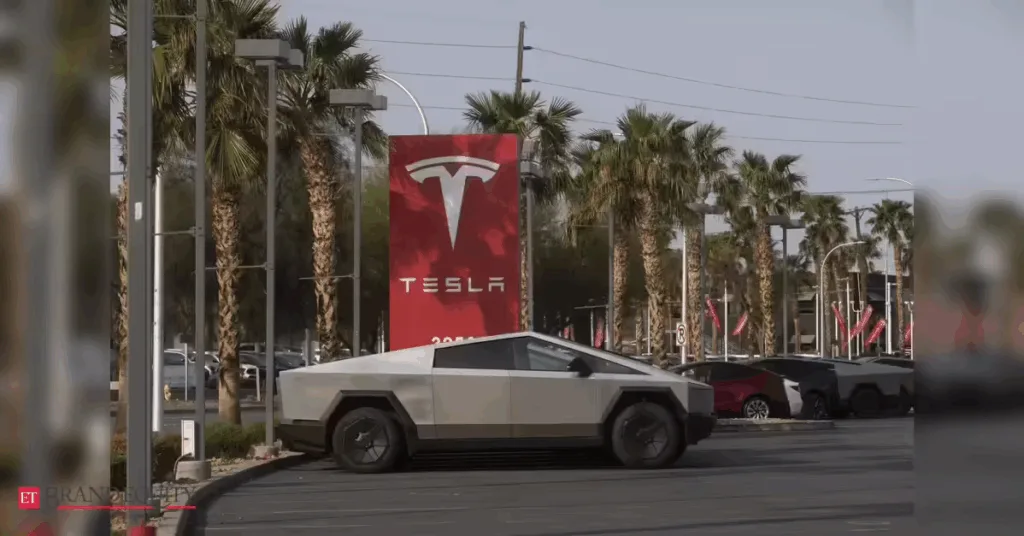
Tesla dominates global headlines, yet Tesla still lacks official showrooms across most South American markets. The company hasn’t established formal import channels, dealer networks, or service centers in Peru, Colombia, Uruguay, or most other South American nations.
Tesla didn’t respond to requests for comment on their South American strategy—or lack thereof.
Tesla’s Absence Creates Opportunity:
- No official importers = complex purchase procedures
- No service networks = maintenance nightmares
- No charging infrastructure partnerships = range anxiety
- Premium pricing = unaffordable for most buyers
Into this void stepped Chinese manufacturers with a different playbook entirely.
The Chinese Invasion: BYD, Geely & GWM Take Over
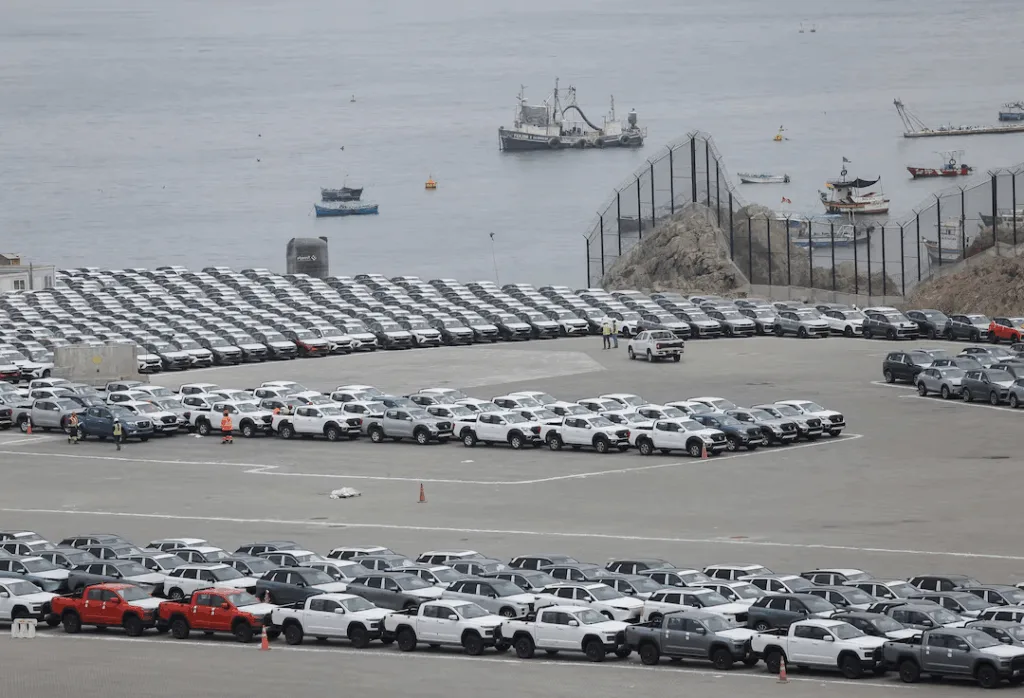
Chinese models from BYD, Geely, and GWM sell electric vehicles at around 60% of Tesla’s price, alongside traditional brands like Toyota, Kia, and Hyundai entering the electric game.
Market Domination Stats:
- Chinese brands accounted for 29.6% of all new passenger cars sold in Chile in Q1 2024
- BYD is already the leader in electric vehicle sales in Brazil and Colombia
- BYD launched in Argentina for the first time in October 2024
- BYD plans to open a fourth dealership in Lima by year’s end, while Chery and Geely have more than a dozen total in Peru
| Chinese Brand | South America Presence | Key Advantage |
|---|---|---|
| BYD | Brazil, Colombia, Peru, Argentina, Chile | 60% cheaper than Tesla, full lineup |
| Geely | Peru, Chile, Brazil | Affordable options, strong dealer network |
| GWM | Peru, Chile, Colombia | Budget-friendly EVs and hybrids |
| Chery | Peru, Brazil, Argentina | Extensive dealership expansion |
The Secret Weapon: Port of Chancay
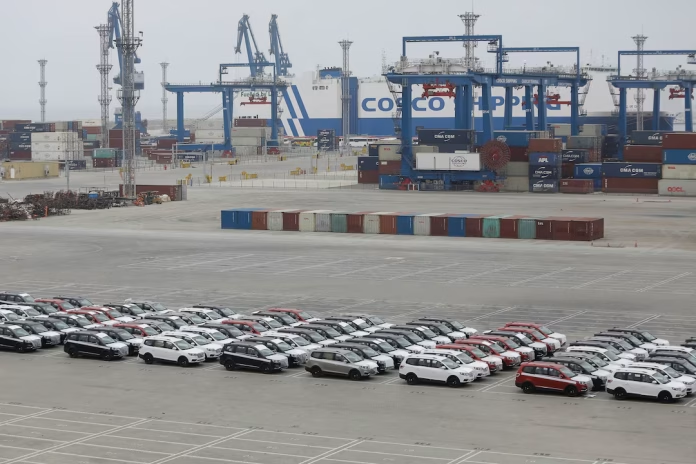
China ramped up sales since opening the Port of Chancay last year, north of Lima. The Chinese-built megaport halved trans-Pacific shipping times—a game-changer for logistics.
Why This Matters:
- Faster delivery = Lower costs
- Direct China-Peru shipping routes
- Perfect timing as Chinese manufacturers face rising barriers in the United States and greater trade restrictions in Europe
- South America becomes the primary alternative market
Peru’s 44% Growth Explosion
In Peru, sales of hybrid and electric vehicles hit a record 7,256 units in the nine months to September, up 44% year-on-year. That’s explosive growth from what was essentially zero just five years ago.
Peru’s EV Journey:
- 2019: Nearly impossible to buy an EV legally
- 2020-2022: Chinese manufacturers establish presence
- 2023: Port of Chancay opens, slashing logistics costs
- 2024: 44% year-over-year growth in EV/hybrid sales
- Total market: 135,394 new cars sold (Jan-Sept 2024)
Government Incentives Accelerating Adoption
EV penetration growth is boosted by government incentives and an influx of affordable Chinese models, according to the International Energy Agency’s Global EV Outlook 2025.
Key Policy Drivers:
- Chile: Zero-emission vehicle mandate by 2035
- Uruguay: Aggressive EV tax incentives (highest adoption at 28%)
- Brazil: Investment billions attracted from Chinese manufacturers
- Colombia: Massive electric bus fleet expansion in Bogotá
- Regional: Reduced import tariffs for EVs
The Real Story: Luis Zwiebach’s Journey
The transformation is best illustrated through individual stories. When Luis Zwiebach wanted an EV in 2019, he flew 4,000 miles to California to test-drive a Tesla Model 3, then had to buy one secondhand from another importer.
Charging initially proved difficult at his friend’s beach house outside Lima: “The car wouldn’t charge because there was no grounding device. We grabbed a fork, stuck it into the soil to make a ground—and the car charged.”
Fast forward to today: Zwiebach can choose from dozens of Chinese EV models at showrooms throughout Lima, all with proper dealer support, service centers, and charging infrastructure—and at 60% less cost than his smuggled Tesla.
Market Projections: $15.6 Billion by 2025
The South American EV market is expected to expand at a compound annual growth rate (CAGR) of 7.4% from 2024 to 2033, with revenue expected to reach $15.6 billion by 2025.
Growth Catalysts:
- Cost parity with combustion engines by late 2020s
- Expanding charging infrastructure
- Public transportation electrification
- Abundant renewable energy (Uruguay, Paraguay, Brazil already largely clean-powered)
- Continued Chinese investment
The Challenges Ahead
Despite rapid growth, obstacles remain:
- Income inequality limits EV accessibility to wealthy buyers
- Infrastructure gaps outside major urban centers
- Used car imports from other regions compete with new EVs
- Economic volatility in countries like Argentina
- Limited domestic production (except Brazil)
Why Tesla’s Absence Might Be Permanent
Tesla’s delay in entering South America may have cost them the market permanently. Here’s why:
First-Mover Advantage Lost:
- Chinese brands established dealer networks
- Service infrastructure built by competitors
- Brand loyalty forming around BYD, Geely, GWM
- Price expectations set at 40% below Tesla levels
Tesla’s Challenge:
- Must build entire infrastructure from scratch
- Price point 60% higher than established competitors
- No government relationships or incentive partnerships
- Reputation as “too expensive” already cemented
Comparing Global EV Adoption Rates
| Region | EV Market Share | Context |
|---|---|---|
| China | 51% | World leader in EV adoption |
| Europe | 56% | Government mandates driving growth |
| United States | ~10% | Growing but politicized |
| Japan | ~2% | Surprisingly low for tech leader |
| South America | 4-28% (varies) | Fastest regional growth rate |
South America’s 4% average masks incredible variation—from Argentina’s barely 1% to Uruguay’s stunning 28%.
The Bottom Line: A Revolution Without the Revolutionary
South America‘s EV revolution proves you don’t need Tesla to go electric. In fact, the region demonstrates that affordable Chinese EVs, strategic infrastructure investments, and smart government policies can create rapid adoption—perhaps faster than Tesla-led markets.
For Tesla, South America represents a massive missed opportunity. For BYD, Geely, and GWM, it’s becoming their most important growth market outside China.
The future of electric vehicles isn’t being written in Silicon Valley—it’s being charged in Lima, São Paulo, Santiago, and Montevideo, one affordable Chinese EV at a time.

