

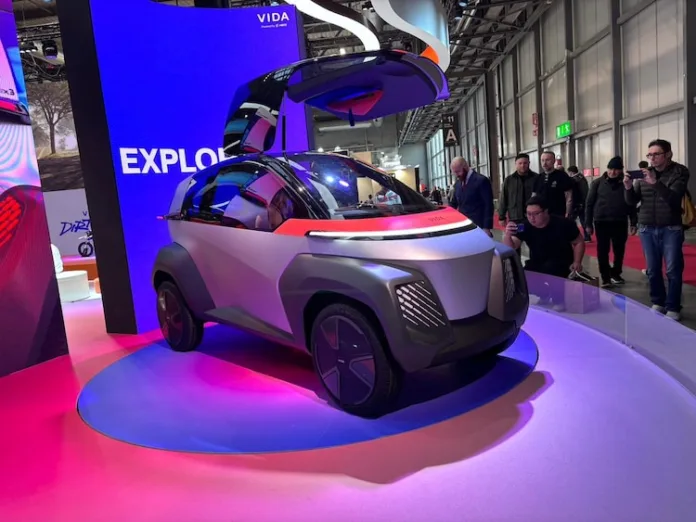

Imagine threading through Mumbai’s chaotic traffic in something narrower Hero Vida Nex than a rickshaw but safer than a scooter, protected from monsoon rains and summer heat. That’s not science fiction—it’s the Hero Vida Nex 3, and it’s about to rewrite India’s urban commute rulebook.
At EICMA 2025 in Milan, Hero MotoCorp dropped a bombshell that nobody saw coming: India’s two-wheeler titan is gunning for four wheels. Not with another boring sedan, but with a radical micro-electric vehicle that could finally solve the “too big for a bike, too small for a car” dilemma millions face daily.
Table of Contents
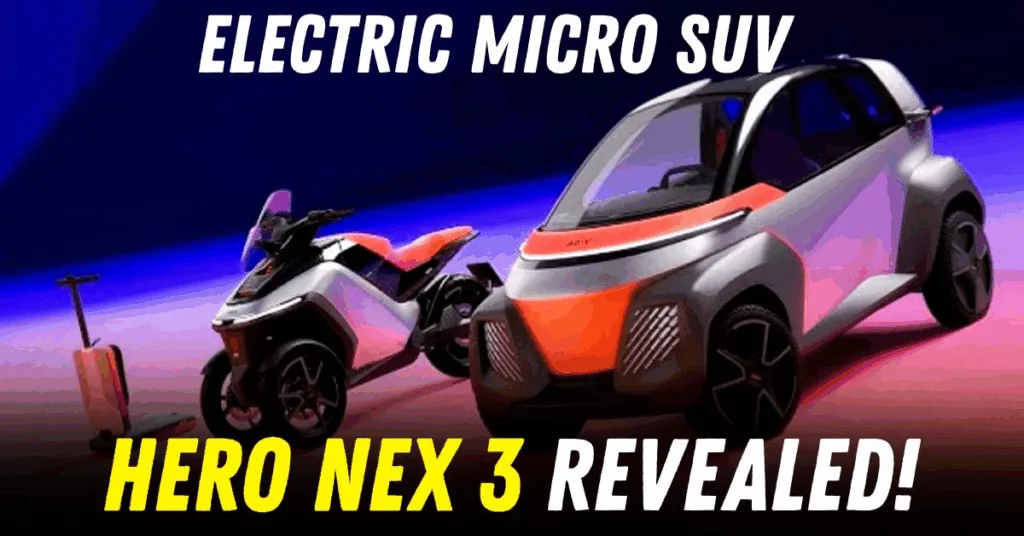
What Exactly Is the Vida Nex 3?
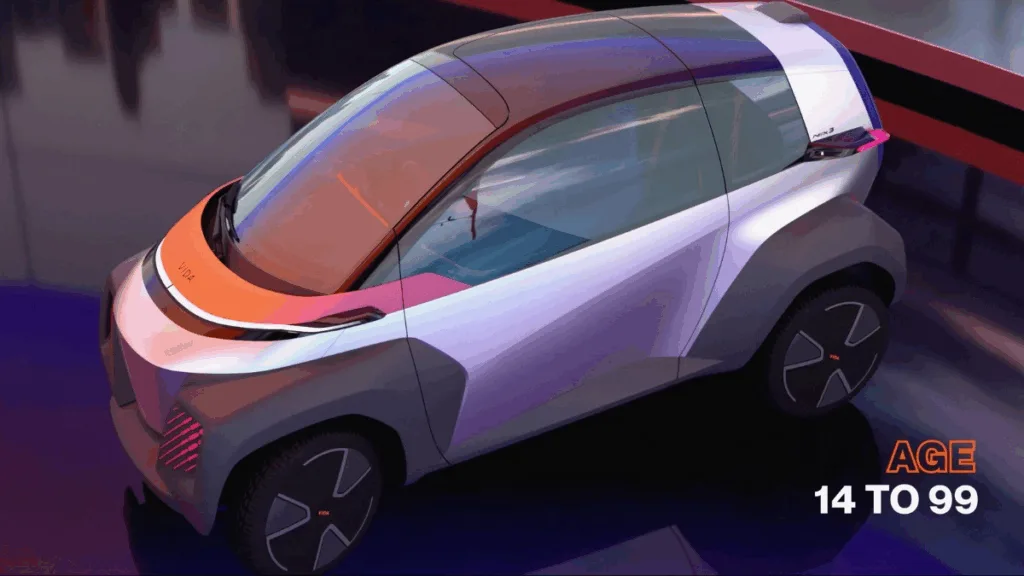
Think of it as a personal mobility pod designed by someone who actually uses public transport. The Nex 3 features tandem seating with passengers sitting one behind the other, offering a fully enclosed weatherproof cabin with a narrow footprint specifically aimed at urban congestion and last-mile mobility.
This isn’t your grandfather’s economy car. Hero designed the Nex 3 concept for longer distances and everyday utility, efficiently crafted without compromising comfort, and aimed at ages 14 to 99. Yes, you read that right—teenagers to grandparents, everyone’s invited to this electric revolution.
Why Micro-EVs Are India’s Next Big Thing
Remember when everyone laughed at the Tata Nano? Well, they’re not laughing at the MG Comet anymore. The MG Comet’s success is one of the main reasons many brands are eyeing the microcar segment, with these vehicles expected to be in high demand due to growing car numbers and limited road space.
Here’s the brutal truth about Indian cities:
- Finding parking is harder than finding affordable housing
- A four-seater car carries one person 90% of the time
- Scooters leave you drenched or sunburnt
- Traffic congestion costs Indians billions in lost productivity
The Nex 3 addresses every single pain point. It’s compact enough to slip through traffic, enclosed enough to protect you from the elements, and practical enough for daily commutes without breaking the bank.
The Vida Novus Vision: Beyond Just Cars
Hero unveiled the Vida Novus portfolio featuring three innovative vehicles—Nex 1 (a personal electric vehicle), Nex 2 (a self-balancing electric trike), and Nex 3 (an all-weather personal EV offering four-wheel safety and comfort).
| Model | Type | Target Use |
|---|---|---|
| Nex 1 | Wearable/Portable EV | Ultra-short personal mobility |
| Nex 2 | Self-balancing Trike | Urban commuting with stability |
| Nex 3 | Micro Four-Wheeler | All-weather urban & rural travel |
This isn’t just product diversification—it’s Hero’s declaration that the future of mobility isn’t one-size-fits-all. Executive Chairman Pawan Munjal stated that Novus symbolizes renewal and reinvention, reimagining how the world will move and shaping a future that’s inspiring, intelligent, and inclusive.
The Real Competition: Who Should Worry?
MG Comet (₹6.99-9.40 lakh): Currently owns this space, but lacks the backing of India’s largest two-wheeler maker and its massive service network.
Ola’s Upcoming Micro-EV: Ola Electric has patented a new micro-electric car currently under development, making this a three-way battle for micro-mobility dominance.
Traditional Scooters: This could cannibalize Hero’s own scooter sales—but better to eat your own lunch than let competitors do it.
What We Don’t Know (Yet)
Hero’s playing its cards close to the chest. As of November 2025, Hero has not disclosed detailed technical specifications such as battery size, driving range, power output, top speed, or pricing.
Critical Questions Remaining:
- What’s the realistic city range?
- Will it qualify for FAME subsidies?
- Can Hero price it under ₹5 lakhs?
- When does production actually begin?
The Bigger Picture: Hero’s Electric Ambition
Don’t think the Nex 3 is happening in isolation. From November 2022 to October 2025, Hero Vida delivered 141,117 e-scooters, with strong growth driven by the Vida V2 and Vida VX2 models.
Hero isn’t just dipping its toes in electric water—it’s doing a cannonball. The company also revealed:
- Vida Concept Ubex: An electric motorcycle for urban exploration
- Vida Project VxZ: Developed with Zero Motorcycles (USA)
- Vida DIRT.E Series: Electric off-road bikes, including the K3 for kids
Why This Actually Matters to You
If you’re still skeptical about micro-EVs, consider this: Should these concepts materialize into production-spec cars, it will cause a paradigm shift in the market, creating a segment for mass micro-mobility and potentially prompting other two-wheeler brands to explore this space.
For Urban Commuters: ✓ Lower operational costs than any car
✓ Protected from weather unlike scooters
✓ Easier parking than traditional vehicles
✓ Potentially accessible to non-license holders (age 14+)
For the Environment: ✓ Smaller battery = lower resource consumption
✓ Reduced urban congestion
✓ Zero tailpipe emissions
The Waiting Game
The Vida Nex 3 EV will be further developed, with expectations to see the production version within the next five years. That might sound like forever in tech years, but developing a completely new vehicle category from scratch isn’t building a scooter with a different paint job.
The Bottom Line
Hero MotoCorp isn’t just building a micro-EV—they’re betting on a fundamental shift in how Indians move through cities. The Vida Nex 3 represents something bigger than a quirky concept car: it’s a vision of practical, affordable, and sustainable urban mobility that could finally make electric vehicles accessible to the middle class.
Will it succeed? That depends on pricing, infrastructure, and whether Hero can overcome the “too small to be a real car” perception that killed the Nano. But one thing’s certain: India’s largest two-wheeler maker throwing its weight behind micro-mobility legitimizes the entire segment.
The streets of Mumbai, Delhi, and Bangalore might look very different in 2030. And they’ll be quieter, cleaner, and far less congested—with tandem-seated, electric pods weaving through traffic like the future finally arrived.

