

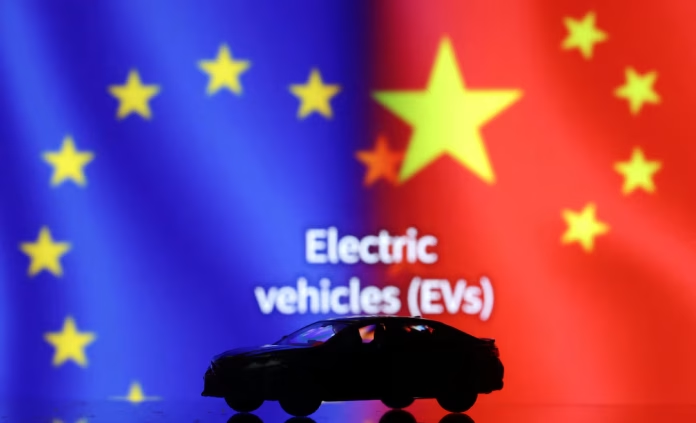

EU China, Europe’s streets filling with affordable electric vehicles, Chinese manufacturers breathing easier, and European automakers finally getting breathing room to innovate. After weeks of nail-biting negotiations, the impossible just happened—the European Union and China struck a landmark deal that could reshape the global electric vehicle landscape.
In the eleventh hour before planned tariff increases would have triggered a potential trade war, Brussels announced a breakthrough agreement that both sides are calling “balanced and mutually beneficial.” But what does this actually mean for consumers, manufacturers, and the future of clean transportation? Let’s break it down.
Table of Contents
EU China: The Crisis That Almost Was
Tensions had been simmering for months. European automakers were sounding alarm bells about Chinese electric vehicles flooding their markets at prices they simply couldn’t compete with. The concern wasn’t just about losing sales—it was about survival.
Chinese EVs, backed by substantial government subsidies, were arriving in European showrooms with price tags that made established manufacturers sweat. BMW, Volkswagen, and Renault watched nervously as BYD, NIO, and other Chinese brands gained ground with vehicles offering impressive range and technology at eye-catching prices.
The EU’s response? Planned tariff increases designed to level the playing field. China’s counter-threat? Retaliatory measures that could have sparked a full-blown trade conflict affecting far more than just cars.
What’s Actually in the Agreement?
The deal establishes a carefully calibrated framework that gives both sides what they desperately needed: certainty.
| Key Component | Details | Duration |
|---|---|---|
| Transitional Tariff Rate | Structured import duties on Chinese EVs | 4 years |
| Market Access | Continued Chinese manufacturer presence | Ongoing |
| Adaptation Period | Time for European automakers to scale EV production | Through 2029 |
| Review Mechanism | Scheduled compliance assessments | Quarterly |
The transitional tariff structure is the agreement’s masterstroke. Rather than slamming doors or leaving them wide open, it creates a gradual pathway that protects European manufacturers while maintaining healthy competition.
Chinese manufacturers retain access to the lucrative European market—but with guardrails. European companies gain precious time to ramp up their electric vehicle offerings without facing immediate elimination.
Winners and Losers: Who Benefits Most?
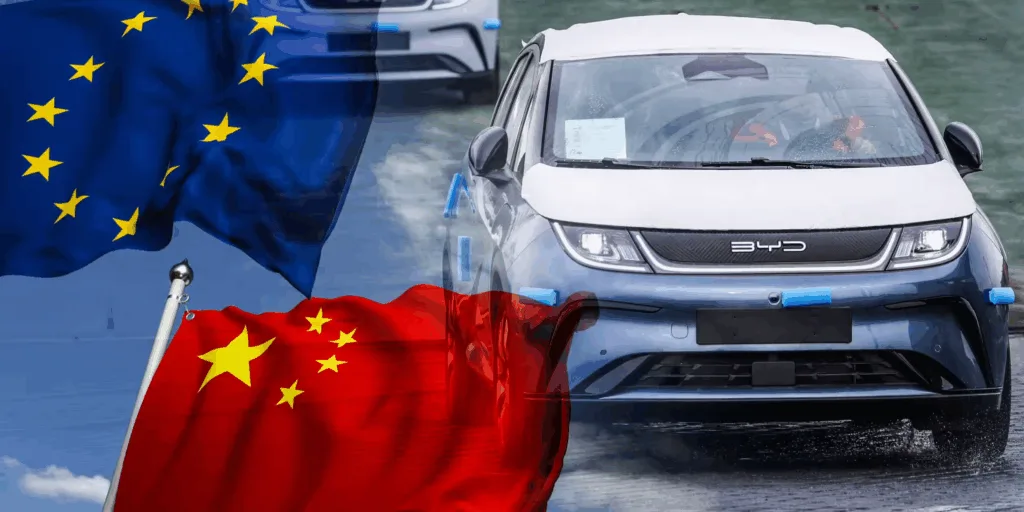
European Consumers: You’re the clear winners here. The agreement prevents sudden price spikes that would have made EVs less affordable precisely when the continent needs mass adoption most. Expect relatively stable pricing with continued competitive pressure keeping costs in check.
Chinese Manufacturers: BYD, NIO, and others avoid the nightmare scenario of being priced out of Europe entirely. They keep their hard-won market position but must play by clearer rules regarding subsidies and pricing strategies.
European Automakers: Volkswagen, Stellantis, and others bought themselves four critical years to accelerate EV development and scale production. The question remains: Will they use this gift wisely or squander it complaining about competition?
The Supply Chain: Battery producers, component manufacturers, and automotive workers across Europe and Asia gain the stability needed for long-term planning and investment.
The Bigger Picture: Beyond Brussels and Beijing
This agreement matters far beyond electric vehicles. It sets a crucial precedent for how major economies navigate the treacherous waters of clean energy competition in an increasingly protectionist world.
Trade wars are economically destructive, hurting consumers through higher prices while disrupting supply chains that took decades to build. The EU-China EV deal demonstrates that even fierce competitors can find middle ground when the stakes are high enough.
Global implications include:
✓ A roadmap for US-China negotiations on similar issues
✓ Proof that climate goals and trade concerns aren’t mutually exclusive
✓ Reduced risk of cascading retaliatory measures across sectors
✓ Increased investor confidence in the EV market’s stability
What Happens Next?
Implementation begins immediately, with the transitional framework kicking in as planned tariff increases are shelved. Over the next four years, scheduled reviews will assess compliance and market conditions, potentially adjusting terms as the EV landscape evolves.
European manufacturers now face a crucial test: Can they leverage this breathing room to build genuinely competitive electric vehicles? Or will 2029 arrive with European brands still playing catch-up?
Chinese manufacturers, meanwhile, must navigate the new framework while maintaining their competitive edge. The subsidy question—long a sore point for European officials—will remain under close scrutiny.
The Unanswered Questions
Not everything is resolved. This agreement specifically addresses electric vehicle tariffs, but broader EU-China trade tensions simmer on. Issues ranging from solar panels to critical minerals remain contentious.
Technology transfer provisions hint at potential joint ventures and cooperation—but details remain murky. Will we see Chinese-European EV partnerships emerge? Could this lead to manufacturing facilities bringing Chinese technology and European design expertise under one roof?
The Bottom Line: Stability Wins
In a world increasingly defined by economic nationalism and trade conflicts, the EU-China electric vehicle tariff agreement stands out as a rare example of pragmatic problem-solving. Both sides came to the table recognizing that mutual destruction benefits nobody.
For consumers, this means continued access to diverse, competitive EV options at reasonable prices. For the planet, it means avoiding disruptions to the electric vehicle transition precisely when momentum is building. For manufacturers, it means clarity to plan, invest, and compete.
The global electric vehicle market just dodged a bullet. Now comes the hard part: ensuring that this four-year window produces genuine progress rather than merely postponing inevitable conflicts.
The road to an electric future just got a little smoother. Whether Europe’s automakers use this on-ramp wisely will define not just their own futures, but the pace of the world’s transition away from fossil fuels.

