

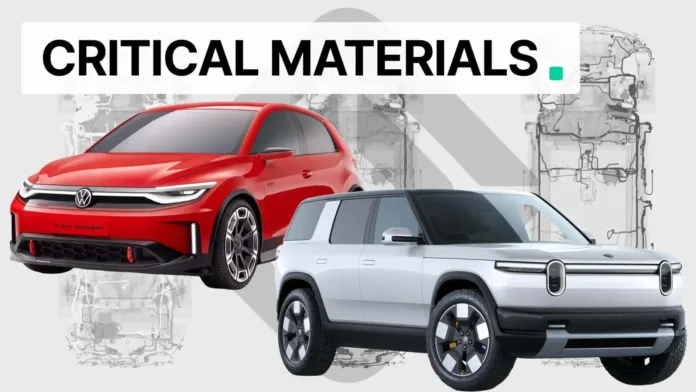

What happens when a scrappy American EV startup teams up with a German automotive giant? They might just rewrite the rulebook for the entire car industry. Rivian and Volkswagen aren’t content with just building their own electric vehicles—they’re planning to become the software backbone for automakers worldwide.
Table of Contents
The $5.8 Billion Partnership That Changes Everything
This isn’t your typical collaboration. Volkswagen invested a staggering $5.8 billion in Rivian, creating a joint venture that’s now preparing to sell their co-developed electrical architecture to other car manufacturers. Think of it as the “Android for automobiles”—a standardized tech platform that anyone can license.
What’s Being Offered?
| Component | Details |
|---|---|
| Zonal Architecture | Advanced electrical platform for all vehicle types |
| Software Stack | Shared computing platforms across brands |
| Scalability | Works for EVs and potentially combustion vehicles |
| Target Market | Rivian, Audi, Porsche, and future third-party automakers |
| Joint Venture Name | Rivian and Volkswagen Group Technologies |
Why This Matters Now
“We’re solving a problem not only for Rivian and VW, but we’re solving a problem for the larger automotive industry,” explains Wassym Bensaid, Rivian’s chief software officer and co-head of the joint venture. The vision? Create a standard technology stack that eliminates the need for every automaker to reinvent the wheel.
For Rivian, this partnership provides access to Volkswagen’s massive scale, securing cheaper electronics that would be prohibitively expensive for a startup. For VW, it’s a lifeline during turbulent times.
Reading Between the Lines: VW’s Strategic Pivot
Here’s the uncomfortable truth: Volkswagen went “really, really heavy towards EVs globally” and now faces the consequences. With slowing U.S. EV demand and expiring federal tax incentives, VW’s brands are feeling the squeeze.
The Warning Signs
Porsche abandoned plans to build EV batteries in-house in August, shifting focus back to research and development instead of manufacturing.
Audi sounded alarms in March about losing ground, reviewing its earlier commitment to stop introducing new gas models in 2026.
“They stopped innovating anything really on the ICE side,” notes Alan Haig, president of Haig Partners. “I feel bad for Audi dealers…they have these expensive facilities that Audi required them to build, but they’re not getting near enough volume to justify the investment.”
From “All-In on EVs” to “Tech for Everyone”
This strategic shift reveals something crucial: VW is pivoting from being an EV-only manufacturer to becoming a technology provider for the entire industry. It’s a hedge against market uncertainty and a potential goldmine.
The Revenue Revolution
By licensing their platform to other automakers, both Rivian and VW unlock a high-margin revenue stream that doesn’t depend on selling individual vehicles. It’s the difference between selling hammers and collecting royalties every time someone builds a house.
What This Means for Dealers and Consumers
Short Term Challenges:
- Audi and Porsche dealers manage thin EV demand
- Costly facility requirements without sufficient volume
- Market uncertainty around EV adoption rates
Long Term Opportunities:
- Faster product updates across brands
- Lower development costs passed to consumers
- Clearer roadmap for both EV and combustion inventory
- Standardized tech means easier servicing and updates
The Bigger Picture
Rivian and Volkswagen aren’t just building cars—they’re positioning themselves as the Intel or Microsoft of the automotive world. Just as Windows powered countless PC manufacturers, this joint venture could power vehicles from dozens of brands.
The platform’s potential extension to combustion vehicles is particularly savvy. While the world transitions to electric, automakers still need cutting-edge software for traditional cars. Rivian and VW are ready to provide it.
Bottom Line: A Game-Changing Bet
This partnership represents automotive’s future: specialized companies providing core technology while brands focus on design, marketing, and customer experience. For an industry historically built on vertical integration, it’s revolutionary.
Whether you’re a car enthusiast, industry professional, or investor, watch this space closely. Rivian and Volkswagen just made a bet that could either rescue both companies or redefine how every vehicle on the road is built.

