

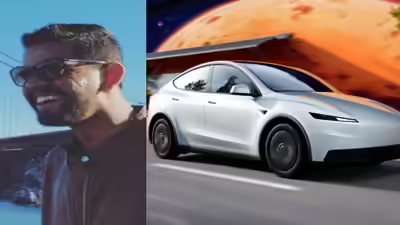

In a move that’s sending ripples through the electric vehicle industry, Siddhant Awasthi, the program manager for Tesla’s Cybertruck and Model 3, announced his departure from the company after eight years. His exit marks the end of one of Silicon Valley’s most remarkable career trajectories—from intern to leading two of Tesla’s most critical programs before turning 30.
Table of Contents
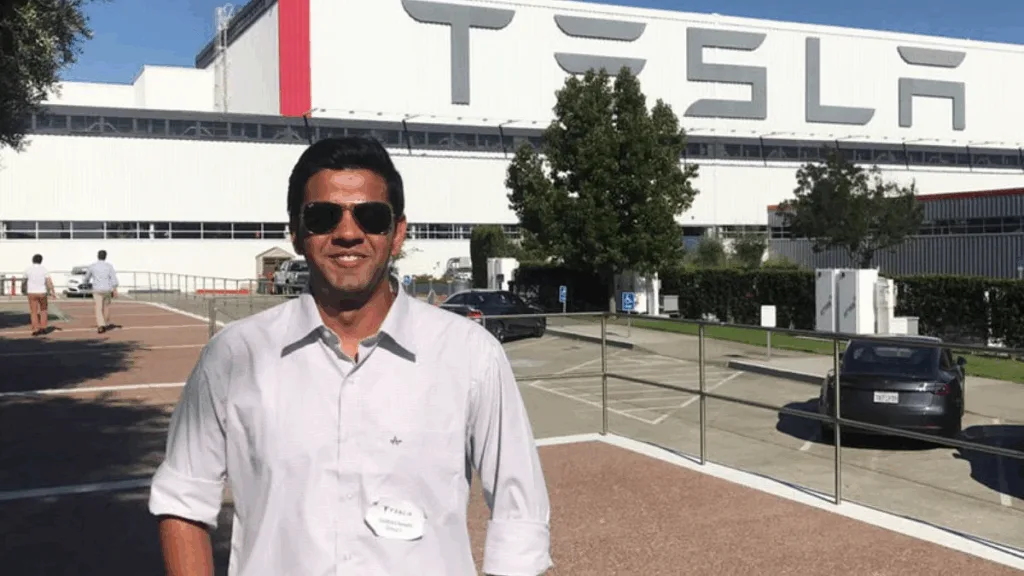
Siddhant Awasthi: From Campus Dreams to Cybertruck Reality
Awasthi began as an intern at Tesla straight out of college in 2017, working on hyperloop projects before joining full-time in 2018. What followed was a meteoric rise that would make even seasoned executives envious.
“Eight years ago, when I started as an intern, I never dreamed I’d one day have the opportunity to lead the Cybertruck program and bring it to reality,” Awasthi wrote in his LinkedIn post.
His journey wasn’t just about climbing the corporate ladder—it was about reshaping Tesla’s engineering DNA from the inside.
The Milestones That Defined a Career
Here’s how Awasthi transformed Tesla’s electric vehicle programs during his tenure:
| Timeline | Achievement | Impact |
|---|---|---|
| 2017 | Started as intern | Worked on hyperloop school programs |
| 2018 | Joined full-time | Model 3 production ramp-up phase |
| 2020 | Engineering Manager | Led projects at Giga Shanghai |
| 2021 | Senior Technical PM | Developed Cybertruck’s revolutionary 48-volt architecture |
| Late 2022 | Cybertruck Program Head | Oversaw engineering to mass production |
| July 2024 | Added Model 3 Leadership | Managed two flagship programs simultaneously |
The Cybertruck Legacy: Success Amid Controversy
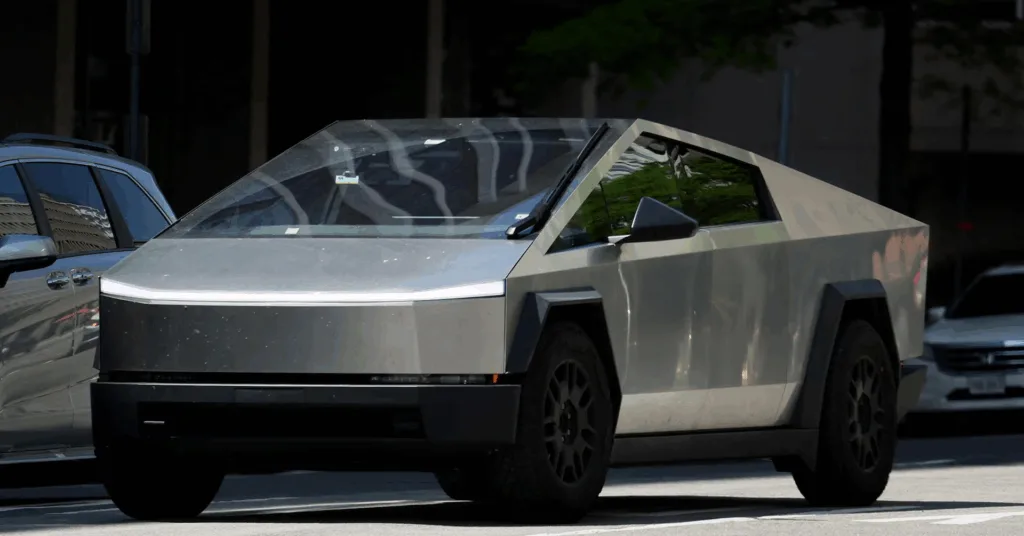
Under Awasthi’s leadership, the Cybertruck progressed from its engineering phase to large-scale production, with efforts focused on product strategy, quality enhancements, and supply chain management.
By the numbers:
- 55,000+ Cybertrucks delivered through September 2025
- Became America’s leading electric pickup despite polarizing design
- Monthly deliveries peaked at 5,000+ units in mid-2024
- Recent Q3 2025 deliveries fell to approximately 5,400 units—averaging around 1,800 monthly
The truck first unveiled by CEO Elon Musk in 2019 has been both praised as a technological marvel and criticized for production challenges. Tesla recalled more than 63,000 Cybertrucks for various issues, including concerns about exterior panels detaching while driving.
Yet despite these hurdles, Awasthi steered the program through uncharted territory, delivering a vehicle unlike anything the automotive world had seen.
The 48-Volt Revolution
One of Awasthi’s most significant technical contributions was leading the development of the Cybertruck’s 48-volt electrical architecture—a radical departure from the industry-standard 12-volt system. This innovation:
- Reduces wiring weight by up to 75%
- Enables more efficient power distribution
- Simplifies electronic integration
- Sets new industry benchmarks for EV design
Within 3 years at Tesla, he was a senior technical program manager in charge of the Cybertruck’s 48-volt architecture, showcasing his technical prowess and leadership potential.
A Broader Exodus at Tesla
Awasthi’s departure isn’t happening in isolation. His exit follows a series of departures this year, including David Lau, Tesla’s long-serving vice president of software engineering, who left for OpenAI after nearly 13 years at the company.
The leadership churn comes as Tesla shifts its strategic focus toward autonomous driving initiatives such as robotaxis and humanoid robotics, while simultaneously contending with cooling consumer demand and the expiration of US tax credits that supported sales earlier in the year.
The timing is particularly delicate. Tesla’s record third-quarter 2024 deliveries were largely fueled by American consumers rushing to take advantage of a $7,500 federal EV tax credit before its expiration, and analysts forecast potential sales drops without this incentive.
The Tesla Philosophy: Promote From Within
Awasthi exemplifies Tesla’s transition into fostering inside leadership rather than outside hiring. Over the last 5 years, Tesla has virtually had no significant outside hires into high-level leadership roles—it almost exclusively promotes from within.
This approach has both champions and critics. Supporters argue it creates fierce loyalty and deep institutional knowledge. Skeptics worry about lack of diverse perspectives and experience gaps in managing complex, large-scale programs.
What’s Next?
Awasthi did not specify what he’ll do next, leaving the tech world speculating about his next move. In his farewell message, he reflected:
“It’s tough to sum up eight years in just a few lines, but what a thrilling journey it’s been: ramping up Model 3, working on Giga Shanghai, developing new electronics and wireless architectures, and delivering the once-in-a-lifetime Cybertruck—all before hitting 30.”
Tesla hasn’t announced Awasthi’s replacement, leaving questions about leadership continuity for the Cybertruck program. The company now faces the challenge of maintaining production momentum and addressing softening demand without its experienced program manager at the helm.
The Bottom Line
Siddhant Awasthi’s story is a testament to what’s possible when talent meets opportunity in the high-stakes world of electric vehicles. From intern to program manager of one of the automotive industry’s most ambitious projects, he delivered results that will influence EV design for years to come.
As Tesla navigates an increasingly competitive landscape—with rivals like Rivian, Ford, and GM launching aggressive electric pickup strategies—the departure of key leaders like Awasthi raises questions about execution continuity during a critical growth phase.

