

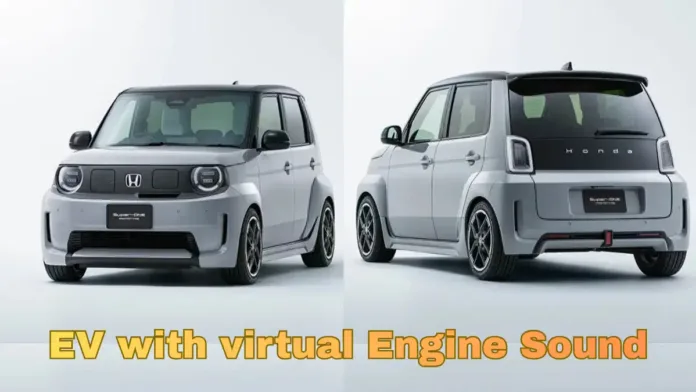

Here’s something nobody saw coming: Honda’s about to make electric vehicles feel like driving your old VTEC Honda—complete with gear shifts you can feel, engine sounds you can hear, and even that satisfying kickdown when you floor it. No, it hasn’t lost its mind. They’ve cracked the code on making EVs emotionally engaging.
Table of Contents
The Problem Honda Is Solving: EVs Are Too… Smooth
Electric vehicles are brilliant—instant torque, whisper-quiet operation, zero emissions. But for driving enthusiasts raised on screaming naturally-aspirated engines and perfectly timed downshifts, EVs can feel clinical. Soulless, even.
It listened to the complaints and responded with something radical: the 7-speed simulated transmission debuting in the Super-ONE prototype and coming to future Honda EVs. This isn’t fake theater—it’s sophisticated engineering that manipulates real motor behavior to recreate ICE sensations.
Honda Super-ONE: Where It All Begins
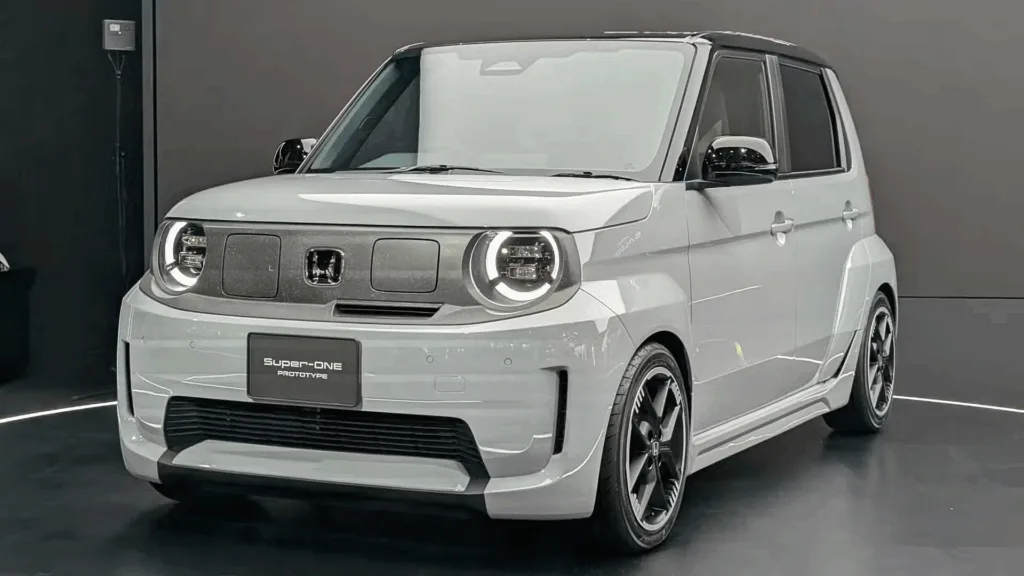
The technology debuts with the Super-ONE Prototype showcased at the Japan Mobility Show 2025. This compact Kei-car-sized EV is scheduled for launch in Japan in 2026, followed by UK and Asian markets.
Honda Super-ONE Key Specifications
| Feature | Specification |
|---|---|
| Segment | A-segment compact EV (Kei car class) |
| Platform | New lightweight EV architecture |
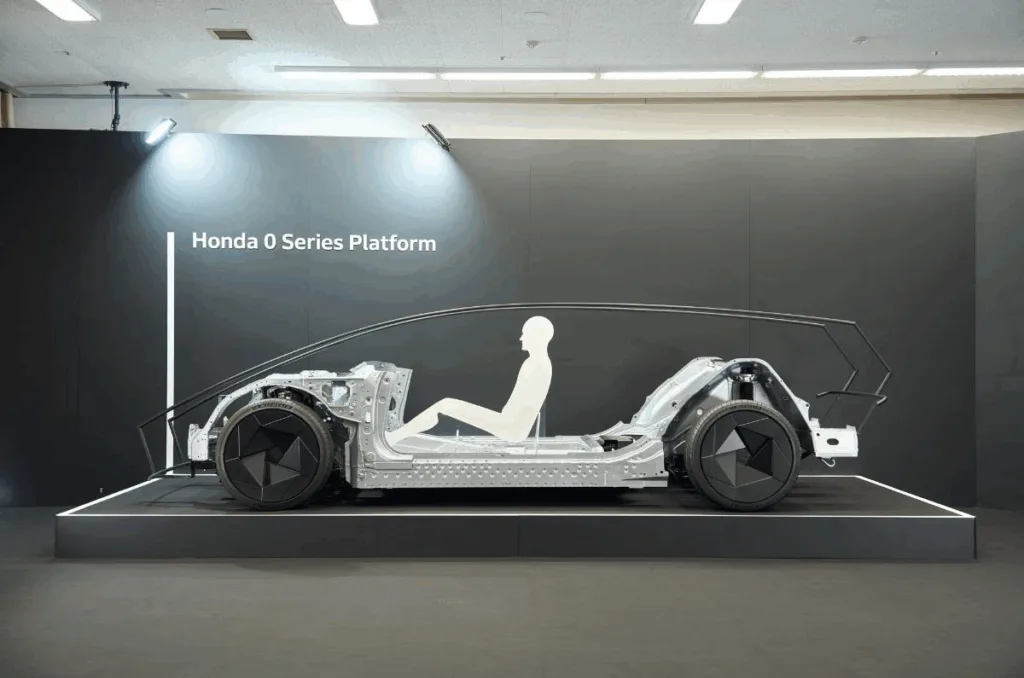
| Battery Position | Low-mounted, center-positioned thin pack |
| Weight Class | One of the lightest bodies in A-segment EVs |
| Center of Gravity | Lower than conventional gasoline compact cars |
| Simulated Transmission | 7-speed with Active Sound Control |
| Drive Modes | Standard + Boost Mode |
| Launch Timeline | Japan 2026, UK/Asia later |
| Target Markets | Global (India-bound 0 Series EVs may also get tech) |
The thin battery pack positioned low and centered improves both balance and handling, delivering high responsiveness to driver inputs and stable cornering—the foundation it needed before adding simulated driving dynamics on top.
How The 7-Speed Simulation Actually Works
This isn’t just sound effects through speakers. Honda’s system is frighteningly sophisticated:
Real-Time Calculations:
- Simulated engine speed and gear positions calculated continuously
- Based on accelerator input, vehicle speed, and cornering behavior
- Driving force and response optimized for each “gear”
- Creates genuine sense of oneness between driver and vehicle
Physical Sensations:
- Kickdown shock during hard acceleration (mimics downshifting)
- Fuel cut simulation during deceleration (temporary power interruption like ICE engines)
- Sharp gearshift feel through motor torque manipulation
- Paddle shifters allow manual “shifting” control
Audio Integration:
- Active Sound Control generates engine sounds synchronized with acceleration
- Sound profiles vary by selected vehicle character (CRX, Formula 1, NSX, S2000 modes confirmed for testing)
- Volume and tone adjust based on throttle position and “gear”
It successfully integrated the driving feel developed through years of ICE development into its EVs, bridging emotional connection without sacrificing EV benefits.
Boost Mode: Unleashing Full Performance
Beyond the simulated transmission, It developed Boost Mode exclusively for the Super-ONE and future performance EVs.
When activated, Boost Mode:
- Increases power output to maximum capacity
- Synchronizes the 7-speed simulation for aggressive shifting
- Amplifies engine sound through Active Sound Control
- Delivers sharp gearshift sensations
It’s the electric equivalent of it’s legendary VTEC engagement—that moment where everything comes alive and the car transforms from commuter to canyon carver.
S+ Shift: Hybrids Get The Same Magic
Honda isn’t restricting this technology to pure EVs. The S+ Shift system debuting in the 2026 Prelude brings similar simulated shifting to Honda’s next-generation e:HEV hybrids.
S+ Shift System Overview
| Feature | Details |
|---|---|
| Debut Vehicle | 2026 Honda Prelude (hybrid coupe) |
| Transmission Type | e:HEV with lockup clutch (no CVT belts) |
| Simulated Gears | 8-speed automatic feel |
| Control Method | Real engine RPM manipulation + electric motor coordination |
| Manual Control | Paddle shifters for driver engagement |
| Sound System | Active Sound Control synchronized with shifts |
| Coming To | Next-gen Civic Hybrid, Accord Hybrid, CR-V Hybrid (2027+) |
Unlike competitors like Hyundai (which uses purely virtual systems in the Ioniq 5 N), Honda manipulates actual engine RPM alongside motor output—creating more authentic sensations rather than purely synthetic effects.
The Competitive Advantage: Real Engine + Electric Motor
Honda’s approach differs fundamentally from pure EV simulation attempts:
Honda’s Method:
- Uses real combustion engine RPM changes (in hybrids)
- Electric motor torque manipulation creates shift shocks
- Active Sound Control amplifies existing engine sounds
- Lockup clutch connects/disconnects engine dynamically
Competitor Methods (Example: Hyundai Ioniq 5 N):
- Purely virtual simulation through software
- No mechanical connection to mimic
- Relies entirely on speaker-generated sounds
- Electric motor programming for sensation
Honda Vice President of Electrification Strategy confirmed they’re exploring monetization of premium features—meaning certain sound profiles (like Formula 1 or NSX character modes) might be subscription-based add-ons.
Beyond Gimmicks: Genuine Engineering Purpose
Skeptics will dismiss this as unnecessary theater, but Honda’s engineering reveals deeper purpose:
Enhanced Driver Engagement:
- Maintains emotional connection during EV transition
- Appeals to enthusiasts hesitant about electric powertrains
- Preserves Honda’s “joy of driving” brand identity
Intuitive Power Management:
- Simulated gears help drivers understand power delivery
- Provides familiar reference points for acceleration
- Makes EV/hybrid operation more intuitive for ICE converts
Commercial Viability:
- Differentiates Honda EVs in crowded marketplace
- Creates premium feature tier for higher-margin models
- Addresses major buyer objection (EVs feel disconnected)
Coming Soon: 0 Series EVs For Global Markets
While the Super-ONE targets Japan initially, Honda’s 0 Series EVs scheduled for global launch starting in 2026 may incorporate similar technology.
Honda 0 Series Timeline:
| Milestone | Date |
|---|---|
| 0 Series Saloon Production (Ohio, USA) | 2026 |
| First 0 Series Global Deliveries | 2026 |
| Total 0 Series Models Planned | 7 vehicles by 2030 |
| New 0 Series Concept Reveal | CES 2025 (January) |
| Possible India Entry | 2026-2027 (speculation) |
Honda hasn’t officially confirmed whether 0 Series EVs will get the simulated transmission, but given the technology’s development exclusively for next-gen platforms, integration seems inevitable.
The India Connection: Will We Get It?
Honda’s statement is cautiously optimistic: “While there is no official confirmation, it is possible that these new innovations could also be introduced with the India-bound 0 Series EVs.”
Given India’s enthusiast car culture and Honda’s historical commitment to “fun-to-drive” products here (remember the City VTEC, Jazz, and Civic?), omitting this technology would be strategic misstep.
The Philosophy: Environment + Safety + Joy
At Honda’s Automotive Technology Workshop, the company reaffirmed its commitment to three pillars:
- Environment: Carbon neutrality for all products by 2050
- Safety: Zero traffic fatalities involving Honda vehicles by 2050
- Joy of Driving: Emotional engagement regardless of powertrain
The simulated transmission directly serves that third pillar—proving you don’t have to sacrifice driving pleasure for sustainability.
The Bottom Line: Bridging Two Eras
Honda’s approach to simulated gear shifts and engine sounds isn’t about rejecting electric vehicles—it’s about carrying forward the soul of driving into a new era.
For the generation that grew up with VTEC screaming at 8,000 RPM, the Super-ONE’s 7-speed simulation and Boost Mode offer familiar thrills without fossil fuels. For new drivers who’ve never experienced manual transmissions, it provides engaging control without intimidating clutch pedals.
Is it necessary? No.
Is it authentic? Debatable.
Will it make Honda EVs more desirable? Absolutely.
In a world where most EVs feel like appliances on wheels, Honda is betting that emotion, engagement, and engineering theater still matter—even when electrons replace explosions.
And judging by enthusiast reactions to the Super-ONE reveal, they might just be right.

