



Imagine controlling 63% of an entire country’s charging infrastructure while competitors struggle to reach double digits. That’s exactly where Bolt.Earth stands today—and they’re about to make history.
Table of Contents
The Game-Changing Announcement
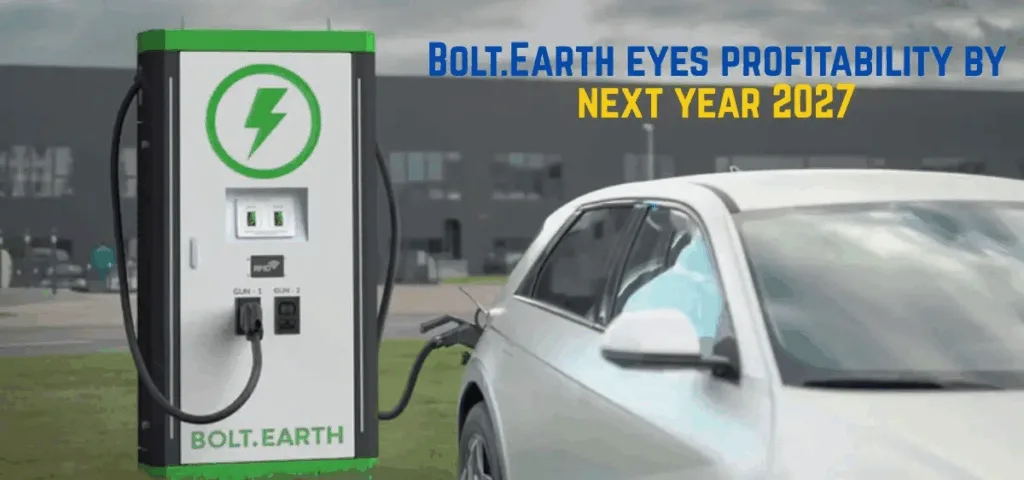
India’s largest electric vehicle charging network, Bolt.Earth, expects to turn profitable in FY27, followed by an IPO shortly after, making them potentially the first EV charging network provider globally to achieve profitability. In an industry where burning cash is the norm, this Bengaluru-based startup is rewriting the playbook.
The Numbers That Tell the Story
Here’s what makes Bolt.Earth’s journey remarkable:
| Metric | Current Status | Future Target |
|---|---|---|
| Market Share | 63% of India’s public charging | Expanding |
| Chargers Deployed | 100,000+ across 1,800 cities | 1 million annually by 2028 |
| Revenue (FY25) | ~$5 million | $20 million (FY26) |
| Coverage | Pan-India (including Lakshadweep) | Global expansion planned |
The Secret Sauce: An Airbnb Model for Charging
While competitors deploy chargers at their own cost and wait years to recover investments, Bolt.Earth operates on an Airbnb-style model, partnering with hosts like apartments, commercial buildings, and office complexes to set up charging stations. This contrarian approach is their ticket to early profitability.
Think about it: Instead of owning every charger, they empower others to host them. The result? Rapid deployment without massive capital expenditure.
Why India Needed This Different Approach
While many players rushed into four-wheeler fast charging mimicking Western markets, Bolt.Earth prioritized accessible charging for two and three-wheelers—vehicles that account for nearly 90% of India’s roads, with over 60% of new three-wheelers already electric and two-wheeler EV penetration climbing toward 40%.
They understood what others missed: India isn’t America or Europe. The real volume is in scooters and auto-rickshaws, not sedans.
From Startup to Industry Leader: The Journey
2017: Started as an operating system for EVs (since phased out)
2020: Pivoted to EV charging infrastructure
2023: Raised $20 million, deployed 30,000 charging points
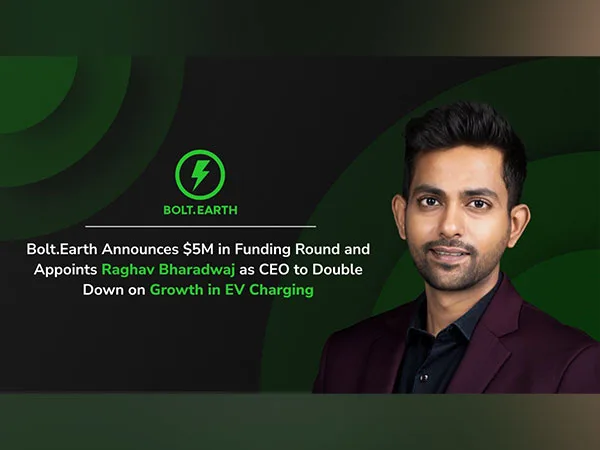
2025: Raised additional $5 million in Series A+ round led by Version One Ventures, appointed S. Raghav Bharadwaj as CEO
2026: Profitability target
2027: IPO expected
The Vertical Integration Advantage
What sets Bolt.Earth apart? They control everything:
- Hardware: Building their own chargers (3.3 kW to 240 kW)
- Software: Proprietary charging management system
- Services: Installation, maintenance, 24/7 support
This vertically integrated approach allows them to control the end-to-end charging experience and scale quickly, from utility companies to EV users.
Strategic Partnerships Powering Growth
Bolt.Earth isn’t going solo. They’ve partnered with heavyweight brands:
- Bajaj
- Mahindra
- Ather Energy
- Piaggio
- Siemens
- SAP
- American Express
- Brigade Group
Plus, their integration with ChargeZone added over 350 fast chargers to their network, positioning the Bolt.Earth app as a one-stop solution where users can seamlessly access and pay for charging services from any provider.
The Innovation Pipeline
Bolt.Earth isn’t standing still. They’re developing:
- Blaze DC: Fast chargers for two and three-wheelers
- Lightning DC Series: Ultra-fast chargers up to 240 kW for four-wheelers
- Interoperability Platform: Making all charging networks accessible through one app
Real People, Real Impact
From the owner of an apartment complex in Bangalore: “We’ve been using their service for over two years now. From installation to the app and fast chargers, everything has been seamless. Plus, having a dedicated team to resolve any issues makes a huge difference!”
The Road to 1 Million Chargers
Having already deployed over 100,000 chargers across 1,800 cities and towns, the company aims to deploy 1 million chargers annually by 2028. That’s aggressive growth by any measure—equivalent to adding nearly 2,740 chargers every single day.
What Makes Profitability Possible?
Unlike traditional charging networks that operate chargers themselves and wait years for ROI, Bolt.Earth’s model generates revenue immediately:
- Upfront sales of charging hardware to hosts
- Software subscription fees for their management platform
- Service contracts for maintenance and support
- Transaction fees from charging sessions
The IPO Timeline: What to Expect
CEO Raghav Bharadwaj stated they’re on track to become profitable early in 2026, likely the first EV charging company in the world to do so, with plans to explore additional funding and IPO options shortly after achieving profitability.
For investors, this represents a rare opportunity: a company in the booming EV sector that’s actually making money, not just promises.
Why This Matters for India’s EV Revolution
With the Indian government targeting 30% EV market share by 2030, charging infrastructure is the critical bottleneck. Bolt.Earth’s rapid expansion addresses this head-on, particularly in Tier-II and Tier-III cities where EV adoption is surging.
The company’s 90-95% focus on private charging environments—homes, apartments, workplaces—reflects where most charging actually happens, rather than overinvesting in public fast-charging that accounts for only a small share.
The Global Ambition
This isn’t just an India story. Bolt.Earth has expansion plans for Asia, Europe, South America, and Latin America. With their proven model and backing from investors like Union Square Ventures, Version One Ventures, and Prime Venture Partners, global domination isn’t far-fetched.
Final Thoughts
In a world where most EV charging companies are still figuring out how to stop losing money, Bolt.Earth is preparing to go public as a profitable enterprise. Their Airbnb-inspired model, India-first strategy, and vertical integration have created something rare: a sustainable business in an unsustainable industry.
For CEO Raghav Bharadwaj and his team, the message is clear: profitability first, IPO next, then world domination.

