

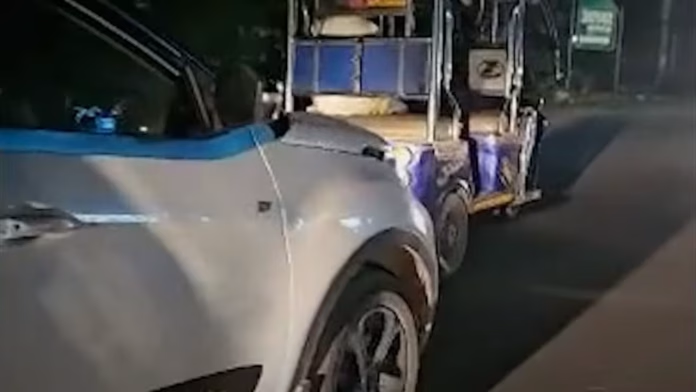

Imagine spending ₹15 lakh on a gleaming electric car, only to have a humble ₹1.5 lakh e-rickshaw come to your rescue when it breaks down. That’s exactly what happened on the streets of Alwar, Rajasthan—and the internet can’t stop talking about it.
This isn’t just another viral video. It’s a reality check about India’s electric vehicle revolution, infrastructure gaps, and the surprising heroes of our EV transition.
Table of Contents
The Viral Moment That Broke the Internet
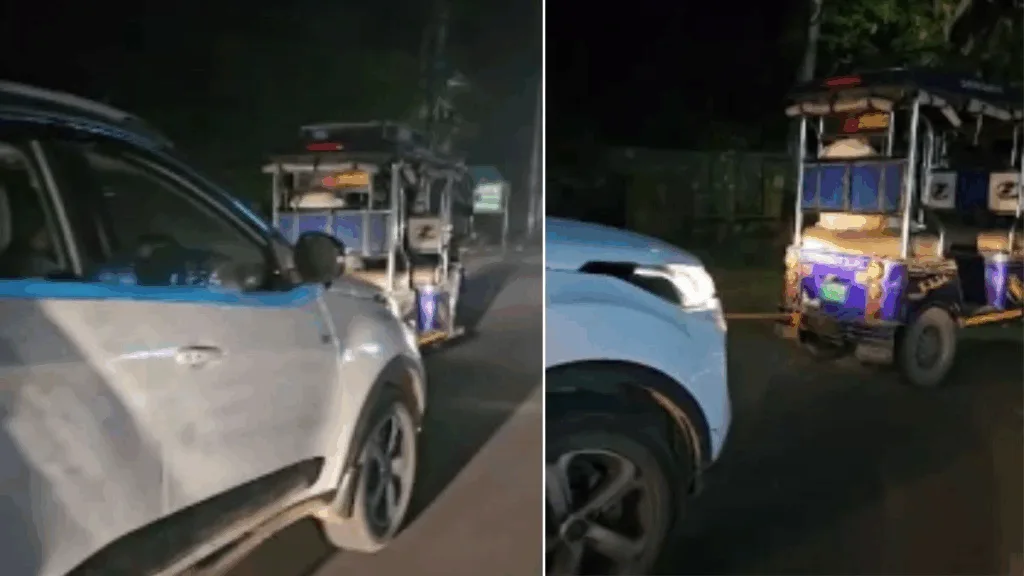
In Alwar, a Tata Nexon EV came to a complete halt in the middle of the road when its battery died. Instead of calling a tow truck, the owner summoned an e-rickshaw. What happened next became social media gold: a ₹1.5 lakh e-rickshaw pulled a ₹15 lakh electric car home using a simple rope.
The video sparked thousands of comments, with users pointing out the delicious irony: the “cheaper” electric vehicle rescuing its more expensive cousin. But beneath the humor lies a serious conversation about EV infrastructure, range anxiety, and the real champions of India’s electric mobility story.
The Unlikely Hero: India’s E-Rickshaw
While premium EV car owners worry about charging stations and range, e-rickshaws are quietly dominating India’s EV revolution. In 2023 alone, over 40,600 e-rickshaws from just one manufacturer (YC Electric) were sold, compared to 82,500 electric cars across the entire country.
Let that sink in. A single e-rickshaw manufacturer nearly matched half of India’s total electric car sales.
Why E-Rickshaws Rule Indian Roads
| Factor | E-Rickshaw | Electric Car (Tata Nexon EV) |
|---|---|---|
| Price Range | ₹58,000 – ₹2.15 lakh | ₹14 – ₹18 lakh |
| Monthly Sales | 44,000+ units | 6,800 units |
| Charging Infrastructure | Flexible (home/local stations) | Limited fast-charging network |
| Operating Cost | ₹0.50 – ₹1 per km | ₹1.50 – ₹2 per km |
| Market Penetration | 1.73 million sold (last decade) | Still emerging |
| Typical Range | 80-150 km | 250-400 km |
The Range Anxiety Reality Check
The Alwar incident happened when the EV car’s charging ran out completely. The driver tried multiple times to restart the vehicle but failed, ultimately calling an e-rickshaw to tow it home.
This exposes a harsh truth: India’s EV charging infrastructure, despite ambitious expansion plans, still leaves gaps that can strand even premium electric vehicle owners.
India’s Charging Infrastructure: The Numbers
While the government is pushing aggressive EV adoption, the ground reality tells a different story:
- 12,146 operational public EV charging stations across India (as of February 2024)
- 419 charging stations on national highways
- Target: One charging station every 25 km on highways
- Reality: Significant gaps remain, especially in tier-2 and tier-3 cities
Alwar, despite being in Rajasthan—a state actively promoting EVs—clearly has infrastructure gaps that can leave expensive electric cars helpless.
Why E-Rickshaws Never Face This Problem
E-rickshaws have become reliable transportation due to their affordability, ease of maintenance, and lower operational costs. Their compact size and maneuverability offer advantages in congested areas.
But the real secret? Flexibility and pragmatism.
E-rickshaw drivers charge wherever they can—at home, at local shops, at small neighborhood charging points. E-rickshaw prices range from ₹1 lakh to ₹4.50 lakh, and their battery-run nature ensures savings on fuel and maintenance. The lower battery capacity also means shorter, cheaper charging times.
They don’t need elaborate fast-charging networks. They’re designed for short-distance urban mobility, and they excel at it.
The Social Media Verdict
The Alwar video triggered a wave of reactions:
“Real power hai…” one user commented, highlighting the irony that the cheaper vehicle had to rescue the premium one.
“This is why I’m sticking to petrol” wrote another, reflecting lingering doubts about EV reliability.
“Don’t blame the car, blame the infrastructure” argued EV advocates, pointing out that better charging networks would prevent such incidents.
All perspectives have merit. But the incident perfectly captures India’s EV transition—aspirational yet infrastructure-constrained.
Lessons from the Streets of Alwar
1. Infrastructure Matters More Than Technology
You can own the most advanced electric car with a 400 km range, but if you can’t find a charging station when you need one, you’re stuck.
2. Affordability Drives Adoption
Around 1.73 million three-wheeler EVs have been sold in India in the last decade. Just last month, around 500 manufacturers sold over 44,000 e-rickshaws, compared to less than 6,800 electric cars.
E-rickshaws succeed because they’re accessible to the masses, not just the affluent.
3. The Last Mile Matters
In 2023, electric 3-wheelers made up 83% of India’s EV market, with around 15 lakh electric auto-rickshaws on Indian roads and 11,000 new e-rickshaws sold every month.
While we celebrate Tesla and Tata, e-rickshaws are doing the heavy lifting in India’s EV revolution.
What EV Car Owners Can Learn
Plan Your Routes: Always know where charging stations are located on your journey.
Monitor Battery Levels: Don’t let your charge drop below 20% unless you’re certain of the next charging point.
Keep Emergency Contacts: Whether it’s a tow service or—yes—a friendly e-rickshaw driver, have backup plans.
Support Infrastructure Development: Advocate for more charging stations in your locality.
The Bigger Picture: India’s EV Journey
The Alwar incident isn’t a failure—it’s a growing pain. India is undergoing a massive transportation transformation. E-rickshaws and e-autos are at the forefront of this change, helping reduce pollution while cutting the country’s reliance on imported fossil fuels.
The market for e-rickshaws is expected to reach $1.15 billion in 2024, projected to grow to $2.81 billion by 2029.
While premium electric cars capture imaginations, affordable electric three-wheelers are capturing market share—and making a tangible difference in reducing emissions.
Conclusion: Humble Heroes of the EV Revolution
The image of a simple e-rickshaw towing a sophisticated electric car might seem embarrassing to EV enthusiasts. But it’s actually beautiful in its own way.
It shows that India’s EV transition isn’t being led by international brands or premium products. It’s being driven—quite literally—by affordable, practical, unglamorous vehicles that ordinary Indians can buy, operate, and profit from.
The e-rickshaw that towed that Tata Nexon EV home? It wasn’t mocking the car. It was demonstrating what real, sustainable, mass-market electric mobility looks like.
Maybe we’ve been looking for EV heroes in the wrong places. They’re not in showrooms—they’re already on our streets, painted bright yellow and green, ferrying millions of Indians every single day.
Have you faced range anxiety with your EV? Or do you think e-rickshaws are the real MVPs of India’s electric revolution? Share your thoughts below!

