

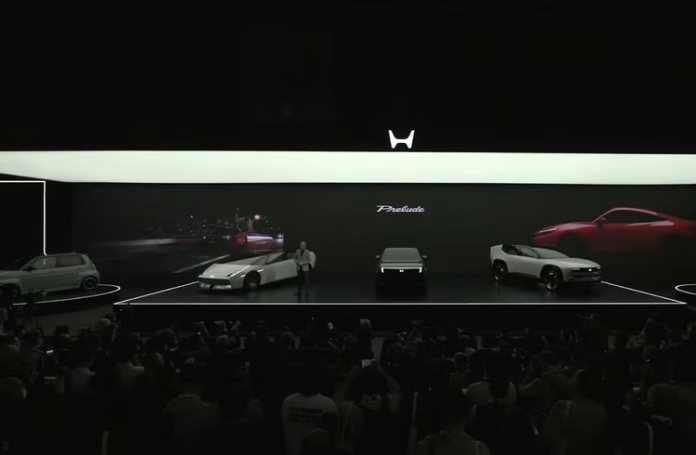

Picture this: You’re at the Japan Mobility Show 2025, and Honda’s CEO Toshihiro Mibe just dropped a bombshell. “We didn’t just electrify cars; we reimagined what they could be,” he declared, unveiling the Zero Series—Honda’s ambitious attempt to reclaim its place in the electric revolution.
But here’s the uncomfortable truth: While Honda EV was perfecting hybrid engines, Tesla, BYD, and Hyundai were eating their lunch in the EV market. Now, Mibe is racing against time to prove Honda isn’t just playing catch-up—they’re rewriting the rules.
Table of Contents
The Zero Series: Honda’s Bold Electric Gamble
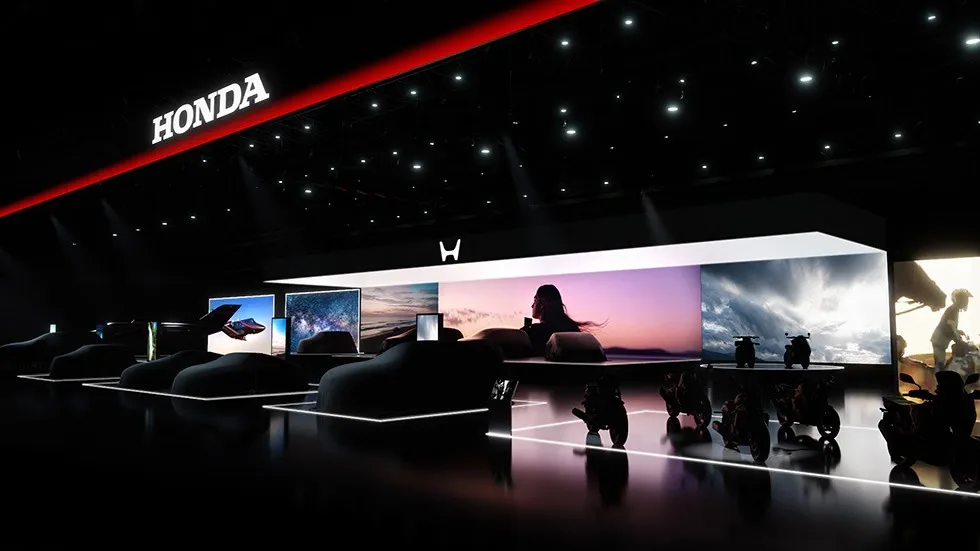
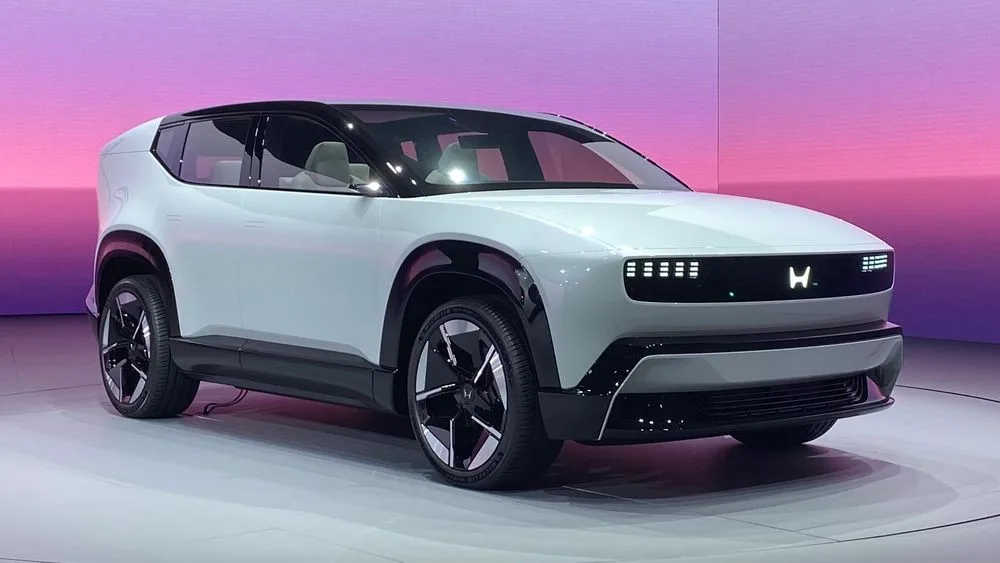
Honda EV introduced its Zero Series as a clean-sheet family of electric vehicles at the Japan Mobility Show 2025, featuring the Zero Saloon and Zero SUV built on a new EV architecture. Think of it as Honda hitting the reset button—starting from scratch, or “zero,” as they call it.
What makes this different? Honda’s unique “Thin, Light, and Wise” philosophy challenges the industry norm that EVs must be thick and heavy. Instead of bulky battery packs and heavyweight frames, Honda engineered sleek, efficient vehicles that feel more like sports cars than electric appliances.
These vehicles will be lighter than competitive electric models thanks to high-strength steel and high-pressure megacasting aluminum structures, reducing weight by 220 pounds while trimming the battery pack height by 6 percent. That’s the difference between a nimble performer and a sluggish commuter.
ASIMO OS: The Brain Behind the Beauty
Here’s where Honda EV gets interesting. Both models will run on Honda’s ASIMO OS, a proprietary operating system that learns driver preferences—yes, the same ASIMO that once delighted us with robotic dance moves is now powering Honda’s electric dreams.
These vehicles will incorporate software-defined vehicle (SDV) capabilities enabled by ASIMO OS and advanced driver assistance systems, powered by a high-performance chip developed with Renesas Electronics offering 2,000 TOPS of AI capability. Translation? Your Honda won’t just drive—it’ll understand you.
Imagine your car remembering your favorite seat position, climate preferences, and even predicting your morning coffee run. That’s “ultra-personal optimization” in action.
Honda’s Zero Series at a Glance
| Feature | Details |
|---|---|
| Launch Timeline | First-generation models debut in 2026 |
| Architecture | Thin, Light, and Wise platform |
| Operating System | ASIMO OS with AI learning |
| Weight Reduction | 220 lbs lighter than competitors |
| AI Performance | 2,000 TOPS processing power |
| Drive Options | Rear-wheel or all-wheel drive |
| Models Planned | 7 variants by 2030 (small, medium, large) |
The Uncomfortable Reality: Playing Catch-Up
Let’s be honest. Analysts note that competitors like Tesla, BYD, Hyundai, and Kia have already achieved greater EV scale and software maturity, pushing Honda to accelerate execution globally.
Due to recent market slowdown, Honda’s EV sales ratio in 2030 is now expected to fall below the previously announced target of 30 percent. That’s not just a miss—it’s a reality check.
But Mibe isn’t backing down. Honda EV is reassessing its EV strategy and roadmap, including plans for the EV product lineup and timing of relevant investments, while maintaining that EVs are the optimal solution to achieve carbon neutrality.
Speed Matters: Can Honda Deliver?
The automotive world has learned a harsh lesson: In EVs, speed of execution trumps legacy reputation.Honda EV’s technical blueprint looks solid—lightweight platforms, smart software, gradual adoption. But can they industrialize fast enough?
Success will depend on the speed of industrialization, cost efficiency, and software execution amid the rush of EVs from rivals both in India and globally. India, in particular, represents a critical battleground where affordability meets aspiration.
The Human Touch in an Electric World
Here’s what sets Honda apart: They’re obsessed with emotion. The Super One prototype, a compact EV, features a Boost Mode that simulates gear shifts and power delivery, while the Prelude hybrid demonstrates Honda’s commitment to driver involvement even as powertrains evolve.
While competitors race toward autonomous, soulless transportation pods, Honda is asking: Can an electric car still make your heart race?
The Verdict: Revolution or Too Late?
Honda’s Zero Series represents more than new cars—it’s a philosophical statement. The technical direction of lightweight platforms, proprietary operating systems, and gradual software adoption is sound, but market competitiveness will hinge on delivery timelines and ecosystem strength.
By 2030, Honda EV aims to increase total global automobile sales beyond the current 3.6 million units, targeting 2.2 million as hybrid electric vehicle sales, with the new “H mark” appearing on both future EVs and next-generation hybrids from 2027 onwards.
The question isn’t whether Honda can build great EVs—they undoubtedly can. The question is: Will customers wait for Honda EV while Tesla, BYD, and others are already parked in their driveways?
Only time will tell if Mibe’s bet on speed, scale, and software pays off—or if Honda’s electric dreams arrive fashionably late to a party that’s already ending.

