

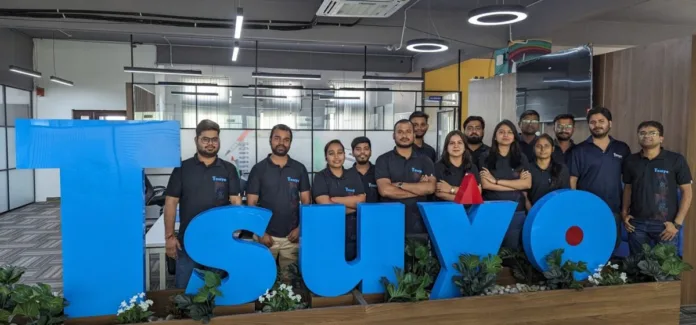

Delhi-based Tsuyo Manufacturing just secured ₹40 crore (approximately $4.5 million) in its pre-Series A funding round, marking a significant milestone for India’s homegrown electric vehicle powertrain industry. Led by Avaana Capital, this investment signals growing confidence in indigenous EV component manufacturing at a time when India desperately needs to reduce its import dependence.
Table of Contents
Breaking India’s Import Addiction
Here’s the uncomfortable truth about India’s EV revolution: we’re building electric vehicles with mostly foreign parts. Critical components like advanced battery cells, power electronics, and rare-earth magnet motors are still heavily imported, creating cost pressures and supply-chain vulnerabilities.
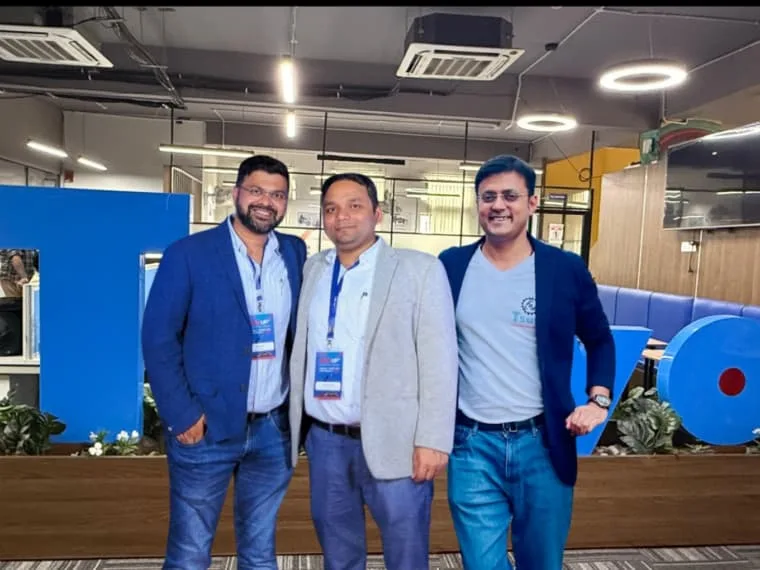
Tsuyo is tackling this problem head-on. Founded in 2020 by Vijay Kumar, Tripurari Kumar, and Lalit Baid, the company designs, develops, and manufactures electric motors, controllers, and integrated powertrain systems entirely in India. And they’re not just talking about localization—they’re delivering results.
What Makes Tsuyo Different?
In just four years, Tsuyo has shipped over 150,000 powertrain units across various EV segments. That’s not a typo. A startup founded during the pandemic has already supplied powertrains to more than 25 original equipment manufacturers, including heavy hitters like Hero, Mahindra, Volvo Eicher, Sonalika, Greaves, and Livguard.
But here’s what really sets them apart: Tsuyo holds 29 patentable innovations, including rare earth-free and hybrid magnet-based motors. In a world where China controls 90% of rare earth supplies, this technology isn’t just clever—it’s strategic.
Tsuyo Manufacturing Raises ₹40 Cr: The Funding Breakdown
| Funding Details | Information |
|---|---|
| Amount Raised | ₹40 crore ($4.5 million) |
| Round Type | Pre-Series A |
| Lead Investor | Avaana Capital |
| Founded | 2020 |
| Founders | Vijay Kumar, Tripurari Kumar, Lalit Baid |
| Manufacturing Units | 3 (including upcoming facility) |
| Powertrain Units Delivered | 150,000+ |
Where the Money’s Going
Tsuyo isn’t sitting on this capital. The company has crystal-clear plans for deployment:
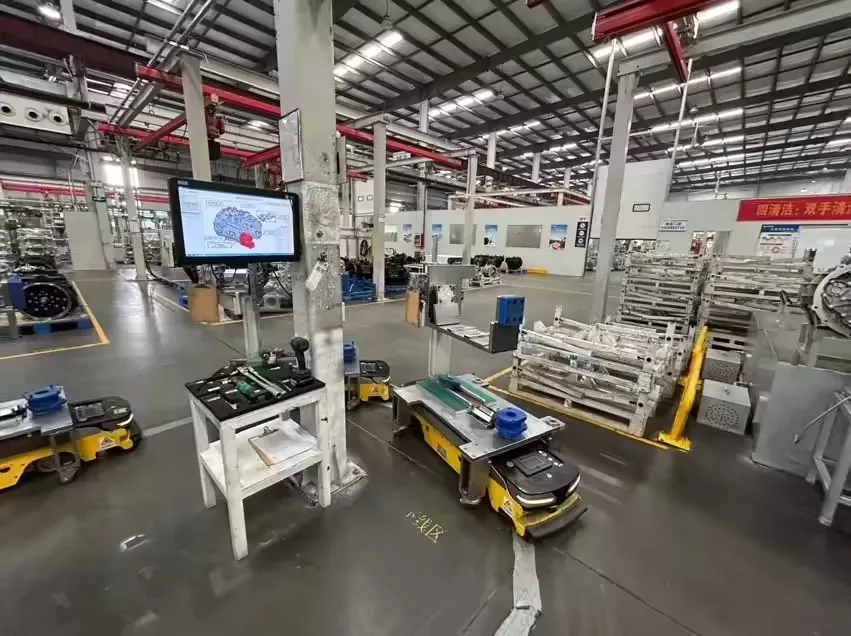
New Greenfield Facility: This will be Tsuyo’s third manufacturing unit, dedicated to producing high-wattage electric motors up to 250 kW and transmission assemblies. The facility will include a vehicle testing track and advanced end-of-line validation systems compliant with PM E-DRIVE and FAME standards.
Advanced R&D Center: The new research hub will concentrate on power electronics, embedded systems, and prototype development. Translation: more innovation, faster product cycles, and better solutions for heavy commercial vehicles.
Scaling Heavy Commercial Vehicle Solutions: Tsuyo is specifically targeting electrification and retrofit solutions for trucks, buses, and construction equipment—segments that represent the toughest technical challenges in EV adoption.
The Technology Edge
Tsuyo’s product portfolio reads like a comprehensive EV powertrain catalog. They manufacture:
- SPMSM, IPMSM, ACIM, SRM, and SynRM (magnet-less) motor technologies
- Vehicle Control Units (VCU)
- Transmission Control Units (TCU)
- DC-DC converters
- Gearboxes
- IoT systems
The company has filed four patents, with 25 more under development. They’re collaborating with IIT Delhi and VNIT Nagpur on research and participating in academic programs to support EV engineering education.
Why This Matters Now
India’s EV component manufacturing sector is experiencing robust expansion, driven by government backing and the broader electrification push. But growth means nothing if we’re just assembling imported parts.
The government’s Production Linked Incentive scheme incentivizes localized manufacturing. Tsuyo’s approach allows commercial vehicle manufacturers to leverage PLI benefits while reducing dependence on imports—a win-win scenario that strengthens India’s EV ecosystem.
Export Ambitions
Tsuyo isn’t content with dominating the domestic market. The company currently exports to Sri Lanka, Bangladesh, and the Philippines, with aggressive expansion plans into Southeast Asia, Japan, Korea, and Europe.
Think about that for a moment. A four-year-old Indian startup is exporting advanced powertrain technology to markets worldwide. That’s the kind of “Make in India” success story that deserves attention.
What the Investors Say
Vikas Verma, Venture Partner at Avaana Capital, didn’t mince words: “Tsuyo is building the backbone of India’s energy transition. Their vertically integrated powertrain, critical for electrification across automotive and industrial applications, exemplifies the kind of indigenous, scalable innovation that will define India’s role in building globally resilient supply chains.”
That’s venture capital speak for: “We found something special.”
The Road Ahead
Vijay Kumar, Founder and CEO, articulated Tsuyo’s mission clearly: “Our mission has always been to design and manufacture powertrain systems from India that compete at a global level. With Avaana’s support, we’re scaling high-wattage motor production and advancing deep-tech R&D.”
The company is focusing on magnet-less designs, novel winding approaches, and localized tooling—innovations that create more efficient, reliable, and sustainable powertrain solutions.
The Bigger Picture
Tsuyo’s success represents more than one company’s growth trajectory. It’s a proof point that India can develop and manufacture sophisticated EV components domestically. In an industry still dominated by Chinese technology and supply chains, that matters enormously.
The company has also been selected by MeitY for the ICE-to-EV retrofit project for commercial vehicles—another validation of their technical capabilities and strategic importance.
Final Thoughts
With this ₹40 crore infusion, Tsuyo is positioned to accelerate India’s transition from EV assembler to genuine EV component manufacturer. Their focus on heavy commercial vehicles, rare earth-free motors, and vertically integrated solutions addresses real market gaps.
As China pivots away from prioritizing EVs and global supply chains face increasing geopolitical pressure, companies like Tsuyo represent India’s opportunity to establish leadership in critical EV technologies. The race is on, and Tsuyo just got a significant boost.

