

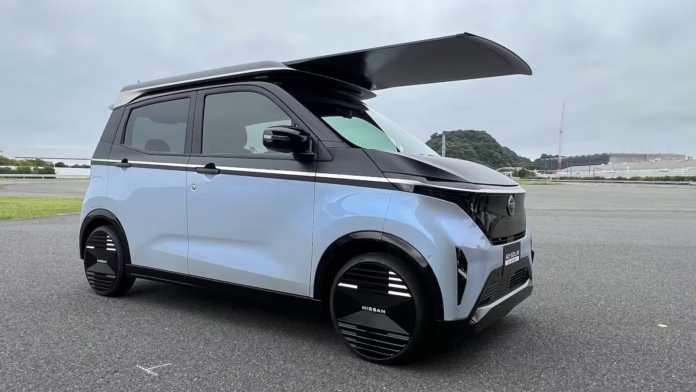

Imagine pulling into your driveway, stepping out of your electric car, and never worrying about finding a charging station again. No cables. No waiting. Just pure sunshine keeping you on the road. This isn’t science fiction—it’s Nissan’s latest breakthrough showcased at Japan Mobility Show 2025.
Table of Contents
The Car That Charges Itself
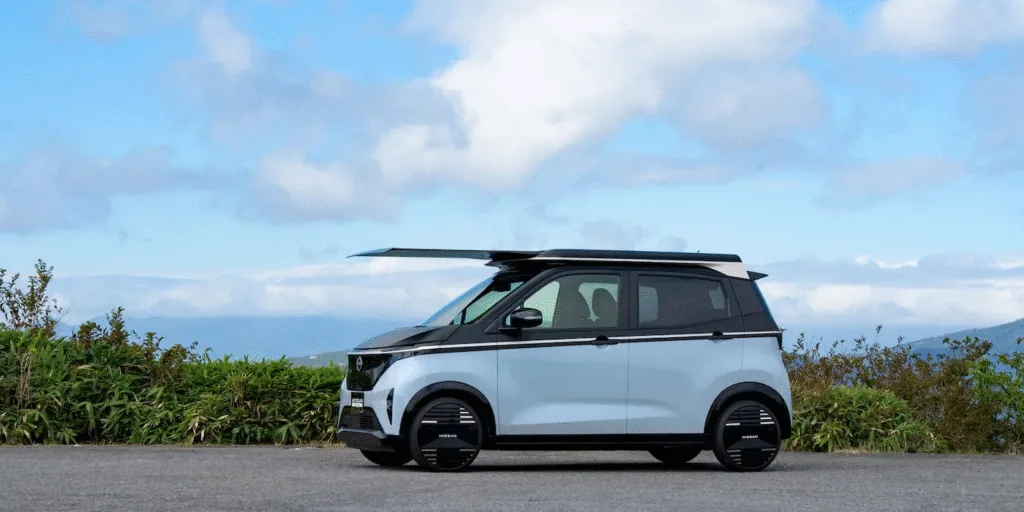
Nissan unveiled the Ao-Solar Extender prototype at this month’s Japan Mobility Show 2025—a revolutionary solar power generation system installed on the Nissan Sakura, Japan’s best-selling electric vehicle for three consecutive years.
The name “Ao-Solar” translates to “blue sky,” perfectly capturing the essence of this innovation. While other automakers have flirted with solar panels, Nissan has gone all-in with a system that could fundamentally change how we think about EV ownership.
Power from Above: The Numbers That Matter
Here’s what makes the Ao-Solar Extender a game-changer:
| Feature | Specification | Real-World Impact |
|---|---|---|
| Annual Solar Power | Up to 3,000 km of driving range | Covers most daily commutes entirely |
| Base Vehicle | Nissan Sakura (Kei EV) | Japan’s top-selling electric car |
| Panel Design | Electric sliding system | Maximizes sun exposure automatically |
| Grid Dependency | Significantly reduced | Lower electricity bills |
| Emergency Function | Backup power source | Energy during disasters |
Think about that 3,000-kilometer figure for a moment. Analysis of Sakura owner driving data reveals that many primarily travel short distances for errands and school runs, meaning solar-generated power could nearly eliminate the need for grid-based charging for a significant portion of owners.
Born from Innovation
The Ao-Solar Extender concept originated within Nissan’s 2021 internal idea contest—proof that breakthrough innovations often come from engineers who actually use the products they create. It took four years of development to transform a napkin sketch into a working prototype.
The system features an electric sliding mechanism, allowing the solar panels to extend beyond the car’s roofline when parked, soaking up maximum sunlight. When you’re driving, they retract seamlessly into the vehicle’s design.
Why This Matters Now
Japan faces unique mobility challenges. The country’s aging population creates transportation difficulties, while urban density makes public charging infrastructure expensive and space-consuming. Solar EVs address both issues elegantly.
But the implications extend far beyond Japan’s borders. Consider:
For Urban Dwellers: Apartment residents without home charging can finally join the EV revolution. Your parking space becomes your charging station.
For Rural Communities: Remote areas with limited charging infrastructure gain independence. The sun shines everywhere.
For Climate Goals: Renewable energy directly powers transportation, cutting the carbon footprint even further than conventional EVs.
For Emergency Preparedness: The solar system can serve as an emergency power source during disasters—critical in earthquake-prone regions.
The Bigger Picture
This technology exemplifies Nissan’s Re:Nissan strategy—a renewed commitment to delivering innovative products and mobility solutions that enhance customer experience. After facing financial headwinds in recent years, Nissan isn’t just surviving; they’re innovating where it counts.
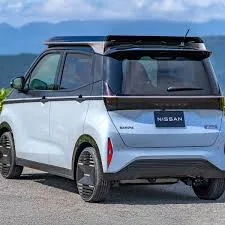
The Sakura itself represents smart engineering. It’s compact, efficient, and perfectly suited for Japan’s crowded cities. Adding solar technology transforms it from a practical city car into a statement about the future of mobility.
What Comes Next
The Ao-Solar Extender is planned for future commercial launch, though Nissan hasn’t announced specific timelines. The technology needs real-world testing across different climates and usage patterns.
But the vision is clear: EVs that harvest their own energy, reducing dependence on infrastructure and making sustainable transportation accessible to millions who currently can’t participate.
A New Dawn for EVs
The Ao-Solar Extender represents more than clever engineering—it’s a philosophical shift. Instead of building more charging stations, why not make cars that need them less?
For daily drivers averaging 30-40 kilometers per day, the math is compelling. That’s roughly 11,000-15,000 kilometers annually—and the Ao-Solar system could cover a quarter of that. Add workplace charging or occasional home top-ups, and grid electricity becomes optional rather than essential.
As battery technology improves and solar panel efficiency increases, these numbers will only get better. Today’s 3,000 kilometers could be tomorrow’s 5,000 or 10,000.
The future of electric mobility might not be in the ground beneath our feet—it could be in the sky above our heads. Nissan just showed us what that looks like, and it’s brilliant.

