

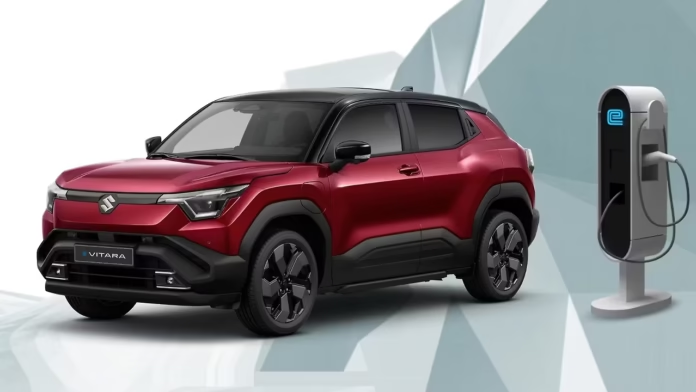

eVitara, India’s largest carmaker is about to do something it’s never done before: sell an electric car. And not just any electric car—a full-fledged SUV that could redefine what millions expect from Maruti Suzuki. The eVitara launches in December 2025, and the automotive world is holding its breath.
Table of Contents
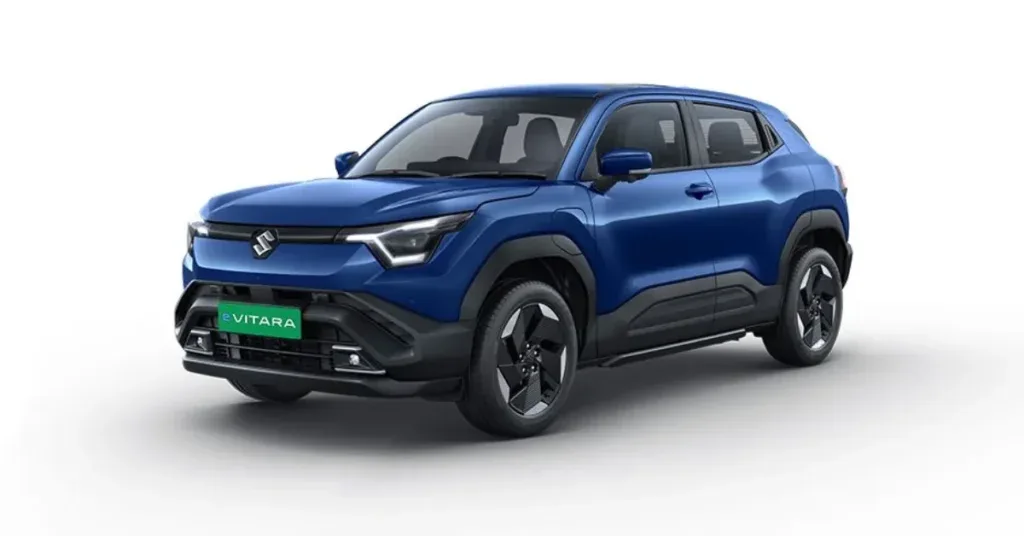
Why This Launch Changes Everything
Maruti Suzuki owns over 40% of India’s car market. When you dominate that thoroughly with petrol and diesel engines, going electric isn’t just launching a product—it’s making a statement about the future of mobility in India.
The eVitara, unveiled at the Bharat Mobility Expo 2025, represents Maruti’s biggest gamble in decades. And judging by the pre-launch buzz, they’re playing to win.
The Numbers That Matter
| Specification | Details |
|---|---|
| Launch Date | December 18, 2025 |
| Price Range | ₹15-22.5 lakh (estimated) |
| Battery Options | 49 kWh / 61 kWh (BYD supplied) |
| Power Output | 144 PS (49kWh) / 174 PS (61kWh) |
| Torque | 192 Nm |
| Range | Up to 500 km (claimed) |
| Variants | Delta, Zeta, Alpha |
| Wheelbase | 2,700 mm |
| Length | 4.27 meters |
That 500 km range? That’s game-changing for India. Most current EVs struggle to match it at this price point.
Production Already Began—2,900 Units Exported
Here’s what most people missed: Maruti isn’t waiting for the India launch to start production. The company began manufacturing at its Hansalpur plant in Gujarat in August 2025, and by September, had already shipped 2,900 units to Europe.
Countries receiving Made-in-India eVitaras:
- United Kingdom, Germany, Norway, France
- Denmark, Switzerland, Netherlands, Sweden
- Hungary, Iceland, Austria, Belgium
This isn’t a test run. It’s a full-scale global launch with India as the manufacturing hub. Prime Minister Narendra Modi personally flagged off the first export batch on August 26—that’s how significant this is for India’s Make in India initiative.
Safety First: 4-Star Euro NCAP Rating
The eVitara secured a 4-star Euro NCAP safety rating in September 2025, with impressive scores:
- Adult Occupant Protection: 77%
- Child Occupant Protection: 85%
For context, that’s competitive with established European EVs costing significantly more. Safety-conscious Indian buyers take note.
Features That Rival Luxury Cars
Maruti isn’t holding back on equipment. The eVitara comes loaded with features typically found in vehicles costing ₹10 lakh more:
- 10.25-inch touchscreen infotainment
- 10.1-inch digital driver display
- 10-speaker Infinity sound system (first for Maruti)
- 10-way powered driver seat
- Multi-color ambient lighting
- Front seat ventilation
- Glass roof
- 360-degree camera
- Level 2 ADAS (Advanced Driver Assistance Systems)
That floating center console and 2-spoke steering wheel signal a complete departure from traditional Maruti design language. This isn’t your father’s Maruti—literally.
The Competition Just Got Serious
The eVitara enters a battlefield with established warriors:
- Tata Curvv EV
- Mahindra BE 6
- MG ZS EV
- Hyundai Creta Electric (upcoming)
But Maruti has advantages competitors can’t match:
- Dealer network: 3,000+ Nexa showrooms nationwide
- Trust factor: Decades of reliability reputation
- Service accessibility: Workshop in every town
- Resale value: Historically strongest in segment
That last point matters enormously in India. Buyers worry about EV resale value; Maruti’s badge provides reassurance.
The China Factor Nobody’s Talking About
Here’s the plot twist: Maruti drastically slashed production targets by 69% for April-September 2025. Instead of 26,500 units, they’re producing just 8,200 units.
The reason? China’s export restrictions on rare earth materials essential for EV batteries. This global supply chain disruption could delay some deliveries and signals how vulnerable the EV revolution is to geopolitical tensions.
Despite sourcing batteries from BYD (China’s EV giant), Maruti faces the same supply constraints plaguing the entire industry.
The Toyota Connection
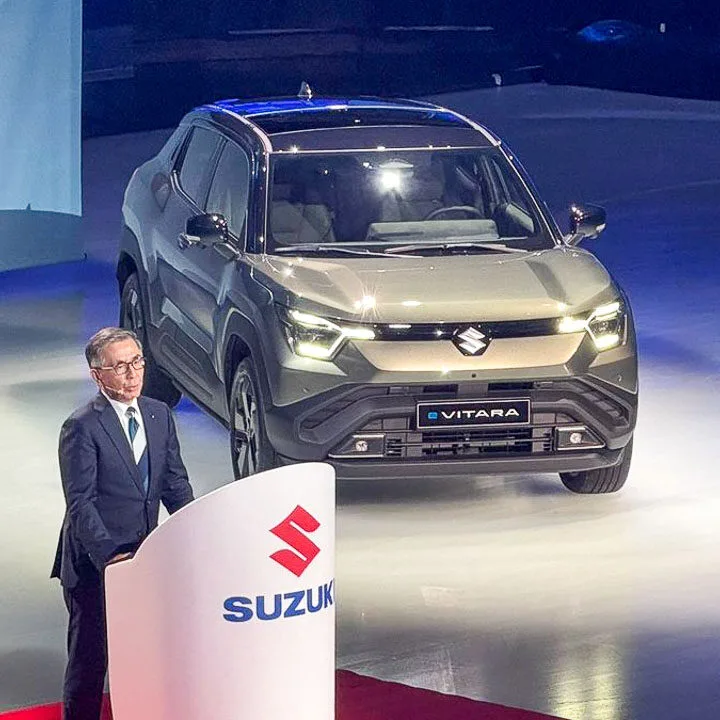
The eVitara will spawn a badge-engineered Toyota version called the Urban Cruiser EV, also manufactured in Gujarat exclusively. This partnership mirrors their successful collaboration on other models and extends Suzuki’s EV reach through Toyota’s distribution network.
Both versions will compete in the hottest segment of India’s auto market—compact SUVs—where emotions and practicality collide.
Charging Infrastructure: Maruti’s Bold Promise
Unlike competitors who rely on third-party networks, Maruti committed to developing charging infrastructure at its own dealerships and workshops. This addresses India’s biggest EV adoption barrier: charging anxiety.
Fast charging capability:
- 70 kW DC fast charging
- 0-80% charge in approximately 30 minutes
- Compatible with CCS2 standard (India’s adopted format)
That’s comparable to charging times for premium EVs costing twice as much.
What Buyers Are Saying
Pre-launch sentiment reveals interesting patterns:
Praise:
- “Finally, a trustworthy brand in EVs”
- “500 km range solves my intercity travel concerns”
- “Features list rivals luxury cars”
Concerns:
- “₹20+ lakh is too expensive for middle-class buyers”
- “Need to see real-world range, not claims”
- “Rear seat headroom compromised by high floor”
The price debate is fierce. Many hoped Maruti would undercut competition aggressively, but the company appears positioning eVitara as premium, not budget.
December Showdown
The timing is strategic. December launches capture year-end buying sentiment, festival bonuses, and new year enthusiasm. Maruti needs strong initial momentum to establish credibility in EVs.
What happens at launch:
- Final pricing and variant details revealed
- Pre-bookings open (amount TBA)
- Test drives begin at Nexa dealerships
- Delivery timelines announced
The first quarter of 2026 will determine if Maruti’s electric gamble pays off or if they’ve entered the EV race too late.
The Bottom Line
Maruti Suzuki‘s eVitara isn’t just another EV—it’s India’s most trusted carmaker saying “the future is electric, and we’re ready.”
With 500 km range, premium features, manufacturing already underway, and exports flowing to Europe, this is no half-hearted effort. It’s a full-scale assault on India’s emerging EV market.
Whether priced too high for the middle class or positioned perfectly for premium buyers will be decided by the market. But one thing’s certain: when Maruti enters a segment, everyone else takes notice.
December 2025 isn’t just a launch date—it’s potentially the inflection point when India’s EV adoption accelerates from niche to mainstream. And Maruti Suzuki is betting billions that they’ll lead that charge.

