


While Western nations debate electric vehicle policies, the Philippines is quietly building an EV revolution that could reshape Southeast Asia’s automotive future. And the numbers? They’re absolutely staggering.
Table of Contents
The Sleeping Giant Awakens
“The Philippine electric vehicle sector is experiencing a significant acceleration in investment and policy implementation,” declares Edmund Araga, President of the Electric Vehicle Association of the Philippines (EVAP). That’s not just optimism—it’s backed by billions in commitments.
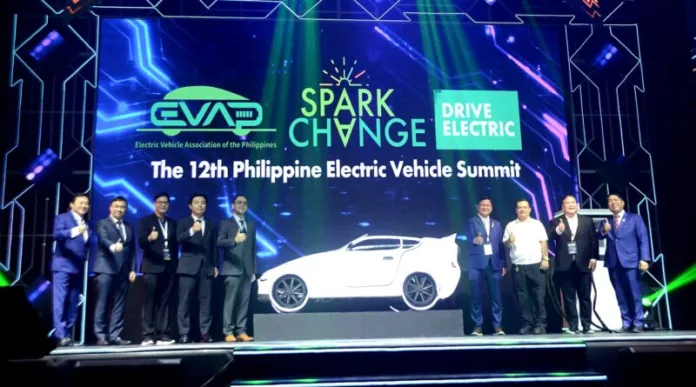
The 13th Philippine Electric Vehicle Summit kicking off October 23-25 isn’t just another industry conference. It’s ground zero for a transformation powered by the Electric Vehicle Industry Development Act (EVIDA) of 2022 and the comprehensive roadmap plotting the country’s electric future.
Follow the Money: Who’s Betting Big
The investment tsunami tells you everything about where smart money sees opportunity:
| Investor | Commitment | Focus Area | Timeline |
|---|---|---|---|
| Mitsubishi Motors PH | ₱7 billion (~$125M) | EV & renewable energy | 5 years (from June 2023) |
| ACMobility (Ayala) | $100 million (ADB) | Charging infrastructure & commercial EVs | Secured Jan 2023 |
| StB GIGA Factory | Production facility | EV battery manufacturing | Operational Sept 2024 |
| Private investors | 4,000 charging stations | National EVCS network | 2-3 years |
That’s not speculation money—those are signed checks from companies betting their futures on the Philippines becoming an EV powerhouse.
The Infrastructure Race Nobody’s Talking About
Here’s what most people miss: the Philippines isn’t just planning to import EVs and hope for the best. The country is building the entire ecosystem from scratch.
The Charging Network:
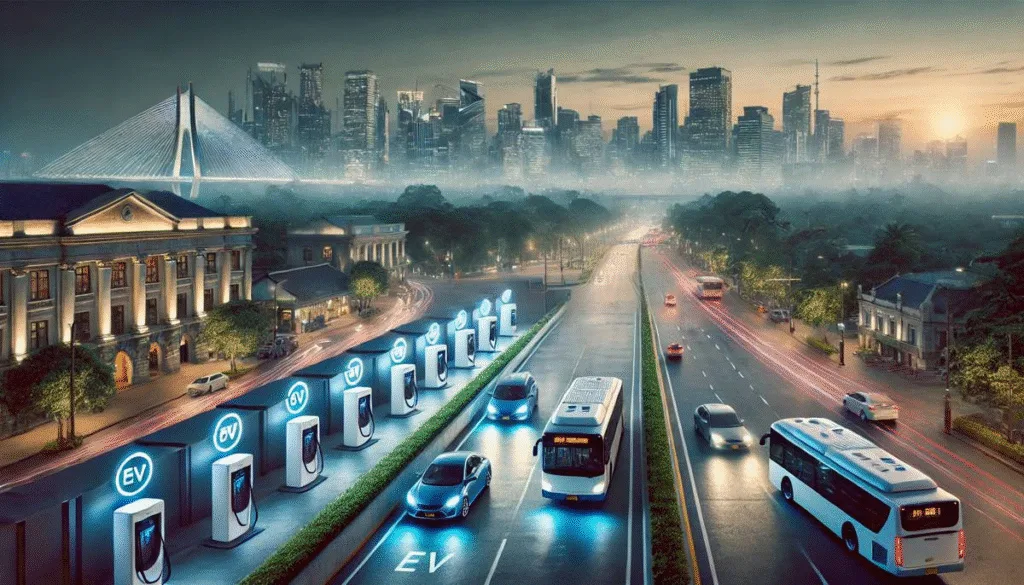
- Current proposals: 4,000 EV charging stations in 2-3 years
- 2028 target: 7,300 charging stations nationwide
- 2040 vision: 20,400 charging stations supporting 2.5 million EVs
But the real game-changer? Australia’s StB GIGA Factory just opened the Philippines’ first domestic EV battery plant in New Clark City. By 2030, this facility will produce 2 gigawatt-hours annually—enough to power 18,000 EVs. And they’re building it for export, not just domestic use.
Think about that: the Philippines positioning itself as a battery supplier for the region.
The 11.4 Trillion Peso Question
The Department of Trade and Industry dropped a bombshell in June 2023 with the Electric Vehicle Incentive Strategy (EVIS). The projections are almost too big to grasp:
- Economic output: ₱11.4 trillion ($204 billion)
- Job creation: Up to 700,000 positions
- Focus areas: EV assembly, battery production, charging station maintenance
Seven hundred thousand jobs. In a country where unemployment and underemployment remain significant challenges, that’s not just an industrial policy—it’s a social transformation strategy.
Why the Philippines Makes Perfect Sense
While other nations grapple with legacy automotive industries fighting change, the Philippines has a unique advantage: less to lose, everything to gain.
Strategic positioning:
- No entrenched traditional auto manufacturing to protect
- Young, tech-savvy population ready for adoption
- Growing middle class seeking affordable transportation
- Volatile global oil prices making EVs economically attractive
- Government committed to renewable energy integration
As Araga notes, petroleum price volatility isn’t just an environmental argument—it’s an economic imperative driving the transition faster than policy alone ever could.
From Myth-Busting to Reality Building
Last year’s summit spent considerable time debunking EV myths—range anxiety, charging times, total cost of ownership. This year’s focus has shifted from “should we?” to “how fast can we?”
That shift in conversation reveals everything. The debate’s over. Now it’s execution mode.
The summit’s evolution mirrors the market:
- 2024: Policy discussions and consumer education
- 2025: Infrastructure development and technology showcases
- Beyond: Scaling production and regional integration
The ASEAN Wild Card
Here’s where it gets interesting for regional watchers: the ASEAN Federation of Electric Vehicle Associations (AFEVA) connection means the Philippines isn’t operating in isolation. Success here creates a template for Thailand, Vietnam, Indonesia, and Malaysia.
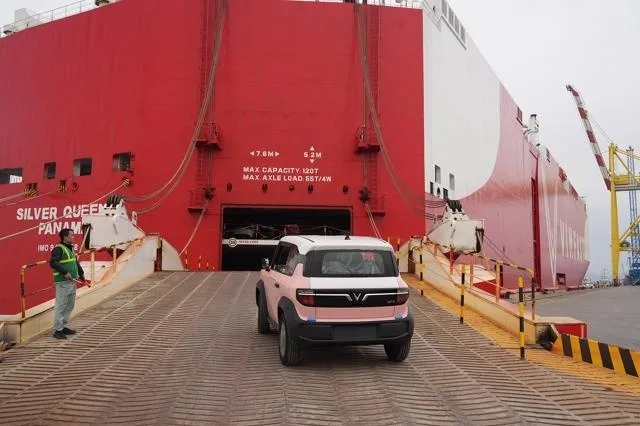
Chinese manufacturers are already exploring local assembly operations. Mitsubishi’s massive investment signals Japanese confidence. Western companies are watching closely. The Philippines could become Southeast Asia’s EV hub—not by accident, but by design.
The Reality Check
Is everything perfect? Of course not. Challenges remain:
- Consumer adoption still building
- Charging infrastructure needs rapid deployment
- Local manufacturing capacity scaling up
- Integration with renewable energy grid
But here’s the difference: these are execution challenges, not existential questions. The commitment’s been made. The money’s been committed. The roadmap exists.
What Happens Next
The 13th PEVS isn’t just tracking progress—it’s accelerating it. When government agencies, private investors, manufacturers, and consumers gather with aligned incentives, revolutions happen fast.
The Philippines isn’t asking if it can build an EV ecosystem. It’s showing the world how to do it without the baggage of legacy industries, with policy coherence, and with economic incentives that make sense for everyone involved.
Watch this space. The revolution might not be televised, but it’s definitely being assembled, one battery at a time.

