

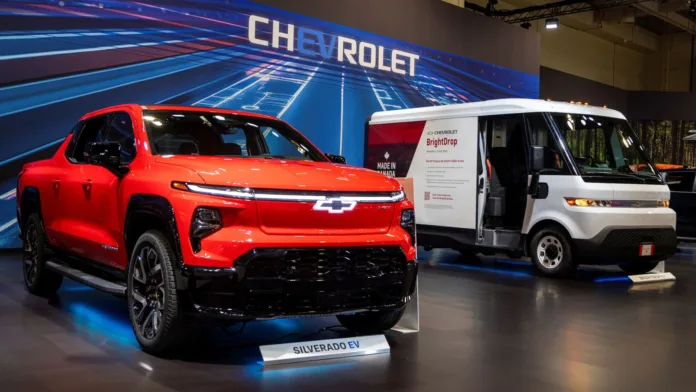

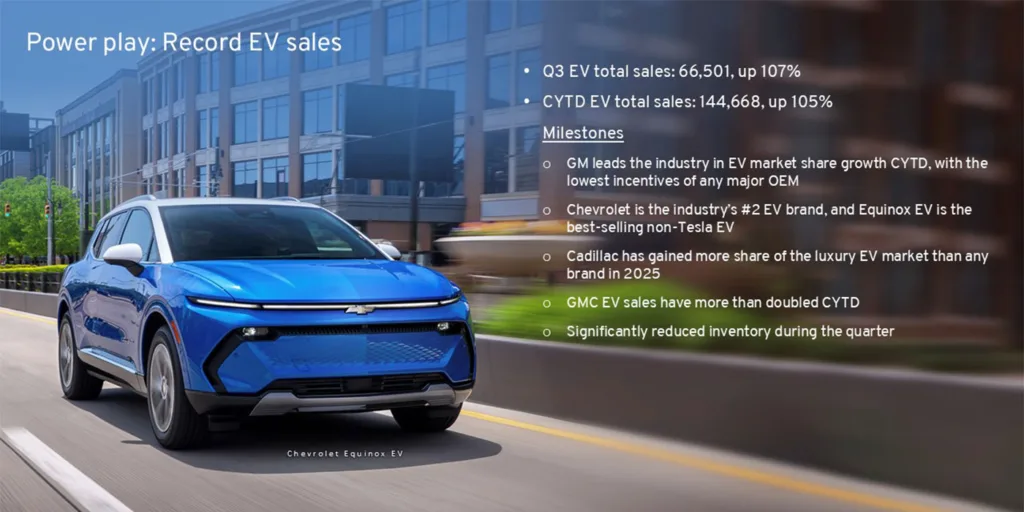
General Motors (GM) announced that its third-quarter U.S. vehicle sales increased 8% compared to the same period last year, driven by sustained growth in both electric and gas-powered vehicles, with the company setting another EV sales record in Q3 with 66,501 deliveries. This milestone underscores its commanding position in America’s rapidly accelerating electric vehicle market.
Table of Contents
Record-Breaking Momentum
The numbers tell an electrifying story. The company’s total EV sales year-to-date now stand at 144,668 units, up 105% from a year earlier—a doubling of EV sales in just twelve months. This explosive growth reflects both consumer appetite and strategic execution at the highest levels of GM’s operations.
| Metric | Q3 2025 Performance |
|---|---|
| Q3 EV Deliveries | 66,501 units |
| Q3 EV Growth | 110% increase YoY |
| Year-to-Date EV Sales | 144,668 units |
| YTD Growth Rate | 105% vs. 2024 |
| Total Q3 Sales | 710,347 units |
| Total Q3 Growth | 8% vs. Q3 2024 |
The Tax Credit Advantage
Industry-wide EV sales continued to surge as customers sought to take advantage of the $7,500 federal tax credit. This timing created a perfect storm of demand, with buyers eager to capture government incentives before policy changes. Smart consumers recognized the window of opportunity, pushing dealerships to their limits.
EV Leadership Across Models
GM’s EV growth was led by the Chevy Equinox EV, Blazer EV, and Cadillac Lyriq crossovers. The trio of crossover-focused electric vehicles resonates perfectly with American consumer preferences, which increasingly favor SUV and crossover body styles regardless of powertrain.
The Chevy Equinox EV’s aggressive pricing strategy has proven particularly effective, democratizing EV ownership for mainstream buyers. The Blazer EV and Lyriq have captured premium and mid-premium segments respectively, allowing GM to dominate across price points.
Strategic Implications for Global EV Leadership
GM’s record-breaking performance positions it as a serious challenger to Tesla’s EV dominance in the United States. While Tesla still maintains the overall market share crown, GM’s trajectory suggests the competitive landscape is shifting toward traditional automakers who bring decades of manufacturing expertise and dealer networks to the EV revolution.

What This Means for the Industry
GM again leads the industry in overall sales, with its U.S. vehicle sales up 8% in Q3 2025. This demonstrates that electric vehicle growth doesn’t cannibalize traditional powertrains—both segments are expanding simultaneously as the overall market strengthens.
The surge also validates GM’s aggressive EV investment strategy, which has committed tens of billions toward battery production, charging infrastructure, and next-generation platform development. These investments are now paying tangible dividends in the showroom.
Looking Forward
As we approach the end of 2025, GM’s momentum raises questions about how policy changes and tax credit availability will impact 2026 sales. The federal incentive program has proven instrumental in driving adoption, and any modifications could reshape market dynamics. Nonetheless, the underlying consumer interest in EVs appears genuine and durable.
GM’s year-to-date EV sales of 144,668 units represent a 105% increase from the previous year, demonstrating that electric vehicles have moved from early adopter territory into mainstream acceptance. For General Motors, this third consecutive quarterly record suggests the company has finally cracked the code on scaling EV production and sales—a critical milestone in its transition to an electrified future.
Track GM’s EV evolution and global electric vehicle trends at IndiaEVNews.com.

