

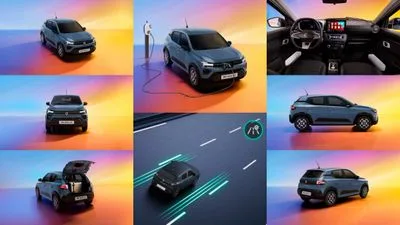

The Renault Kwid just went electric—and it’s turning heads in Brazil. Renault’s latest electric offering has finally broken cover, bringing affordable EV technology to South America while giving Indian buyers a glimpse of what’s coming home next year.
Table of Contents
Brazil Gets India’s Future Electric Star
Launched at approximately BRL 99,990 (around ₹16 lakh in Brazilian currency), the Renault Kwid E-Tech has officially arrived in Brazil, replacing the older generation electric Kwid. But this isn’t just a battery swap—it’s a complete transformation based on the globally successful Dacia Spring EV platform.
Indian test mules have been spotted multiple times on our roads, suggesting a 2026 launch is almost certain. When it arrives, expect pricing around ₹7-8 lakh, making it one of India’s most affordable electric vehicles.
Design That Ditches the Ordinary
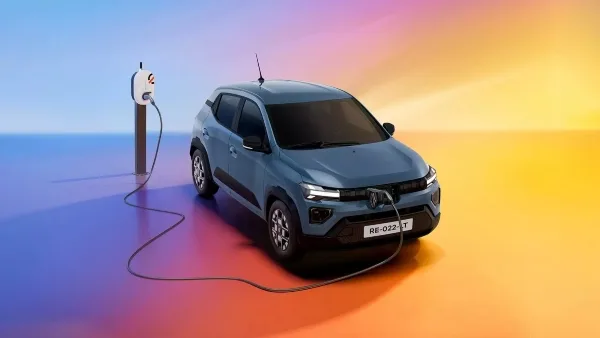
Gone is the quirky charm of the petrol Kwid. The electric version embraces a bolder, sharper design language that screams modernity:
Front Fascia:
- New vertical-element grille housing the Renault logo
- Y-shaped LED DRLs maintaining brand identity
- Front-mounted charging port for easy access
- Redesigned bumper distinct from the European Dacia Spring
Side Profile:
- 14-inch steel wheels with dual-tone covers
- Chunky wheel arch cladding adding ruggedness
- Side door cladding and flip-up door handles
- Turn indicators integrated into ORVMs
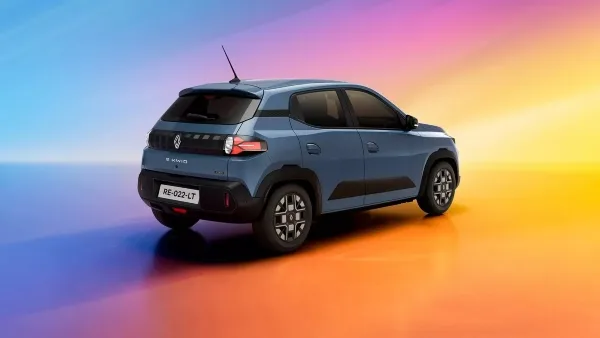
Rear End:
- Connected Y-shaped LED tail lights
- New plaque linking tail lamps
- Cleaner bumper design without contrasting elements
The result? A Kwid that looks like it belongs in 2025, not 2015.
Interior Upgrades That Matter
Step inside, and you’ll forget this is an entry-level EV. The Brazil-spec Kwid E-Tech features:
- 10.1-inch touchscreen with wireless Android Auto and Apple CarPlay
- Modern layered dashboard with Y-shaped AC vent elements
- Four-spoke steering wheel with contemporary design
- Auto climate control for comfort
- 290-liter boot space—practical for city life
- Level 1 ADAS—a segment-first safety feature
Power and Performance Breakdown
| Specification | Details |
|---|---|
| Battery Capacity | 26.8 kWh lithium-ion pack |
| Electric Motor | 65 bhp (48 kW) |
| Range (WLTP) | 220-265 km per charge |
| 0-100 km/h | 14.6 seconds |
| Top Speed | City-focused performance |
| Charging Port | Front-mounted for convenience |
While 265 km might not win drag races, it’s perfectly suited for daily urban commutes, school runs, and weekend grocery trips—exactly what most Indian families need.
Safety First Approach
Renault hasn’t compromised on safety despite the affordable positioning:
- Six airbags as standard
- ABS with EBD for confident braking
- Electronic Stability Control (ESP)
- Hill Start Assist—crucial for Indian roads
- Tyre Pressure Monitoring System (TPMS)
- Level 1 ADAS features—rare in this segment
This safety suite puts the Kwid EV ahead of most budget electric offerings globally.
India Launch: What to Expect
The India-spec Kwid EV will likely mirror the Brazilian version with minor tweaks:
Expected Launch: Mid-2026
Estimated Price: ₹7-8 lakh (ex-showroom)
Competition: Tata Tiago EV, MG Comet EV
Key Advantage: Proven Renault service network across India
Renault is importing units from Chinese manufacturing plants to Brazil, suggesting the same strategy could work for India, keeping costs competitive while maintaining quality.
Who Should Wait for This?
First-time EV buyers hesitant about range anxiety will appreciate the practical 220+ km range that covers daily needs without charging stress.
Urban families seeking an affordable second car for city errands will find the Kwid EV’s compact dimensions and modern features perfectly suited for congested streets.
Kwid loyalists already familiar with Renault’s service network can upgrade to electric without abandoning brand trust or accessibility.
Budget-conscious eco-warriors who want zero emissions without breaking the bank finally have a credible option under ₹8 lakh.
The Bigger Picture
The Kwid E-Tech represents Renault’s commitment to democratizing electric mobility. While premium EVs grab headlines, affordable options like this will actually accelerate India’s electric transition.
With proven global platforms, competitive pricing, and Renault’s established service infrastructure, the Kwid EV could become what the original Kwid was in 2015—a game-changer that makes modern technology accessible to millions.
Keep watching this space. Brazil just got its electric Kwid. India’s turn is next.

