

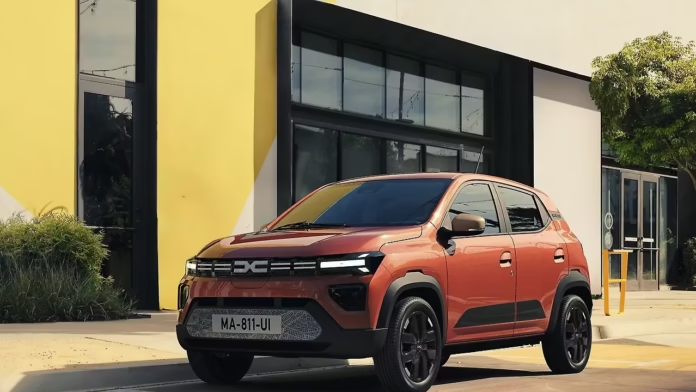

Renault India is preparing to electrify its popular Kwid lineup, potentially bringing India’s most affordable electric car to market. With an expected launch by 2025-26 and pricing rumoured to start around ₹8 lakh, the Kwid EV could democratise electric mobility for millions of Indian buyers.
Table of Contents
Renault Kwid EV: Expected Specifications
| Specification | Details | Segment Impact |
|---|---|---|
| Expected Price | ₹8-10 lakh | Most affordable EV segment |
| Battery Capacity | 26.8 kWh | Optimized for city use |
| Range | 220-305 km | Ideal for daily commutes |
| Motor Options | 46 PS / 65 PS | Choice of power outputs |
| Launch Timeline | 2025-26 | Confirmed development |
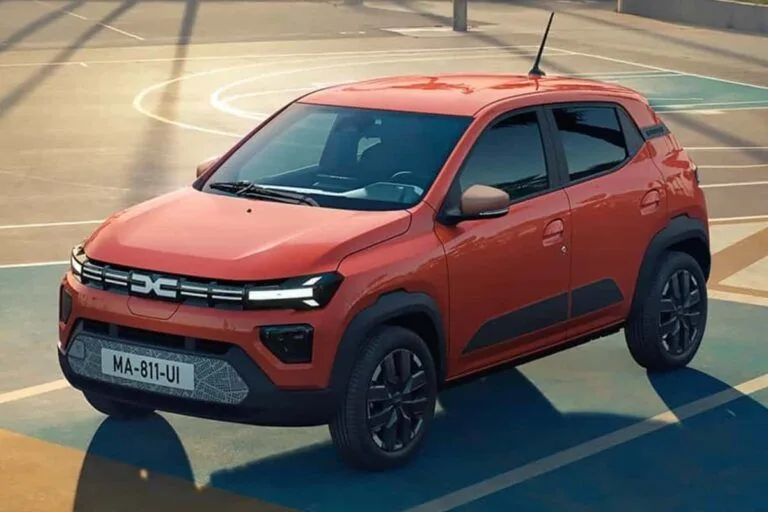
Two Power Options for Different Needs
The Kwid EV is expected to offer flexibility with dual motor configurations:
Base Variant: 46 PS motor with 26.8 kWh battery delivering around 220 km WLTP range
Performance Variant: 65 PS motor producing 125 Nm torque, claiming up to 305 km range
This dual-option strategy allows Renault to cater to budget-conscious buyers with the base model while offering enhanced performance for those willing to pay a premium.
Design and Features: Modern Electric Appeal
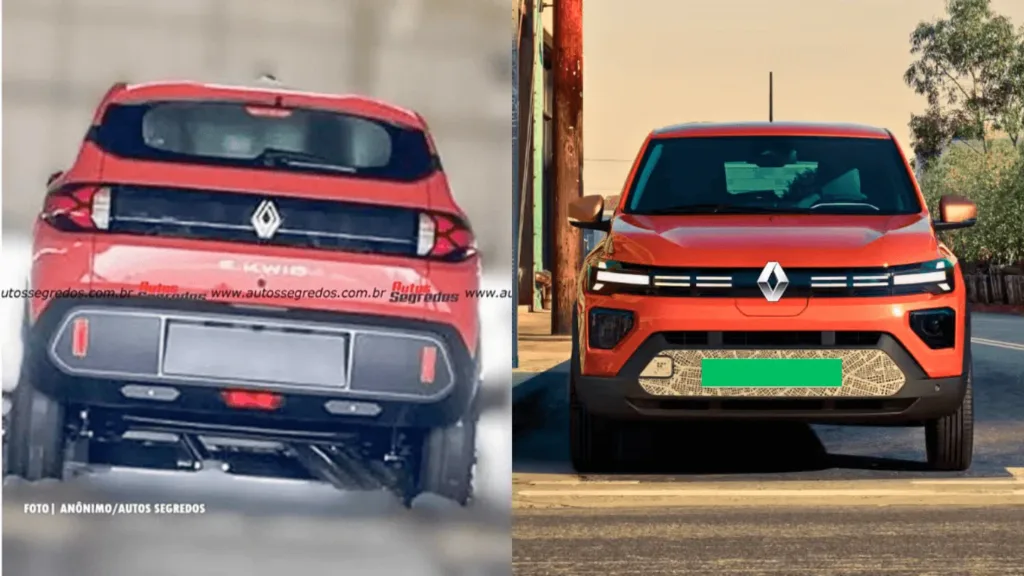
The India-spec Kwid EV is expected to borrow design elements from Renault’s global portfolio, including:
Exterior Updates: Interior design elements from the new Duster and Kardian SUV
Technology Features: Expected features include ventilated seats, panoramic sunroof, and Level 2 ADAS suite
Connectivity: Advanced infotainment with smartphone integration
Safety: Enhanced airbag configurations and modern safety tech
For insights into how affordable EVs are reshaping India’s automotive landscape, explore our coverage on entry-level electric vehicles.
Competitive Positioning in India’s EV Market
| Model | Expected Price | Range | Target Buyer |
|---|---|---|---|
| Renault Kwid EV | ₹8-10 lakh | 220-305 km | First-time EV buyers |
| Tata Tiago EV | ₹8-12 lakh | 250-315 km | Value-conscious families |
| MG Comet EV | ₹7-10 lakh | 230 km | Urban millennials |
| Citroen eC3 | ₹12-13 lakh | 320 km | Premium compact segment |
The Kwid EV’s competitive pricing could make it a game-changer in India’s affordable EV segment, especially considering Renault’s established brand presence and service network.
Why the Kwid Platform Makes Sense for EVs
The existing Renault Kwid has proven immensely popular in India, known for:
Compact Dimensions: Perfect for crowded urban environments
High Ground Clearance: Handles Indian road conditions well
Affordable Maintenance: Established service network across India
Proven Reliability: Years of market validation
Electrifying this successful platform leverages existing customer familiarity while introducing zero-emission benefits.
European Experience: What India Can Expect
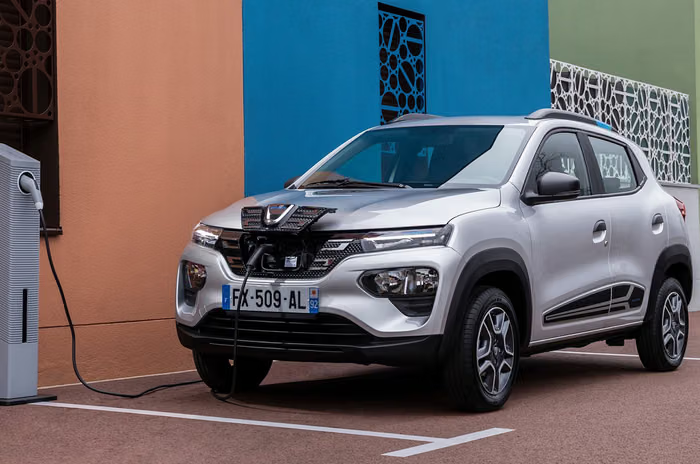
The Kwid EV already sells in Europe as the Dacia Spring, offering valuable insights:
European version features 44 hp output and 125 Nm torque with 26.8 kWh battery delivering 295 km city range (WLTP)
Fast Charging: Relatively small battery enables quicker charging times
Practical Range: Real-world performance validated in European markets
Affordable Ownership: Competitive running costs proven internationally
Market Impact: Democratizing Electric Mobility
If Renault prices the Kwid EV competitively around ₹8 lakh, it could become the catalyst that brings electric vehicles to mainstream Indian buyers—families currently considering petrol hatchbacks in the ₹5-7 lakh segment.
The total cost of ownership argument becomes compelling when factoring in:
Running Costs: ₹1-2/km vs ₹6-8/km for petrol
Maintenance: Significantly lower than ICE vehicles
Government Incentives: FAME-III subsidies and state benefits
Fuel Independence: Protection from fluctuating petrol prices
For comprehensive analysis of EV ownership economics, read our guide on electric vehicle cost benefits.
Challenges and Opportunities
Challenges: Limited charging infrastructure in tier-2/3 cities, range anxiety for long-distance travel
Opportunities: Growing environmental consciousness, rising fuel costs, expanding charging networks supported by government initiatives
To understand India’s charging infrastructure development, explore our coverage on EV charging network expansion.
Official Launch Timeline
While Renault hasn’t confirmed exact dates, industry sources suggest a launch window by June 2026, with pre-launch activities potentially beginning by late 2025.
The Bottom Line
The Renault Kwid EV represents a potentially transformative moment for Indian electric mobility. By leveraging a proven platform and targeting aggressive pricing, Renault could make electric vehicles accessible to millions of first-time EV buyers.
Success will depend on balancing affordability with adequate range, features, and charging convenience—but if executed well, the Kwid EV could repeat the original Kwid’s disruptive success in the electric era.
Stay updated on the Renault Kwid EV launch timeline, specifications, and booking details at IndiaEVNews.com – your source for affordable EV coverage and launch updates.
Would you consider the Renault Kwid EV as your first electric car? Share your thoughts on pricing and features that matter most to you!

