



While Tata Motors sleeps on its EV throne, Mahindra & Mahindra is quietly executing one of India’s most aggressive electric vehicle strategies. Their bold prediction? EV share will double within three years—and they’re backing it with billion-dollar investments that could reshape India’s automotive landscape.
Table of Contents
The Numbers Tell a Stunning Story
Mahindra & Mahindra recorded a new high in its electric vehicle journey, with EVs accounting for 8 percent of its total SUV volumes in Q1 FY26—a remarkable jump that signals serious momentum.
But here’s the shocker: MG and Mahindra command over 53 percent of the EV market, a dramatic reversal from a year ago, when Tata alone held the lion’s share. Mahindra hasn’t just entered the EV race—they’ve taken the lead in the fast lane.
The Ambitious 2030 Vision
Mahindra & Mahindra Ltd aims to make more than a quarter of its portfolio electric by 2030, with EVs forming 30% of their product lineup. That’s not incremental change—it’s transformation.
| Metric | Current Status | 2027-28 Target | 2030 Target |
|---|---|---|---|
| EV Share of SUV Sales | 8% (Q1 FY26) | ~16% (estimated) | 30% |
| Market Position | Co-leader with MG | Projected leader | Dominant player |
| Combined Market Share | 53% (with MG) | Growing | Commanding |
| Portfolio EVs | BE 6, XEV 9e | Expanded lineup | 30% of portfolio |
What’s Driving This Confidence?
1. The Born Electric Platform Success
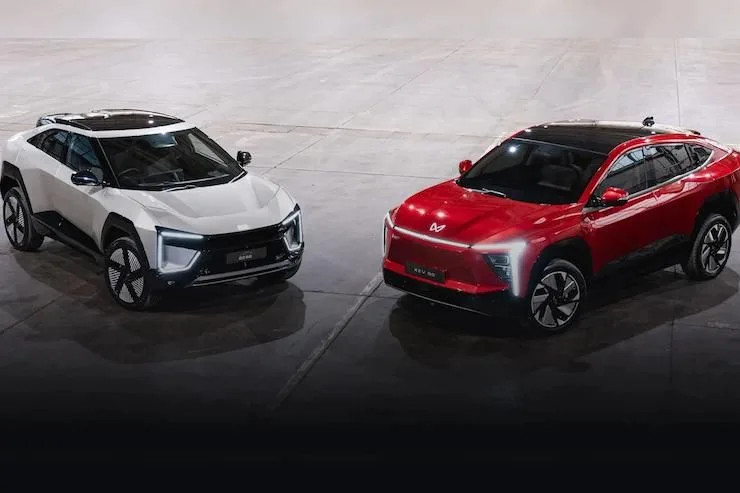
Mahindra’s XEV 9e and BE 6—their first “Born Electric” SUVs—have received overwhelming response since launch. These aren’t retrofitted petrol vehicles with batteries slapped on. They’re ground-up EV designs that prioritize electric performance, range, and technology.
2. Premium Positioning Pays Off
While competitors chase volume in entry-level segments, Mahindra tops e-SUV revenue charts—proof that Indian buyers are willing to pay premium prices for quality EVs.
3. Infrastructure Investment
Building EVs requires more than factory lines. Mahindra’s invested billions in:
- Dedicated EV manufacturing facilities
- Battery technology partnerships
- Charging infrastructure expansion
- Software and connected tech platforms
The Tata Problem (For Tata)
Tata Motors retained its position as the top-selling brand in June with 4,664 units. However, while its volume remained steady, its market share continued to decline—a warning sign that volume alone doesn’t guarantee market leadership.
Tata pioneered affordable EVs with the Nexon and Tiago. But Mahindra’s targeting a different customer: the premium SUV buyer who wants electric without compromising on space, features, or brand prestige.
Market Share Shake-Up
The dramatic shift in India’s EV landscape tells a powerful story:
A Year Ago:
- Tata Motors: Dominant leader
- Others: Struggling for scraps
Today:
- Mahindra + MG: 53% combined share
- Tata: Fighting to maintain position
- Market: Wide open for innovation
This isn’t just growth—it’s disruption.
Why Mahindra Can Actually Pull This Off
Strong SUV DNA: Mahindra’s brand is synonymous with rugged, capable SUVs. That credibility transfers seamlessly to electric SUVs.
Deep Pockets: With market cap exceeding Rs 4.3 lakh crore, Mahindra has the financial muscle to outspend competitors in R&D and infrastructure.
Product Pipeline: The BE brand and XEV series are just the beginning. Multiple launches are planned across price segments.
Dealer Network: Mahindra’s extensive dealership footprint solves the biggest EV challenge—sales and service accessibility.
The Challenges Nobody’s Talking About
Battery Supply Constraints: Scaling to 30% EV portfolio requires massive battery procurement. Global supply chains remain unpredictable.
Charging Infrastructure Gaps: India’s public charging network lags developed markets. Range anxiety still deters buyers outside metros.
Price Sensitivity: Premium positioning works until competitors offer similar features at lower prices. The market could shift rapidly.
Policy Uncertainty: EV subsidies and incentives change with political winds. Mahindra’s betting on sustained government support.
What This Means for Buyers
More Choices: Increased competition means better options across price points.
Better Technology: The EV race is accelerating innovation in batteries, software, and charging speeds.
Price Pressure: As Mahindra scales production, economies of scale could bring premium EV prices down.
Resale Concerns: Early EVs may depreciate faster as newer, better models launch rapidly.
The Investment Angle
Mahindra’s stock has rewarded believers—more than doubling in three years. But can it sustain the rally?
Bull Case: EV leadership, strong SUV demand, execution capability
Bear Case: Overvaluation, intense competition, slower-than-expected EV adoption
Smart investors are watching Mahindra’s quarterly EV penetration numbers closely. If they hit 10-12% by FY27, the doubling target becomes credible.
Bottom Line: Bold Claims, Bolder Execution
Predicting EV share will double isn’t revolutionary—lots of companies make ambitious promises. What separates Mahindra is their execution track record.
They’ve already jumped from negligible EV presence to 8% penetration in under a year. They’ve launched products that reviewers actually praise. They’ve grabbed market share from an entrenched leader.
Can they double down and hit 16% by 2027-28? The trajectory suggests yes—if they maintain product momentum, avoid quality issues, and keep pricing competitive.
One thing’s certain: India’s EV market just got a lot more interesting. And Mahindra’s betting billions they’ll be the last one standing when the dust settles.
The next three years will reveal whether that confidence is justified—or just another automotive pipe dream.

