


When rivals shake hands, it’s usually because they’ve spotted something bigger than competition: survival. Ford and Nissan—two automotive giants who’ve spent decades battling for market share—are now joining forces on electric vehicles. And the reason why reveals everything about the state of the EV industry today.
Table of Contents
Ford-Nissan EV Collaboration : The Deal That Surprised Everyone
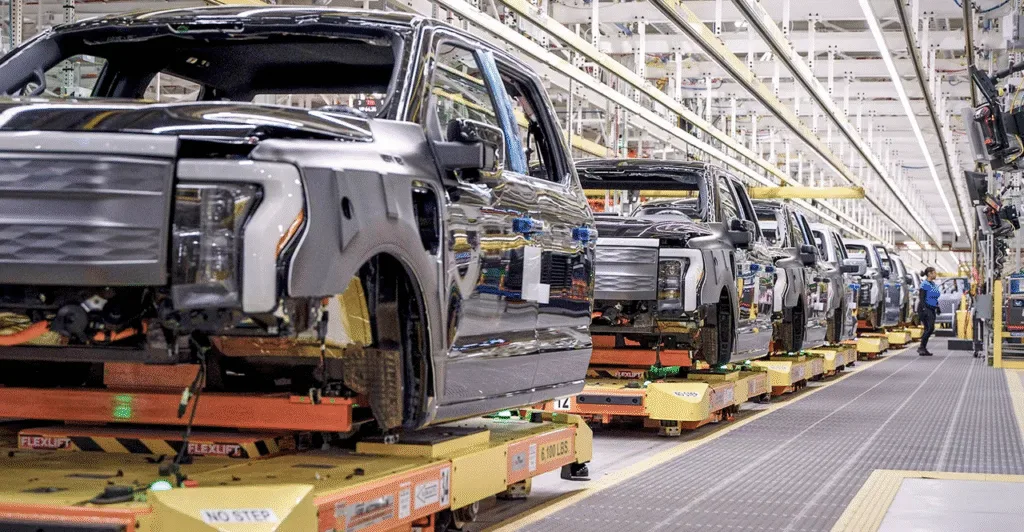
Ford’s massive BlueOval SK Battery Park in Kentucky was built with grand ambitions: two operational plants, 5,000 employees, batteries powering millions of EVs. Reality had different plans.
Slower-than-expected EV demand forced Ford and partner SK On to scale back, operating just one plant with 2,500 workers instead. That left expensive real estate sitting idle—until Nissan came knocking.
Now, Nissan will utilize part of the BlueOval SK Battery Park site to build batteries for its own EVs, marking one of the automotive industry’s most unexpected collaborations.
Why This Partnership Makes Perfect Sense
| Aspect | Ford’s Benefit | Nissan’s Benefit |
|---|---|---|
| Capacity | Monetizes unused plant space | Gets US battery production |
| Costs | Offsets construction expenses | Avoids building new facility |
| Tariffs | N/A | Dodges import tariffs |
| Timeline | Immediate revenue stream | Batteries ready by 2028 |
| Scale | Maintains operational efficiency | Accesses 100 GWh supply |
Both automakers face the same brutal truth: building battery plants costs billions, but selling EVs has proven harder than anyone predicted. Sharing infrastructure simply makes financial sense.
The Numbers Behind the Deal
SK On announced that it had signed a battery supply agreement with Nissan, which will result in the company supplying the automaker with roughly 100 GWh of EV batteries between 2028-2033—all manufactured on American soil.
To put that in perspective: 100 GWh could power approximately 1.3 million EVs with 75 kWh battery packs. That’s massive volume for Nissan’s electrification push.
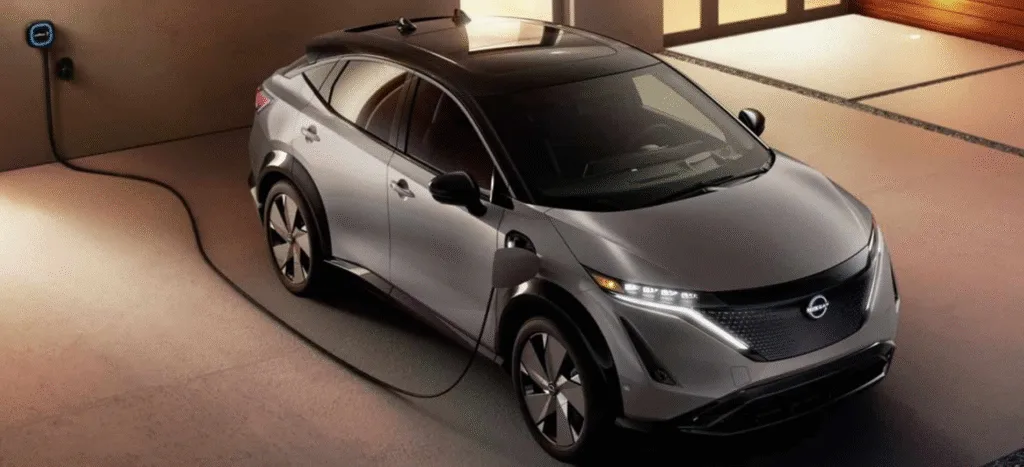
The batteries utilize high-nickel pouch cells and will power Nissan’s next-generation EVs, which will be built at the company’s plant in Canton, Mississippi starting in 2028.
Beyond Just Battery Sharing
This isn’t Ford’s first rodeo with unlikely partnerships. The company has historically collaborated with Mazda, Volvo, and yes—even Nissan—on various platforms and technologies. Shared development reduces costs while accelerating innovation.
Recent reports suggest discussions extend beyond batteries. Nissan is in talks with Ford to develop an electric model based on the Rogue crossover, potentially leveraging Ford’s EV platform expertise.
The Tariff Factor
For Nissan, this deal solves a critical problem: manufacturing batteries domestically avoids import tariffs while positioning the company for potential government incentives favoring American-made EVs.
With tightening regulations around battery sourcing for tax credits, having US production isn’t just smart—it’s essential for competitiveness.
What This Means for EV Buyers
More Competition = Better Prices When manufacturers share infrastructure costs, those savings can flow to consumers. More battery production capacity also helps stabilize supply chains.
American Jobs Preserved The Kentucky plant was at risk of underutilization. Nissan’s partnership helps justify continued operation, protecting those 2,500 jobs.
Faster Innovation Competition between brands using the same facility could accelerate battery technology improvements as each tries to differentiate their products.
The Challenges Ahead
Not everyone’s celebrating. Some Ford supporters question why the company would “help a competitor” rather than reserving capacity for themselves or American suppliers.
Valid concern? Perhaps. But sitting on empty factories helps no one. The alternative—shuttering unused capacity—looks far worse on balance sheets.
Ford and SK On are facing allegations of unsafe working conditions at BlueOval SK Battery Park, which adds pressure to justify the facility’s continued operation through deals like this.
The Bigger Picture: Industry Adaptation
This partnership exemplifies how legacy automakers are adapting to EV realities:
Slower Adoption: Slowing demand for EVs recently prompted Ford to push back its planned production start date for the next-generation Ford F-150 EV from 2026 to 2027.
Flexible Strategy: Rather than abandon investments, manufacturers are finding creative ways to leverage them.
Collaboration Over Competition: When the enemy is slow EV adoption, former rivals become natural allies.
Timeline: What Happens Next
| Year | Milestone |
|---|---|
| 2025 | BlueOval SK begins production |
| 2028 | Nissan battery supply starts |
| 2028 | Nissan Canton plant produces EVs |
| 2033 | 100 GWh supply agreement ends |
Bottom Line
The Ford-Nissan battery collaboration isn’t about friendship—it’s about mathematics. Empty factories lose money. Shared factories split costs. In an industry where billion-dollar bets are standard, hedging makes sense.
For consumers, this partnership signals maturity in the EV market. The hype phase is over. Now comes the hard work of building sustainable businesses around electric vehicles—even if that means sharing space with yesterday’s competitor.
The real question isn’t whether Ford and Nissan can work together. It’s whether the broader auto industry can adapt fast enough to make EVs work economically.
Based on this deal, they’re certainly trying.

