

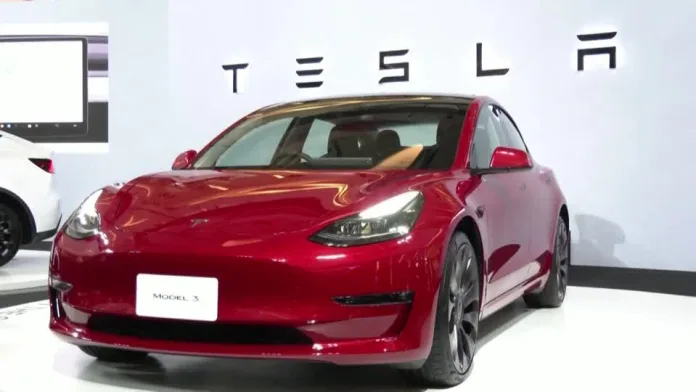

Tesla’s dominance in the US electric vehicle market is facing its biggest challenge yet! For the first time since 2017, Tesla’s market share has plummeted below 40%, marking a historic shift in America’s EV landscape as fierce competition heats up.
Tesla, which once held more than 80% of the U.S. EV market, accounted for just 38% of total EV sales in August 2025 – a dramatic fall that signals the end of Tesla’s near-monopoly in American electric mobility.
Table of Contents
The Numbers Tell a Dramatic Story
The latest data from Cox Automotive reveals just how dramatically the EV market has shifted, with Tesla experiencing its steepest decline in years.
Tesla’s Market Share Decline
| Time Period | Tesla Market Share | Key Events |
|---|---|---|
| 2017 Peak | 80%+ | Early Model 3 production |
| June 2025 | 48.7% | Still maintaining lead |
| July 2025 | 42% | Sharp 6.7% drop |
| August 2025 | 38% | First time below 40% since 2017 |
The drop from 48.7% in June to 42% in July was the sharpest decline since March 2021, around the time when Ford launched its Mustang Mach-E EV.
Who’s Winning Tesla’s Lost Ground?
The competition isn’t just heating up—it’s blazing! Legacy automakers and new players are seizing market share with aggressive strategies that are reshaping the entire industry.
The Rising Competition
Hyundai, Honda, Kia and Toyota rolled out higher incentives than Tesla and drove up EV sales between 60% and 120%, boosting their market share. This aggressive approach is paying dividends as consumers respond to more attractive pricing and incentives.
Top Performers Gaining Ground:
- Hyundai Group (Hyundai + Kia): Massive surge with Ioniq 5 and EV6
- General Motors: Big gains across multiple EV models
- Ford: Mustang Mach-E continues strong performance
- Honda: Prologue making significant impact
The Tax Credit Game Changer
Rivals like Hyundai, Kia, and Volkswagen surged with incentives ahead of expiring federal tax credits, creating a perfect storm for Tesla’s market share decline.
Current EV Incentive Landscape
| Manufacturer | Strategy | Market Impact |
|---|---|---|
| Tesla | Limited incentives | Losing ground |
| Hyundai/Kia | Aggressive pricing + tax credits | 60-120% sales growth |
| Honda/Toyota | Strong incentive packages | Significant share gains |
| Ford/GM | Competitive pricing | Steady growth |
The top five selling EVs saw incentives ranging from 14.5% to 27.7% of average transaction price, bringing effective prices for all models below $40,000.
What’s Driving This Historic Shift?
Several factors are contributing to Tesla’s market share erosion, creating the perfect storm for competitors to gain ground.
Key Market Dynamics
1. Increased Competition The EV market has exploded with choices. Tesla is battling intense competition as rivals expanded their piece of the pie by 120 percent.
2. Price Pressure Legacy automakers are offering competitive pricing and substantial incentives that Tesla has been reluctant to match.
3. Tax Credit Rush Buyers are rushing to take advantage of federal EV incentives, which are set to expire in September, benefiting manufacturers other than Tesla.
4. Product Diversification Consumers now have access to diverse EV options across all segments, from compact cars to large SUVs.
The Bigger Picture for Tesla
While losing market share might seem alarming, it’s important to understand the context. The overall EV market is expanding rapidly, meaning Tesla’s absolute sales numbers may still be growing even as its percentage share declines.
Tesla’s Strategic Position
Challenges:
- Increased competition across all price segments
- Limited product refresh cycles
- Pricing pressure from incentive-heavy competitors
Opportunities:
- Massive overall EV market growth
- Technology leadership in areas like autonomous driving
- Expanding global presence
What This Means for EV Buyers
This market shift is fantastic news for consumers! More competition means better prices, improved features, and greater choice in electric vehicles.
Consumer Benefits
- Lower Prices: Aggressive competition driving down costs
- More Options: Diverse lineup from multiple manufacturers
- Better Incentives: Manufacturers competing with attractive deals
- Innovation: Rapid advancement in EV technology
The Road Ahead
This is the first time that Tesla’s stronghold on the market has dropped to such levels, marking a true inflection point in the American EV revolution.
Tesla’s challenge now is clear: adapt to a competitive market where dominance through early adoption is no longer sufficient. The company that revolutionized electric vehicles must now prove it can thrive in a crowded, competitive marketplace.

