

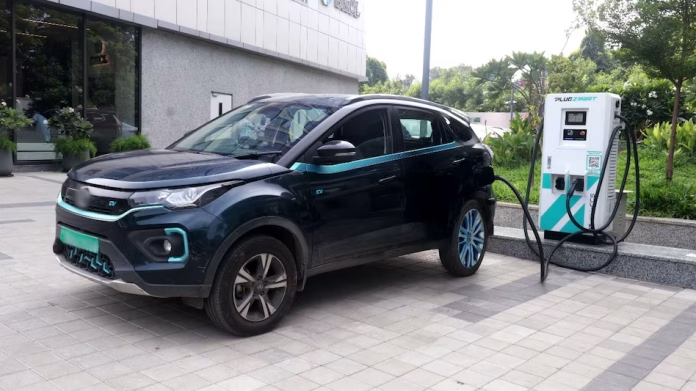

EV Adoption India’s electric vehicle revolution is no longer a distant dream—it’s happening right now! In a remarkable transformation that has caught global attention, India’s EV adoption has skyrocketed from just 0.1% six years ago to nearly 5%, marking one of the fastest transitions to sustainable mobility in the world.
This incredible journey was highlighted by Shailesh Chandra, MD and CEO of Tata Motors, during the launch of Mumbai’s largest EV charging hub on World EV Day. But what’s driving this phenomenal growth? Let’s dive into India’s EV success story.
Table of Contents
The Numbers That Tell the Story
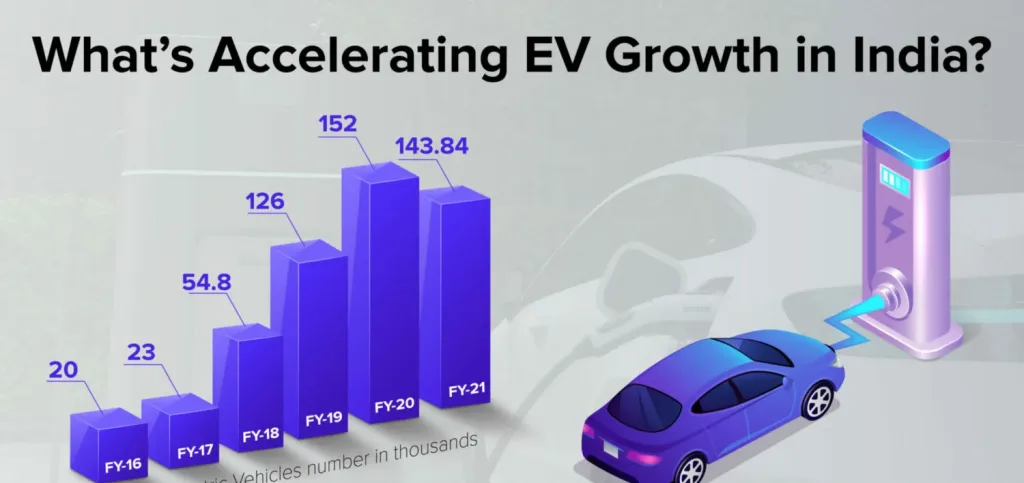
The statistics are nothing short of extraordinary. India’s charging network has expanded from a few hundred stations in 2018 to nearly 25,000 today, creating the backbone for this electric revolution.
Key Growth Metrics
| Metric | 2018 | 2024 | Growth Rate |
|---|---|---|---|
| EV Adoption Rate | 0.1% | 5% | 5000% increase |
| Charging Stations | Few hundred | 25,000+ | 50x growth |
| EV Sales Growth (2025) | – | 70%+ | 8 months only |
| Tata EV Owners | – | 1.5+ lakh | Home charging enabled |
What’s Driving This EV Boom?
1. Charging Infrastructure Revolution
Charging infrastructure remains the single most critical factor for expanding EV adoption across the country, according to Chandra. The transformation has been comprehensive:
- Highway Coverage: Chargers every 75-100 km on major highways
- Urban Solutions: Community charging in residential complexes
- Home Charging: Over 1.5 lakh Tata EV owners now have home charging access
- Public Networks: 25,000+ charging stations nationwide
2. Technology Advancement
The new Mumbai EV charging hub exemplifies this progress:
- Ultra-fast charging: 120 kW chargers that power vehicles in 40-50 minutes
- High capacity: 8 charging points serving 16 vehicles simultaneously
- 100% renewable energy: Powered entirely by solar and wind
- Customer benefits: 25% discount for Tata EV customers
Breaking the Chicken-and-Egg Problem
“Six to seven years ago, creating an EV ecosystem in India was considered a risky bet. There were hardly any entrepreneurs willing to invest in charging because there were no cars on the road. It was a classic chicken-and-egg problem, but Tata Motors and Tata Power decided to take that leap of faith,” Chandra revealed.
This bold decision has paid off magnificently, positioning Tata at the forefront of India’s EV industry.

The Clean Energy Connection
Praveer Sinha, CEO & MD of Tata Power, emphasized the environmental impact: The new facility runs entirely on renewable energy sourced from solar and wind and is one of the country’s first large-scale hubs to offer clean charging end-to-end.
Tata Power’s Green Vision
- Target: 95-99% of charging network on renewable energy by 2030
- Current Achievement: Multiple facilities running on 100% clean energy
- Philosophy: “Clean energy and clean mobility are not just good for business, they are a national necessity”
Real-World Impact: Beyond the Numbers
The transformation extends beyond statistics. Chandra described the challenge of enabling home charging for over 1.5 lakh Tata EV owners as a “logistical nightmare” given the challenges of site surveys, load assessments, and installations across different cities.
Yet, this massive undertaking has built the trust needed for mainstream adoption.
What’s Next for India’s EV Journey?
Expansion Plans
- Geographic Growth: Replicating the Mumbai model in other metros and large cities
- Infrastructure Scale: Further expansion of the 25,000+ charging network
- Technology Evolution: Continued investment in faster, more efficient charging solutions
Market Momentum
With EV sales growing by over 70% in the first eight months of 2025 alone, India is clearly on an accelerated path toward electric mobility.
The Road Ahead
India’s EV adoption story is far from over—it’s just beginning. From solving the infrastructure challenge to building consumer trust, the foundation is now solid. The leap from 0.1% to 5% adoption in six years proves that with vision, investment, and commitment, revolutionary change is possible.
As Sinha aptly put it: “This transition has to happen, and as pioneers, we must lead by example.”

