

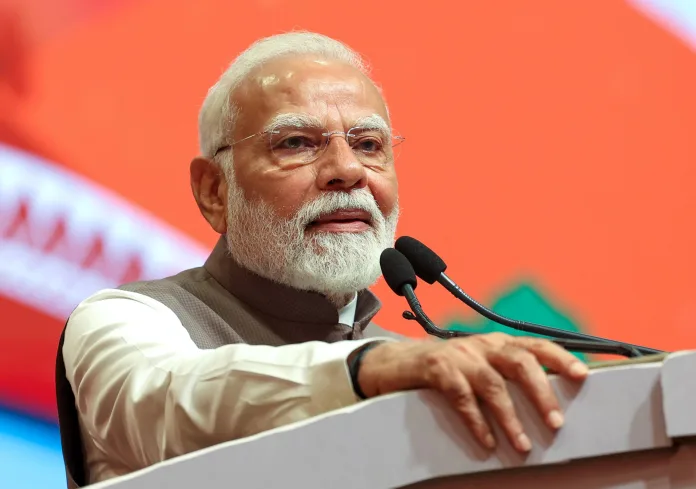

Prime Minister Narendra Modi, PM Modi, today unveiled India’s balanced approach to clean mobility by simultaneously launching Maruti Suzuki’s e-Vitara electric SUV and inaugurating a hybrid battery manufacturing facility, signaling the government’s pragmatic stance on sustainable transportation. This dual strategy acknowledges that India’s transition to clean mobility requires both electric and hybrid technologies working together.
Table of Contents
PM Modi’s Hybrid Vision: Best of Both Worlds
At the Hansalpur plant inauguration, PM Modi emphasized India’s unique approach to clean mobility, recognizing that hybrid vehicles serve as a crucial bridge technology while pure electric infrastructure develops across the country’s diverse landscape. The Prime Minister’s hybrid approach reflects ground realities—acknowledging that different regions and consumer segments may adopt clean technologies at varying paces.
The simultaneous launch of electric vehicle exports and hybrid battery production demonstrates the government’s commitment to technology-agnostic clean mobility solutions, supporting both immediate adoption through hybrids and future-ready electric infrastructure.
Hybrid Technology: The Pragmatic Path Forward
The newly inaugurated lithium-ion battery facility, developed through a strategic joint venture between Suzuki, Toshiba, and Denso, will manufacture batteries for both hybrid and electric vehicles. This dual-purpose approach ensures optimal resource utilization while catering to India’s diverse automotive needs.
| PM Modi’s Hybrid Strategy | Key Elements |
|---|---|
| Electric Focus | e-Vitara export to 100+ countries |
| Hybrid Investment | Joint battery facility by Suzuki-Toshiba-Denso |
| Manufacturing Hub | Hansalpur, Gujarat |
| Technology Approach | Dual electric & hybrid strategy |
| Market Coverage | Domestic adoption + global exports |
| Infrastructure | Parallel development of charging & hybrid tech |

Why Hybrids Matter in India’s Clean Mobility Transition
PM Modi’s hybrid approach addresses critical challenges facing India’s EV adoption. While charging infrastructure expands rapidly—with over 20,000 stations operational and plans to double by 2025—hybrid vehicles offer immediate emission reductions without range anxiety concerns that still affect many Indian consumers.
This pragmatic strategy recognizes that India’s vast geographical diversity, from metro cities with robust charging networks to rural areas still developing infrastructure, requires flexible clean mobility solutions. Hybrids can operate effectively regardless of charging availability while delivering significant fuel efficiency improvements.
Government’s Technology-Neutral Clean Energy Policy
The Prime Minister’s dual launch signals a shift from pure-play electric promotion to a more inclusive clean mobility ecosystem. This approach aligns with global automotive trends where leading markets like Japan and Europe continue investing heavily in hybrid technology alongside electric vehicles.
The hybrid battery manufacturing facility ensures India develops capabilities across the entire clean mobility spectrum, positioning the country as a comprehensive solutions provider rather than focusing solely on one technology.
Strategic Benefits of the Hybrid Approach
India’s hybrid strategy addresses consumer concerns while building industrial capabilities. Hybrid vehicles typically cost 15-20% less than equivalent electric vehicles while delivering 40-50% better fuel efficiency than conventional engines. This affordability factor makes clean mobility accessible to a broader consumer base.
The manufacturing approach also maximizes industrial investment efficiency. The same battery facility serves both hybrid and electric vehicle production, optimizing capital deployment while building supply chain expertise that benefits the entire clean mobility ecosystem.
Market Impact: Bridging Today and Tomorrow
PM Modi’s hybrid approach acknowledges market realities. While e-Vitara targets global markets with established charging infrastructure, hybrid technology serves domestic consumers who need immediate clean mobility solutions without infrastructure constraints.
This dual strategy positions Indian automotive manufacturers to compete effectively in both emerging and developed markets, with hybrids serving price-sensitive segments and pure electrics targeting premium environmentally-conscious consumers.
Building India’s Clean Mobility Leadership
The Prime Minister’s hybrid vision demonstrates India’s mature approach to clean energy transition. Rather than following a one-size-fits-all strategy, the government supports multiple pathways to emission reduction, recognizing that successful clean mobility adoption requires addressing diverse consumer needs and infrastructure realities.
This pragmatic hybrid approach could become India’s unique contribution to global clean mobility, showing how developing nations can achieve environmental goals while maintaining economic accessibility and technological flexibility.
By supporting both electric and hybrid technologies simultaneously, PM Modi’s strategy ensures India builds comprehensive clean mobility capabilities, positioning the country as a global leader in sustainable transportation solutions.
Explore more about India’s balanced approach to clean mobility at indiaevnews.com. Follow our Hybrid Technology and Clean Mobility Policy sections for comprehensive coverage.
Sources:

