

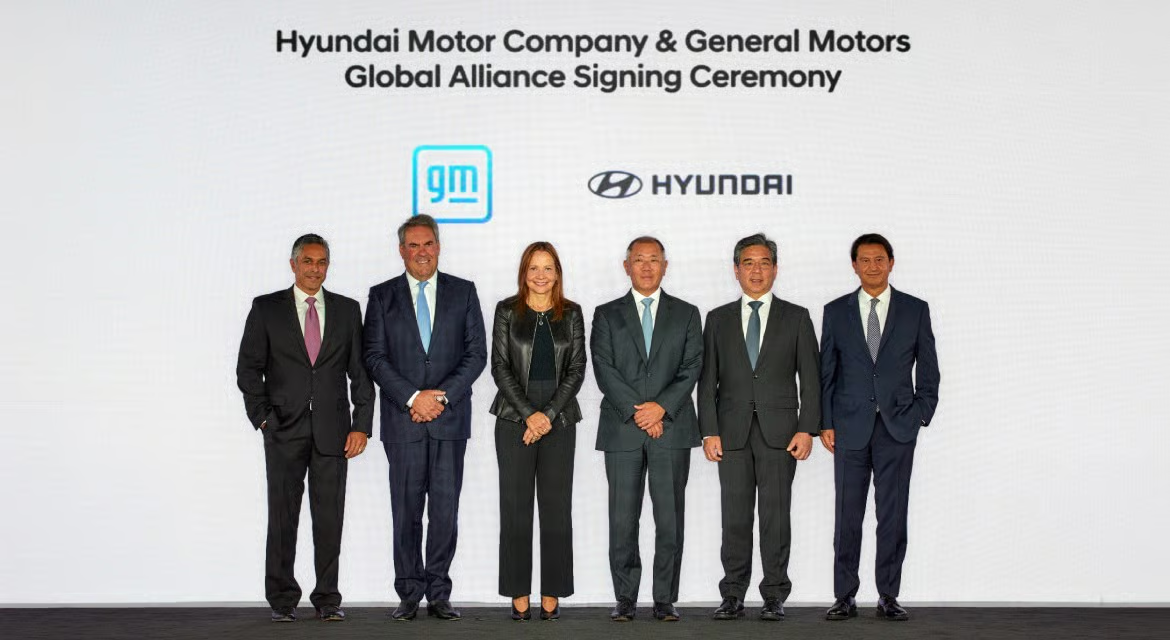

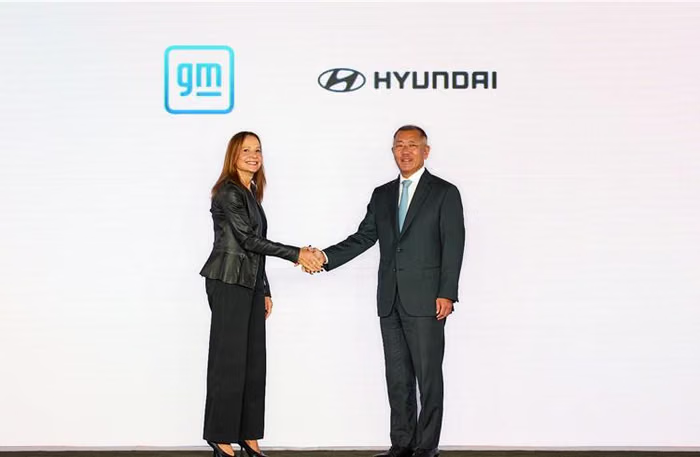
Two automotive giants are pooling their resources! General Motors and Hyundai Motor have announced plans to develop five vehicles as they seek to lower costs amid growing competition from nimble Chinese rivals. This strategic partnership marks a significant shift in how traditional automakers are responding to market pressures.
Table of Contents
The Partnership Breakdown
This collaboration isn’t just about sharing costs – it’s about smart specialization. Here’s how the two companies are dividing responsibilities:
| Vehicle Type | Market | Lead Developer | Launch Timeline |
|---|---|---|---|
| Compact SUV | Central & South America | Hyundai | 2028 onwards |
| Compact Car | Central & South America | Hyundai | 2028 onwards |
| Compact Pickup | Central & South America | Hyundai | 2028 onwards |
| Mid-size Pickup | Central & South America | GM | 2028 onwards |
| Electric Commercial Van | United States | Hyundai | As early as 2028 |

Smart Strategy Behind the Alliance
By dividing development responsibilities, GM and Hyundai can accelerate their respective product timelines. This approach allows each company to leverage their core strengths while sharing development costs and risks.
GM’s Focus: GM will take the lead on the mid-size truck platform, drawing on their extensive experience in pickup truck development for the American market.
Hyundai’s Expertise: Hyundai will oversee the development of the compact passenger vehicle line and the electric commercial van, capitalizing on their compact car engineering and EV technology.
Flexible Powertrains for Market Needs
One standout feature of this collaboration is powertrain flexibility. The four vehicles for the Central and South American market will have the flexibility to use either internal combustion or hybrid propulsion systems. This approach ensures the vehicles can adapt to varying market demands and infrastructure readiness across different regions.
Why This Partnership Makes Sense Now
The timing isn’t coincidental. Traditional automakers are facing unprecedented pressure from:
- Chinese EV Manufacturers: Offering competitive pricing and rapid innovation
- Rising Development Costs: Especially for electric and autonomous vehicle technologies
- Market Fragmentation: Need to serve diverse global markets with localized solutions
- Regulatory Pressure: Increasing emissions standards worldwide
What Makes Each Brand Unique
Despite sharing platforms, each company will sell these vehicles under their own brands, with unique interior and exterior designs. This ensures brand identity remains intact while achieving cost efficiencies through shared engineering.
Shared Architecture Benefits:
- Reduced development timeline
- Lower per-unit costs
- Proven reliability through dual testing
- Enhanced economies of scale
Market Impact and Competition Response
Development is already underway on the four compact models set to launch in Central and South America, which will begin to roll out in 2028. Meanwhile, the commercial electric van will be made in the US, starting as early as 2028.
This strategic move positions both companies to:
- Compete more effectively on pricing
- Accelerate time-to-market for new models
- Share R&D costs in an increasingly expensive industry
- Leverage each other’s regional market knowledge
For more insights on automotive partnerships and industry trends, explore our comprehensive coverage at IndiaEVNews.
Looking Ahead
This Hyundai-GM collaboration represents a new model for automotive partnerships – one where traditional competitors recognize that cooperation can be key to competing against emerging threats. As the industry continues evolving, expect to see more such strategic alliances.
The success of these five co-developed vehicles could pave the way for deeper collaboration between the two automotive giants, potentially extending to other markets and vehicle segments.
Stay updated on the latest automotive partnerships and industry developments by following General Motors’ official newsroom and Hyundai’s newsroom for official announcements.

