

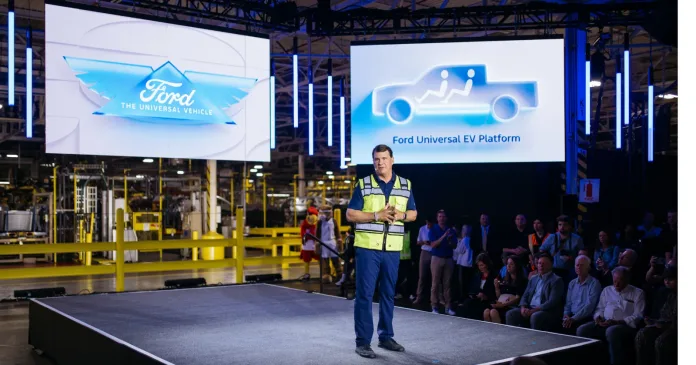

Imagine buying a brand-new electric pickup truck for just $30,000. Sounds too good to be true? Ford is about to make this dream a reality with their revolutionary $5 billion gamble that could reshape the entire electric vehicle landscape.
Table of Contents
The Bold Bet That Could Change Everything
Ford CEO Jim Farley isn’t just talking about making another electric car – he’s reimagining how EVs are built from the ground up. The company’s Universal EV Platform represents the biggest strategic shift since the Model T rolled off the assembly line.
Here’s what makes this announcement earth-shaking: While Tesla and other competitors focus on premium markets, Ford is targeting the sweet spot where affordability meets innovation. Their new platform promises to deliver electric vehicles that everyday families can actually afford.
Breaking Down the $5 Billion Investment
The numbers are staggering, but the strategy is brilliant:
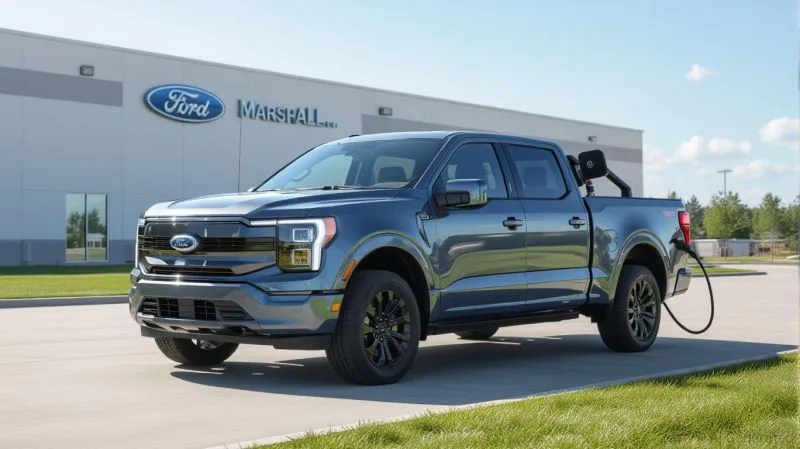
Ford’s Universal EV Platform isn’t just about building one car – it’s about creating a foundation that can spawn multiple vehicle types across global markets. The first vehicle, a midsize four-door electric pickup, will debut in 2027 starting at approximately $30,000.
The cost-cutting magic happens through:
- 20% fewer vehicle parts than traditional platforms
- 25% reduction in fasteners streamlining assembly
- 15% shorter assembly time through innovative “assembly tree” construction
- 30% lower raw material costs using cobalt and nickel-free LFP batteries
Why This Platform is a Game-Changer
Remember Ford’s earlier electric vehicles like the Mach-E and F-150 Lightning? While impressive, they relied on expensive dedicated platforms or modified gas-car chassis. The Universal EV Platform throws that playbook out the window.
The revolutionary approach:
Smart Battery Integration: The lithium iron phosphate battery pack doubles as the vehicle’s structural floor. This isn’t just clever engineering – it frees up interior space while improving handling and safety.
Global Scalability: Unlike previous Ford EVs designed primarily for American tastes, this platform can adapt to create compact SUVs perfect for crowded Indian cities or utility pickups for emerging markets.
Manufacturing Efficiency: Ford’s new “zonal electrical architecture” simplifies wiring and reduces complexity, making these vehicles easier and cheaper to produce anywhere in the world.
The India Connection: A Market Waiting to Explode
Here’s where the story gets really interesting for Indian consumers.
India’s EV penetration sits below 2%, but the potential is enormous. Most Indians buy cars under ₹12 lakh ($14,000), making affordability crucial. Universal EV Platform could finally bridge the gap between electric dreams and budget realities.
The challenge? Import tariffs of 70-100% on fully-built vehicles. The solution? Ford could assemble vehicles locally using CKD (completely knocked-down) kits, slashing tariffs to just 15-30%.
Racing Against Time in a Booming Market
The timing couldn’t be more critical. Global EV demand is exploding from 14 million units in 2023 to a projected 40 million by 2030. Ford’s Universal EV Platform positions them to capture market share in both wealthy Western countries and price-sensitive emerging markets.
What sets Ford apart from competitors:
While others chase luxury buyers, Ford is democratizing electric mobility. Their platform promises “fun to drive, efficient to build, and sustainable to scale” – exactly what global markets need.
The Verdict: Revolution or Risky Bet?
Ford’s $5 billion Universal EV Platform represents more than just another car launch – it’s a fundamental reimagining of how electric vehicles can reach the masses.
Success depends on execution: Can Ford deliver on their cost promises? Will the 2027 timeline hold? Can they navigate complex global manufacturing and tariff challenges?
But if they succeed, it could own the affordable EV space just as Tesla dominates premium electric vehicles.
The stakes couldn’t be higher. With electric vehicles becoming inevitable worldwide, Ford’s Universal EV Platform might just be the key to unlocking affordable electric mobility for billions of people.

