

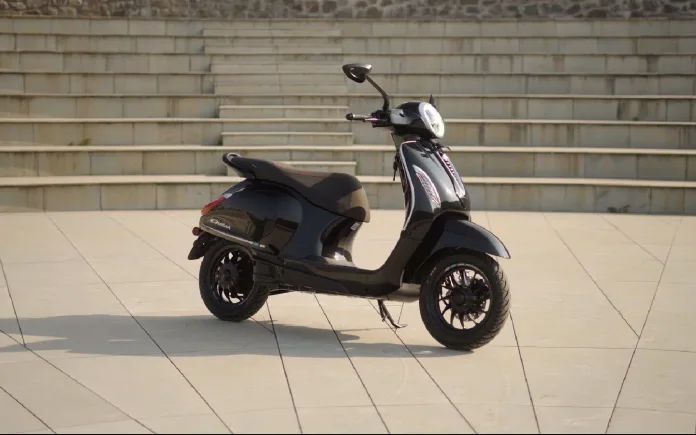

India’s electric vehicle revolution is hanging by a thread! In a shocking turn of events, Bajaj Auto—India’s second-largest EV two-wheeler manufacturer—has slashed its electric vehicle production by 50% in July and faces a complete production halt in August. This devastating blow, triggered by China’s export restrictions on rare earth magnets, could derail India’s entire EV ambitions just as the festive season approaches.
Table of Contents
Crisis Deepens: The Numbers That Tell the Story
| Critical Impact | Details |
|---|---|
| Bajaj Auto Production Cut | 50% reduction in July 2025 |
| August Outlook | Complete shutdown (“zero month”) |
| China’s Market Domination | 90% of global rare earth magnet production |
| India’s Import Dependency | 85% of $200M annual imports from China |
| Industry-Wide Impact | Ather Energy (8-10% cut), TVS Motor scaling back |
| Export Restriction Start | April 4, 2025 |
| Companies Affected | Bajaj, TVS, Ather, Mahindra, Tata Motors |
Bajaj Auto: From Industry Leader to Crisis Mode
The numbers paint a grim picture. Rajiv Bajaj, Managing Director of Bajaj Auto, didn’t mince words: “Our component inventory saw us through until June, but we are down by half in terms of production in the current month, and I am afraid that we are looking at a zero month in August as of now.”
This crisis hits Bajaj particularly hard because the company had just achieved pole position in both the electric scooter segment with its popular Chetak and the electric three-wheeler segment with its GoGo. According to Business Today, their high-volume requirements make them extremely vulnerable to supply disruptions.
The Perfect Storm: China’s Strategic Chokehold
China’s devastating move began on April 4, 2025, when new export licensing requirements created unprecedented bottlenecks. Despite more than 30 applications submitted by the Indian auto industry, no clearances have been received yet, with Chinese authorities indicating a 40-45-day approval process.
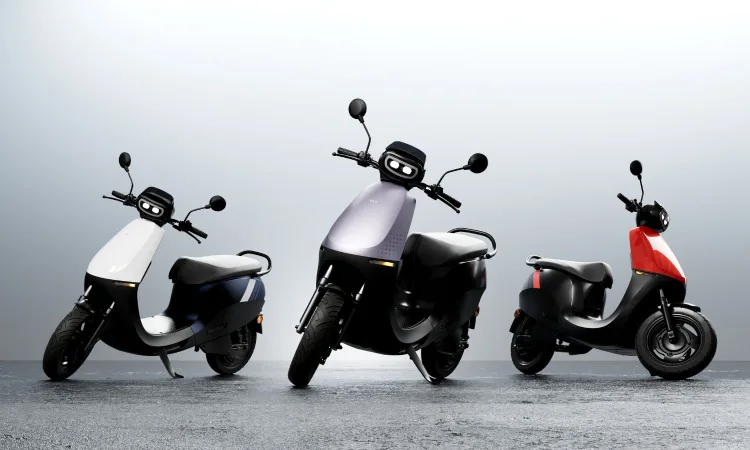
The ripple effect extends beyond Bajaj. Ather Energy plans an 8-10% production cut, while TVS Motor—which led EV sales for three consecutive months—is also scaling back operations. Even Apple’s new AirPods factory in Telangana was forced to shut down for two weeks in June due to magnet supply disruptions.
Why These Tiny Magnets Control India’s EV Destiny
Rare earth magnets may represent just 1-3% of an EV’s total cost, but they’re absolutely irreplaceable. These neodymium-iron-boron magnets power everything from traction motors in EVs to power steering systems in traditional vehicles. Rakesh Sharma, Bajaj’s Executive Director, emphasized: “It’s not as if there is an immediate substitute possible.”
The shortage particularly threatens India’s booming electric two-wheeler segment, which grew 34% year-on-year in Q1 FY26. With the festive season approaching—traditionally the highest sales period—the timing couldn’t be worse for manufacturers who had been building momentum in the Indian EV market.
India’s Fightback: The Rs 50 Billion Battle Plan
India isn’t surrendering to China’s dominance. The government is preparing a massive Rs 35-50 billion National Critical Mineral Mission to ramp up domestic rare earth production, targeting 6,000 metric tonnes annually. The initiative includes 1,200 domestic exploration projects and international partnerships to diversify supply chains.
Companies are also exploring alternatives: importing fully assembled motors from China, developing magnet-free switched reluctance motors, and partnering with countries like Vietnam and Japan for alternative supplies. However, these solutions require time—something the industry doesn’t have.
The Broader Economic Threat
This crisis exposes India’s dangerous over-reliance on Chinese supply chains across critical sectors. As Rajiv Bajaj warned: “Should that happen, it would not be just a significant impact on our leading share and revenue, but also on our EBITDA as our EV portfolio is now reasonably profitable.”
The implications extend beyond individual companies to India’s entire clean mobility transition, potentially derailing government targets and foreign investment commitments in the EV sector.
Bottom Line: India’s EV industry stands at a crossroads. While companies scramble for immediate solutions, the rare earth magnet crisis serves as a stark reminder that true energy independence requires control over the entire supply chain—from mining to manufacturing. The next few months will determine whether India’s EV dreams survive this unprecedented challenge.
Stay updated on the latest developments in India’s EV crisis and rare earth alternatives shaping the future of transportation!

