

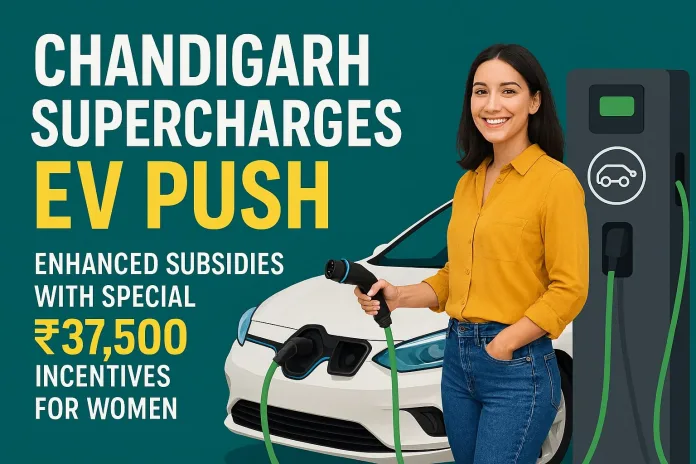

Chandigarh hikes EV subsidies and introduces gender-specific incentives to achieve 18% electric vehicle penetration by FY 2025-26
The union territory has emerged as India’s most progressive EV-friendly city with its latest subsidy enhancement that specifically encourages women’s participation in electric mobility. The UT administration recently announced significant upgrades to its Electric Vehicle Policy, positioning the region as a national model for inclusive EV adoption.
Table of Contents
Enhanced EV Subsidy Structure for Chandigarh
| Category | Previous Subsidy | Enhanced Subsidy | Maximum Benefit |
|---|---|---|---|
| Women E2W Buyers | ₹5,000/kWh | ₹12,500/kWh | ₹37,500 per vehicle |
| Electric Bicycles | Up to ₹4,000 | Up to ₹6,000 | 25% of cost |
| E2W Insurance Support | Not available | ₹5,000 | First year coverage |
| 4W Vehicle Cap | 2,000 units | 3,500 units | 75% increase |
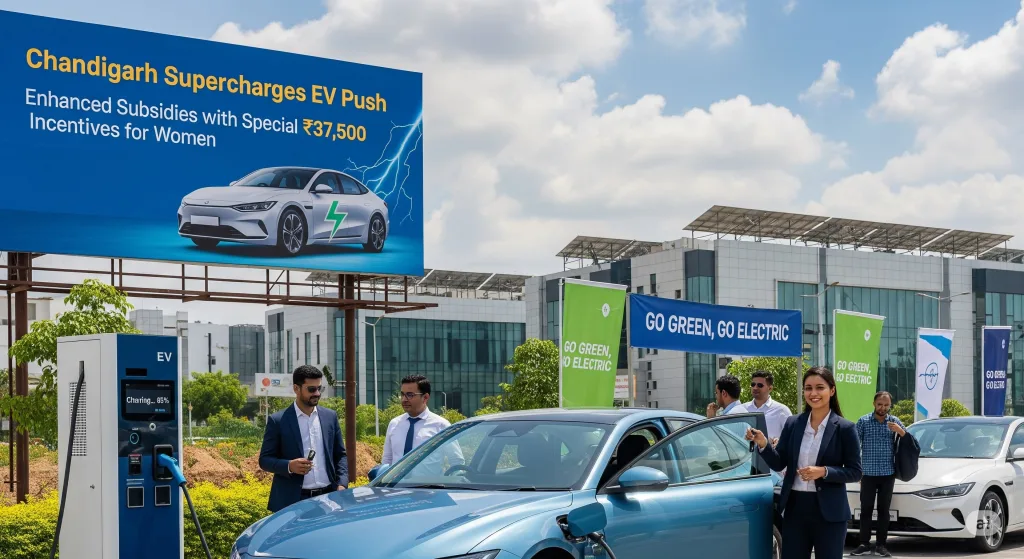
Pioneering Women-Centric EV Incentives
The standout feature is Chandigarh’s special incentives for women buyers of electric two-wheelers. Women purchasers are now eligible for an enhanced subsidy of ₹12,500 per kWh, capped at ₹37,500 per vehicle—significantly higher than the standard ₹5,000/kWh offered to other buyers.
This gender-specific policy recognises women as key decision-makers in household mobility choices and aims to promote greater female participation in sustainable transportation adoption.
Comprehensive EV Ecosystem Development
Beyond purchase incentives, Chandigarh is building a complete electric mobility infrastructure:
Key Enhancements:
- Insurance support: Up to ₹5,000 first-year insurance assistance for electric two-wheelers
- Expanded vehicle quotas: Four-wheeler cap increased from 2,000 to 3,500 units
- Charging infrastructure: Comprehensive coverage across all areas with renewable energy-based hubs
- Registration benefits: Complete waiver on road tax and registration fees
Ambitious 18% Penetration Target
The enhanced subsidies support Chandigarh’s goal of achieving 18% electric vehicle penetration for FY 2025-26. With over 18,000 EVs already registered and ₹33 crore in incentives distributed to 4,776 buyers, the UT is well-positioned to become India’s first “Model EV City” by 2027.
National Leadership in EV Policy
Chandigarh’s progressive approach contrasts with other Indian cities, making it a national benchmark for inclusive electric mobility policies. The combination of enhanced subsidies, gender-specific incentives, and comprehensive infrastructure development creates a compelling ecosystem for EV adoption.
The policy runs through September 2027, covering up to 42,000 vehicles across all categories with incentives ranging from ₹3,000 to ₹2 lakh.
For more updates on India’s evolving EV policies, visit IndiaEVNews.com and explore our state-wise EV incentive guide.
Official details: Chandigarh Administration | CREST Society

