


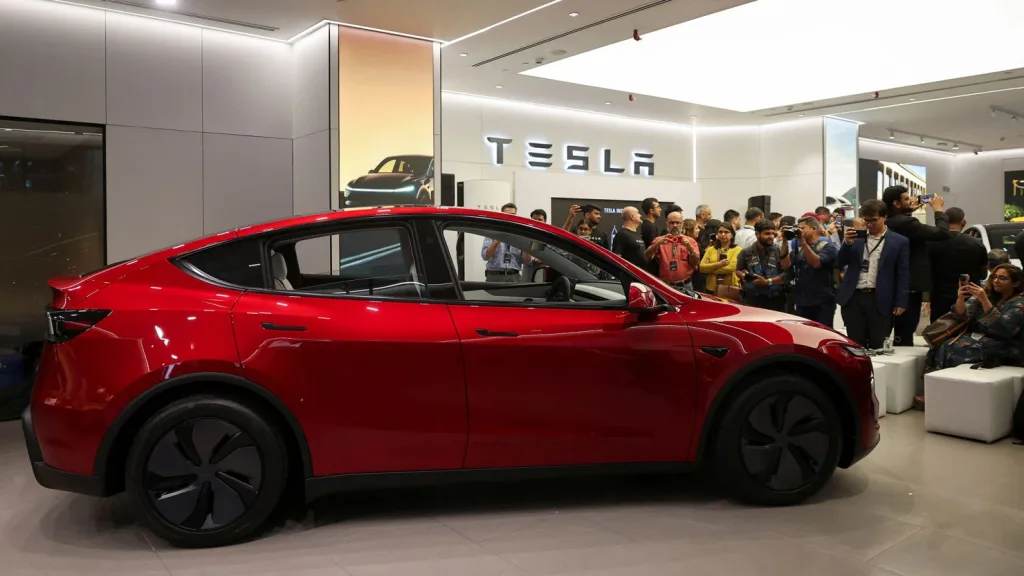
The electric vehicle battlefield in India just got a premium player. Tesla launches Model Y in India starting at ₹59.9 lakh, throwing down the gauntlet to homegrown champions who’ve been quietly building their electric empires. But can Elon Musk’s flagship SUV survive India’s cost-conscious EV ecosystem?
Table of Contents
The David vs Goliath Pricing Reality
Here’s where things get interesting. While Tesla positions itself as a luxury player, local manufacturers dominate the space with Tata leading approximately 60 percent of the market share in India’s electric car segment. The price differential tells the whole story:
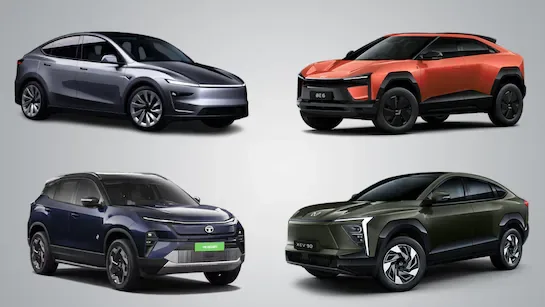
Tata Nexon EV starts at ₹12.49 lakh, Mahindra XEV 9e at ₹21.90 lakh, while Tesla’s Model Y commands nearly triple the price of its closest Indian competitor.
Performance Numbers That Matter
But Tesla isn’t just selling a badge—it’s delivering performance. The Tesla Model Y base variant comes with a single motor producing 299 PS and 420 Nm torque, achieving 0-100 kmph in just 5.9 seconds. This puts it in supercar territory compared to conventional alternatives.
Meanwhile, Indian contenders focus on practical strengths. Mahindra XEV 9e provides a range of 542 km per charge for the base model, potentially outdoing Tesla’s practicality claims.
The Luxury Strategy That Changes Everything
Rather than competing with mass-market players like Tata Motors and Mahindra, Tesla is positioning itself alongside luxury carmakers such as BMW and Mercedes-Benz. This isn’t accidental—it’s strategic genius.
Tesla in India competes in the premium segment with the likes of BMW, rather than local EV companies like Tata Motors, according to industry experts. This positioning sidesteps the price war entirely.
India’s EV Champions Fight Back
Don’t underestimate the homegrown heroes. All three offer ADAS and premium tech, but Harrier.ev and XEV 9e provide more India-specific features at lower prices. Features like seven airbags, 360-degree camera, and DC fast charging: 20-80 percent in 20 minutes show Indian manufacturers aren’t just competing on price anymore.
The triple display in XEV 9e is eye-catching and tech-savvy, easily seating three in comfort, proving that Indian EVs are closing the premium experience gap rapidly.
Real-World Battle: Size and Substance
Dimensions reveal interesting strategies. Tesla Model Y measures 4,790mm length, 1,982mm width, but shorter in height at 1,624mm, emphasizing a sleek profile over Indian preferences for taller, more commanding SUVs.
Tesla keeps battery and motor details under wraps but claims up to 500 kilometres WLTP range for the standard RWD variant—competitive but not dominant against Indian alternatives.
The Infrastructure Challenge Nobody’s Talking About
Here’s where Tesla faces its biggest test. India currently sees only about 4% of total car sales coming from EVs, and charging infrastructure remains patchy. Indian brands have adapted to this reality with faster charging solutions and service networks tailored for local conditions.
Market Reality Check
Tough competition from electric vehicles by Mahindra, Tata and MG is another challenge for Tesla due to its high pricing. The luxury positioning means Tesla remains limited to the rich segment and does not cater to the larger middle and upper middle class population.
Who Wins the Electric Crown?
The answer isn’t straightforward. Tesla brings unmatched brand prestige, cutting-edge technology, and performance credentials that justify premium pricing for affluent buyers. Indian brands counter with practical pricing, India-specific features, and established service networks.
Tesla Model Y launches amid regulatory shifts, infrastructure challenges, and rising pressure on domestic automakers, creating a perfect storm of competition.
The Verdict: Different Races, Different Winners
Tesla Model Y isn’t really competing with Tata Nexon EV or even Mahindra XEV 9e—they’re playing different games. Tesla targets the luxury segment seeking global prestige, while Indian brands serve the practical premium segment prioritizing value and local adaptation.
Both strategies can succeed in India’s diverse market. Tesla will capture the affluent early adopters, while Indian brands continue dominating the volume game.

