

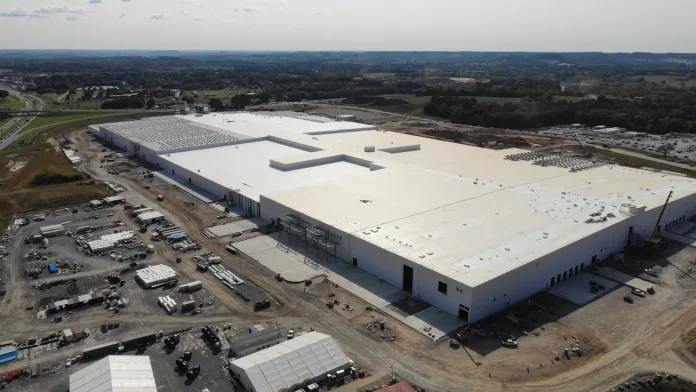

GM LG Tennessee Plant, the electric vehicle industry is about to witness a game-changing moment. General Motors and LG Energy Solution have announced a major upgrade to their Tennessee facility that promises to make electric vehicles more affordable than ever before. This strategic move could finally bridge the gap between electric vehicle aspirations and mainstream adoption.
Table of Contents
The GM LG Tennessee Revolution Begins
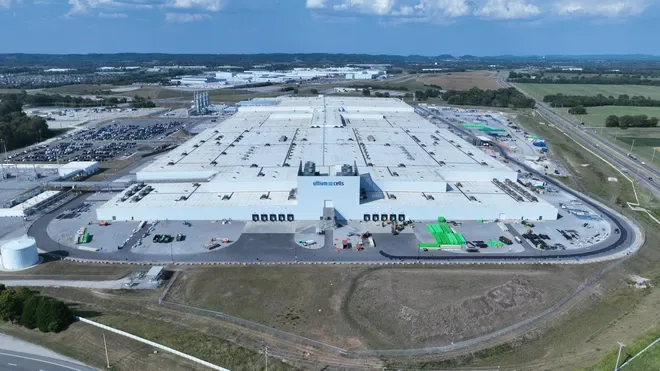
Ultium Cells — a joint venture between General Motors and LG Energy Solution — is upgrading its Spring Hill, Tennessee, facility to make low-cost EV battery cells. This isn’t just another factory upgrade; it’s a fundamental shift in how America approaches electric vehicle manufacturing.
The Spring Hill facility represents more than industrial progress—it’s a symbol of American innovation in clean energy. By choosing Tennessee for this revolutionary battery production, GM and LG are creating a manufacturing hub that could reshape the entire EV landscape.
Breaking the Cost Barrier
What makes this announcement truly groundbreaking is the technology itself. The batteries could be significantly cheaper than those used in other vehicles because they do not require expensive minerals like cobalt and nickel. This lithium iron phosphate (LFP) technology promises to democratize electric vehicle ownership.
GM said the lithium iron phosphate battery cells — abbreviated LFP based on the elements’ chemical symbols — could be significantly cheaper than battery packs used in some EVs, in part because they don’t require expensive minerals like cobalt and nickel that are used in standard lithium-ion batteries.
For everyday consumers, this means electric vehicles could finally compete with traditional gasoline cars on price—not just environmental benefits. The elimination of cobalt and nickel dependencies also addresses ethical sourcing concerns that have plagued the EV industry.
Strategic Vision for the Future
GM’s Vice President of batteries, propulsion and sustainability, Kurt Kelty, explained the bigger picture: “This upgrade at Spring Hill will enable us to scale production of lower-cost LFP cell technologies in the U.S., complementing our high-nickel and future lithium manganese rich solutions and further diversifying our growing EV portfolio.”
This diversification strategy shows GM’s commitment to offering options across all price points. GM has 12 EVs in its lineup, spanning a price range of roughly $35,000 to more than $300,000. The new LFP technology could push that lower limit even further down, making electric vehicles accessible to middle-class American families.
Massive Investment in American Manufacturing
The financial commitment behind this vision is substantial. The Detroit automaker teamed up with LG to invest $2.3 billion in the Tennessee battery plant when it was announced in 2021. While the companies haven’t disclosed the additional investment for this upgrade, the scope suggests another significant financial commitment to American manufacturing.
This investment creates a ripple effect beyond just battery production. Local communities benefit from high-tech manufacturing jobs, while America reduces its dependence on foreign battery suppliers. The Tennessee facility becomes a cornerstone of domestic EV supply chain independence.
Timeline for Transformation
Patience will be required for this revolution. Ultium said it expects commercial production of the LFP cells to begin by late 2027. This timeline allows for thorough testing and scaling, ensuring the technology meets GM’s quality standards while achieving cost targets.
The 2027 timeline also aligns with broader industry trends. By then, charging infrastructure will be more mature, and consumer acceptance of electric vehicles will likely be at an all-time high.

Beyond Tennessee: A National Strategy
GM’s commitment extends beyond Tennessee. GM also said Monday that it has invested $900 million for new battery development labs in Michigan. This dual-state approach creates a comprehensive battery ecosystem spanning research, development, and manufacturing.
The Michigan labs will likely focus on next-generation technologies, while Tennessee handles large-scale production. This division of labor maximizes efficiency and innovation potential across GM’s battery operations.
The Road to 2035
This Tennessee upgrade supports GM’s ambitious long-term vision. GM CEO Mary Barra said GM would exclusively offer EVs by 2035. However, the company has since acknowledged that customer demand will ultimately dictate the pace of this transition.
The low-cost LFP batteries could be the key to accelerating consumer adoption, making GM’s 2035 goal more achievable. By removing cost barriers, these Tennessee-made batteries might finally convince mainstream America that electric vehicles are practical, affordable, and desirable.
The Spring Hill facility upgrade represents more than industrial progress—it’s America’s declaration that affordable, sustainable transportation is within reach for every family.

