

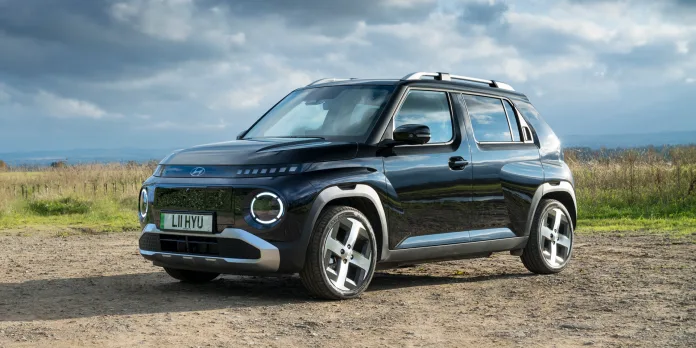

The electric vehicle market just got a new safety assessment that’s turning heads. The Hyundai Inster EV has earned a respectable 4-star rating from Euro NCAP’s stringent crash safety tests, with the micro e-SUV demonstrating good protection in various crash scenarios.
Table of Contents
Breaking Down the Safety Numbers
The Hyundai Inster micro e-SUV scored 70% for adult occupant safety and an impressive 81% for child occupant protection in Euro NCAP’s comprehensive testing program. While these results place it firmly in the 4-star category, they tell a compelling story about modern electric vehicle safety.
What Makes the Inster Stand Out
The compact electric SUV faced Euro NCAP’s rigorous testing protocol, which evaluates vehicles across multiple safety categories. The Inster’s performance reveals both strengths and areas for improvement that potential buyers should understand.
Adult Occupant Protection: The Details
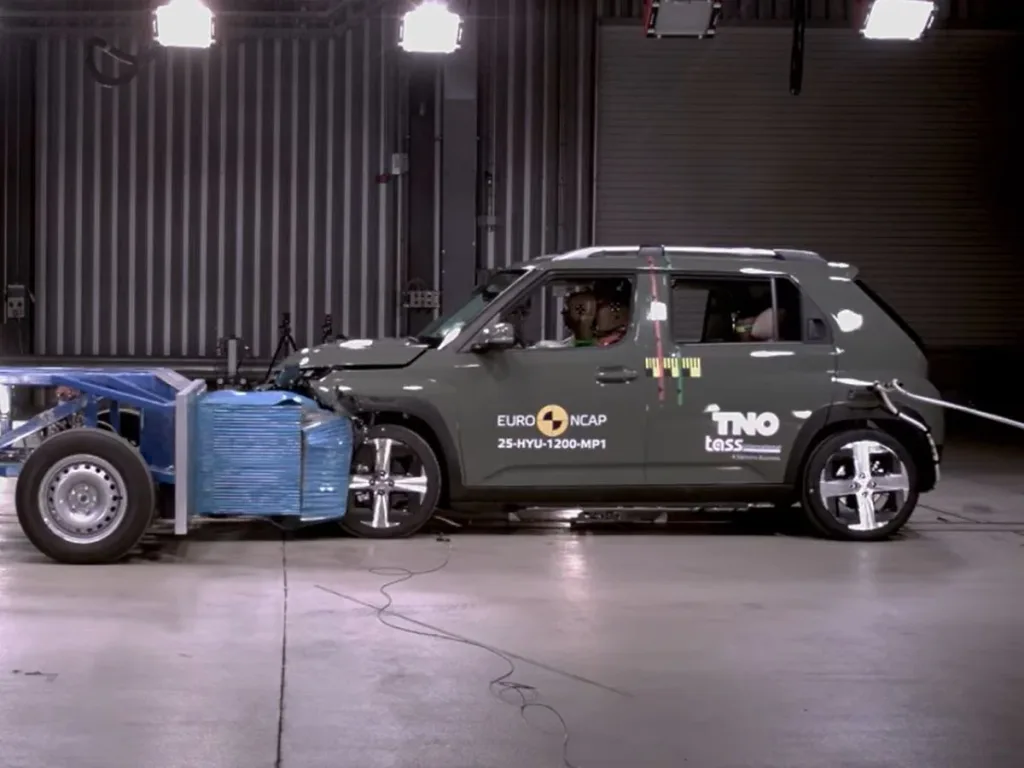
The 70% adult occupant safety score reflects mixed results across different crash scenarios. In frontal offset tests, the passenger compartment remained stable, though the driver’s head “bottomed out” the airbag, resulting in penalties. Chest protection received a marginal rating due to compression readings from crash test dummies.
However, the Inster excelled in protecting knees and femurs of both driver and front passenger, earning good ratings in these critical areas. The vehicle also demonstrated it would be a “benign impact partner” in frontal collisions, meaning it poses less risk to occupants of other vehicles.
Child Safety: A Bright Spot
The 81% child occupant protection score represents one of the Inster’s strongest safety achievements. Frontal offset tests showed good or adequate protection for all critical body areas of child test dummies. The vehicle accommodates various child restraint systems properly and provides clear information about airbag status.
One notable limitation emerged in side barrier tests, where the 10-year dummy’s chest recorded accelerations above Euro NCAP’s threshold, earning a poor rating for that specific scenario.
Advanced Safety Technologies
The Inster comes equipped with modern safety assistance systems that contributed to its overall rating:
- Forward Collision-Avoidance Assist (FCA) with autonomous emergency braking
- Lane Keeping Assist (LKA) operational from 55 km/h
- Forward Attention Warning (FAW) with direct eye monitoring
- Intelligent Speed Limit Assist using camera and map data
These systems performed adequately in pedestrian detection tests and showed good response to cyclists and motorcyclists, though they lack “dooring” protection for cyclists.
The Bigger Picture
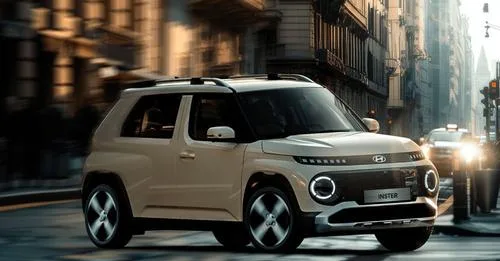
While the 4-star rating might seem modest compared to some premium vehicles, it represents solid safety performance for an affordable electric city car. The Inster’s safety profile aligns with its positioning as a practical urban mobility solution rather than a luxury safety showcase.
The vehicle’s advanced eCall system automatically alerts emergency services during crashes, and its doors and windows remain openable for occupant escape even in submergence scenarios – features that demonstrate thoughtful safety engineering.
What This Means for Buyers
For consumers considering the Hyundai Inster EV, the 4-star Euro NCAP rating provides confidence in the vehicle’s fundamental safety capabilities. The strong child protection scores make it particularly appealing for families, while the comprehensive safety assistance systems offer peace of mind for daily driving.
The rating reflects real-world safety performance that balances the vehicle’s compact size and affordable positioning with meaningful occupant protection. While it may not achieve the 5-star ratings of larger, more expensive vehicles, the Inster delivers essential safety features where they matter most.
The Euro NCAP assessment confirms that electric vehicle safety continues advancing, with even compact, affordable models like the Inster offering substantial protection for their occupants.

