

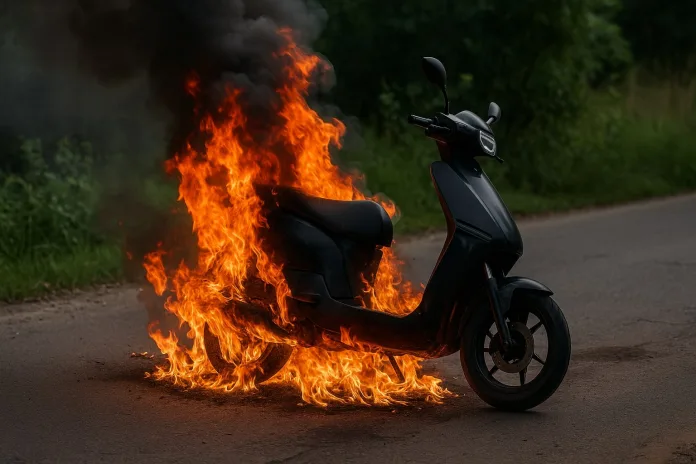

The tragic death of a woman in Andhra Pradesh’s Kadapa district due to an exploding EV Battery has once again highlighted the urgent need for EV safety awareness. A 62-year-old woman was killed when the battery of an electric two-wheeler that was being charged, exploded in their house in Andhra Pradesh’s YSR Kadapa district on Friday. This incident adds to a growing list of battery-related fatalities across India.
Table of Contents
The Growing Pattern of EV Battery Incidents
Almost all the incidents took place when e-bikes were kept on charge and it is suspected that overcharging triggered the explosions. From Vijayawada to Hyderabad, these incidents share a common thread – overnight charging leading to catastrophic failures.
Recent Major Incidents
| Year | Location | Casualties | Cause |
|---|---|---|---|
| 2022 | Hyderabad | 8 deaths | E-bike showroom fire |
| 2022 | Vijayawada | 1 death, 3 injured | Home charging explosion |
| 2024 | Kadapa | 1 death | Overnight charging explosion |
| 2022 | Palakonda | 36 bikes destroyed | Showroom fire |
The biggest disaster happened in Hyderabad in September 2022 when eight people lost their lives after a fire broke out in an e-bike showroom in the cellar of a multi-story building and spread to a hotel on the upper floors.

Essential Safety Guidelines for EV Owners
Smart Charging Practices
Follow the 20-80% Rule: Simply, the 20-80% rule suggests keeping the battery of an electric vehicle charged between 20% and 80% of full capacity. This practice significantly extends battery life and reduces explosion risks.
Avoid Overnight Charging: Never leave batteries charging unattended for extended periods. Always try to maintain the battery status between 20% to 80%.
Critical Safety Measures
- Use certified chargers only – Stick to manufacturer-approved charging equipment
- Install proper safety equipment – Bureau of Indian Standards recognises DHI approved Bharat Charger Specifications
- Never charge in extreme temperatures – Extreme temperatures can damage the battery and reduce its lifespan, so it’s best to avoid charging in temperatures below freezing or above 100 degrees Fahrenheit.
- Keep charging areas clear – Remove flammable materials from charging zones
Government Response and New Regulations
Following multiple incidents, the Ministry of Road Transport and Highways (MoRTH) has taken proactive measures to address battery safety concerns in electric vehicles. Effective from October 1, 2022, MoRTH has introduced new battery safety norms under the updated regulations AIS-038 Rev 2/AIS-156.
These regulations include:
- Mandatory thermal propagation testing
- Enhanced Battery Management Systems (BMS)
- Stricter certification requirements
- Improved traceability standards
What EV Owners Should Do Immediately
- Check your EV model against government recall lists
- Review charging habits – Never leave batteries charging overnight
- Install safety equipment as per BIS standards
- Regular maintenance – Inspect charging cables for damage
EV Battery Safety Crisis
Demands Immediate Action
Critical safety lessons every Indian EV owner must know
The Road Ahead for EV Battery Safety
The industry has embraced these regulations, expressing optimism that they will significantly improve the safety and dependability of electric vehicles in India. However, user awareness remains crucial.
For detailed EV safety guidelines and latest updates, visit our EV Safety Guide and stay informed about battery technology advances.
The transition to electric mobility must prioritize safety alongside sustainability. Every EV owner has a responsibility to follow proper charging protocols and stay updated on safety regulations.
Remember: Your safety is more important than convenience. Never compromise on proper charging practices.
Stay updated with the latest EV safety news and guidelines at IndiaEVNews.com. For emergency situations involving EV fires, contact your local fire department immediately.

