

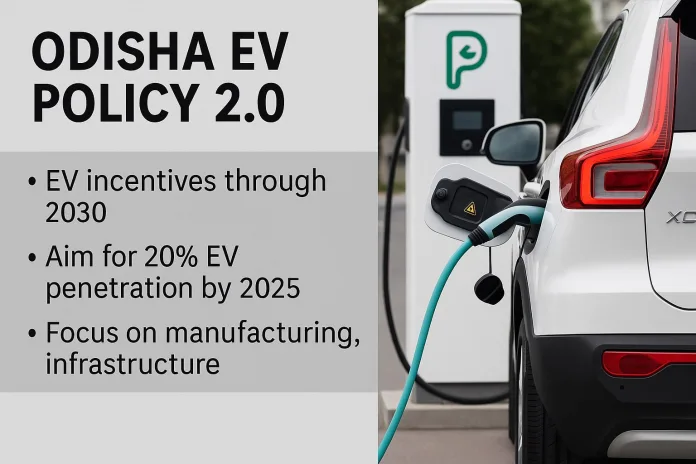

Odisha is steering toward an electric revolution! The Odisha government has decided to launch EV Policy 2.0, aiming to have at least 50% battery-operated electric vehicles (BEVs) in all new vehicle registrations by 2036. This ambitious upgrade from the current EV Policy 2021 represents a quantum leap in sustainable transportation planning.
Table of Contents
The Numbers Tell an Inspiring Story
EV vehicle registration is on the rise. This marks a significant step from the 1.16% EV registration in 2021 to the current 8.71% as on 20th June 2025. This remarkable 650% growth in just four years demonstrates Odisha’s commitment to clean mobility.
| Key Metrics | 2021 | 2025 | 2036 Target |
|---|---|---|---|
| EV Registrations | 1.16% | 8.71% | 50% |
| Charging Stations | Limited | 550+ | Expanded Network |
| Policy Duration | 2021-2026 | Extended | New Framework |

What Makes EV Policy 2.0 Different?
The new policy builds on successful foundations while addressing emerging challenges. As part of the broader Odisha Vision 2036, the State aims to achieve 50 percent adoption of Electric and Alternate Fuel Vehicles by 2036.
Current Infrastructure Strength:
- Odisha currently has over 550 Public Charging Stations (PCS)
- Support from two-wheeler manufacturers and power distribution companies
- Strategic partnerships with oil marketing companies
Enhanced Incentive Structure
The policy revision promises improved financial support. Under the existing framework, two-wheelers will now receive a subsidy of Rs. 5000 per kWh, up to a maximum of Rs. 20,000, while three-wheelers will receive a flat subsidy of Rs. 30,000 per vehicle.
Manufacturing Boost: For entrepreneurs, new micro & small enterprises (MSEs) would receive financial assistance up to 25% of capital investment made in plant and machinery, subject to an upper limit of ₹10 million.
Why This Matters for India’s Green Future
Odisha’s aggressive target aligns with India’s national electric mobility mission and contributes significantly to reducing carbon emissions. The state’s data-driven approach ensures sustainable implementation while creating employment opportunities in the EV ecosystem.
The Commerce & Transport Department’s strategic planning emphasizes infrastructure development, manufacturing incentives, and consumer adoption – a holistic approach that positions Odisha as an EV leader among Indian states.
Related: Understanding India’s EV Revolution | State EV Policies Comparison | Charging Infrastructure Development
Stay informed about India’s electric vehicle transformation with comprehensive coverage on policy updates, market trends, and technological advances.

