

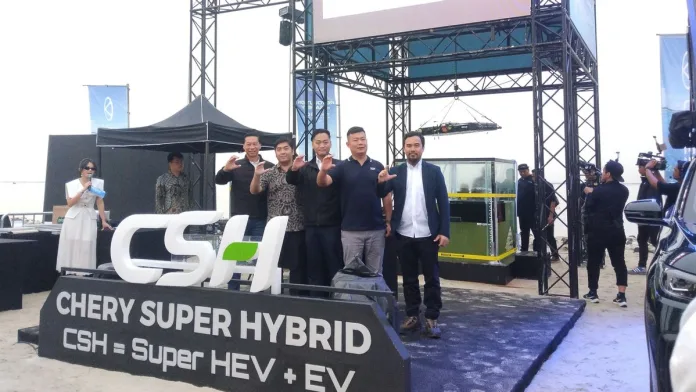

In a groundbreaking demonstration that could reshape EV safety perceptions, Chery’s revolutionary battery technology has passed the ultimate test: surviving 53 hours and 51 minutes of continuous saltwater submersion in Indonesian ocean waters with absolutely zero failures. This achievement addresses one of the most critical safety concerns plaguing electric vehicles during natural disasters.
Table of Contents
The Ultimate Safety Challenge
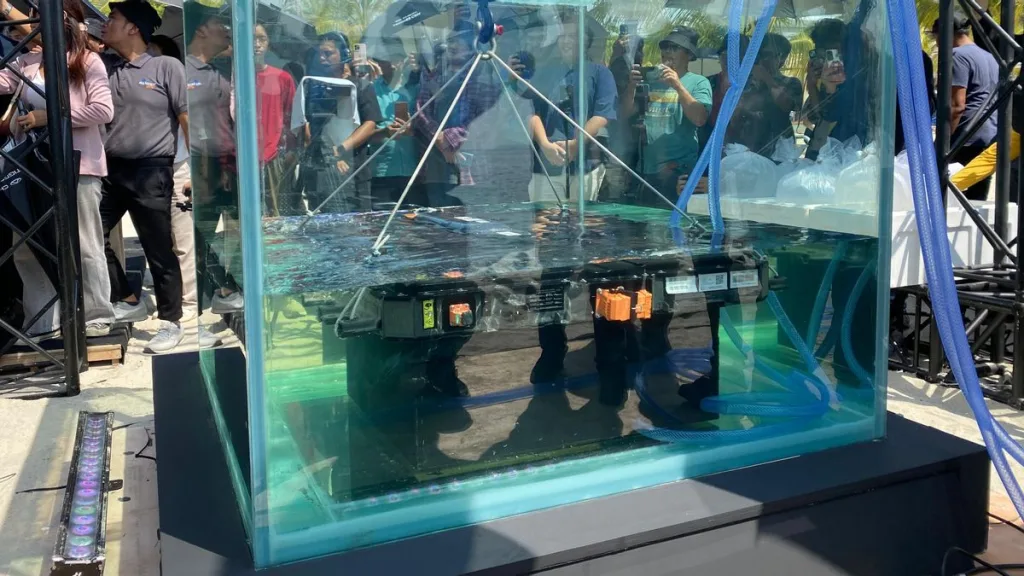
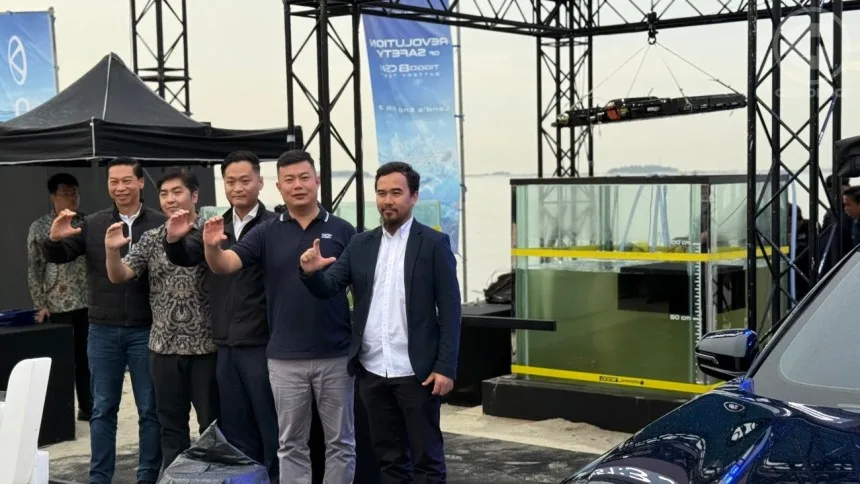
On June 17, Chery Automobile advanced to the second phase of its Global Safety Challenge, conducting critical tests in Indonesia to validate battery safety under high-humidity conditions. The test, conducted at PIK 2, Indonesia, involved completely submerging the Chery TIGGO 8 CSH’s battery system in actual seawater for an unprecedented duration.
| Test Parameters | Results |
|---|---|
| Duration | 53 hours 51 minutes |
| Environment | Indonesian ocean saltwater |
| Battery Leakage | Zero incidents |
| Short Circuits | Zero occurrences |
| Thermal Runaway | No signs detected |
| Structural Integrity | Fully maintained |
| Electrical Insulation | Passed all validations |
Why This Matters for EV Safety
Traditional lithium-ion batteries face severe risks when exposed to saltwater. Flooding from hurricanes Helene and Milton inflicted billions of dollars in damage across the Southeast. It caused dozens of electric vehicles and other battery-powered objects, such as scooters and golf carts, to catch fire. This new breakthrough could eliminate such catastrophic failures.
Critical Safety Achievements:
- Zero Fire Risk: After 53 hours and 51 minutes of continuous saltwater soaking—demonstrating zero leakage, zero short circuit, and no signs of thermal runaway
- Structural Excellence: Battery maintained complete structural integrity throughout the test
- Electrical Safety: Passed all technical validations for electrical insulation
- Real-World Conditions: Tested in actual ocean environment, not laboratory simulation
Global Implications for EV Adoption
This achievement is particularly significant for coastal regions worldwide, where flooding is a growing concern. If you live in a flood-prone area, especially near the ocean, it’s important to know the risks if your EV is flooded. Chery’s battery technology could eliminate these risks entirely.
The success builds on previous extreme testing in China, including spiral rollovers and dual-vehicle collision tests, establishing Chery as a leader in EV safety innovation.
Technology Behind the Success
While specific technical details remain proprietary, the CSH (Chery Safety Hybrid) battery system represents a quantum leap in EV safety engineering. The technology addresses the fundamental issue of saltwater corrosion and electrical failure that has plagued traditional EV batteries.
Future of EV Safety
Chery has officially launched the second phase of its global Safety Challenge in Indonesia, emphasizing the importance of battery safety in all environments, signaling continued investment in breakthrough safety technologies.
For comprehensive coverage of EV safety developments and breakthrough technologies, visit IndiaEVNews.com. Official updates on Chery’s safety innovations are available on Chery’s global website.
Ready for truly safe electric mobility? This breakthrough proves that EVs can be safer than ever imagined, even in the most challenging conditions nature can deliver.

