

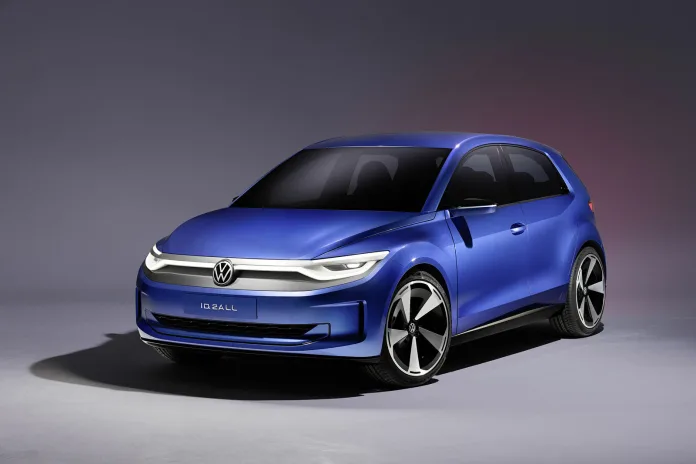

Volkswagen is set to revolutionize the compact car segment with the launch of the ID.2, an electric vehicle roughly the size of the popular Polo, expected to arrive in 2026. This marks a significant expansion of the VW ID range into the small car segment, offering affordable electric mobility to a broader audience.
Table of Contents
Breaking New Ground in Compact Electric Vehicles
Currently, the Volkswagen ID range lacks representation in the small car segment, but the ID.2 will change that landscape dramatically. The new electric vehicle represents Volkswagen’s commitment to democratizing electric mobility by bringing EV technology to the compact car market.
Key Specifications:
- Approximately 4.4 meters in length
- Front-wheel drive configuration
- Battery capacity expected between 50kWh and 80kWh
- Estimated range of up to 400 kilometers
- Priced just under 25,000 Euros

Strategic Market Positioning
The ID.2 is positioned to eventually replace the current Polo in Volkswagen’s lineup, representing a fundamental shift from internal combustion engines to electric powertrains in the compact segment. This transition aligns with Volkswagen’s broader electrification strategy and European emissions regulations.
Priced competitively at just under 25,000 Euros, the ID.2 will cost approximately the same as what VW currently charges for a petrol-powered Golf, making electric mobility accessible to budget-conscious consumers who previously couldn’t afford premium EVs.
Technical Innovation and Production Plans
The ID.2 shares technical DNA with the compact entry-level Cupra model called Raval. Unlike larger ID models such as the ID.3, both the ID.2 and Raval will feature front-wheel drive configurations, optimizing them for efficiency and cost-effectiveness in urban environments.
Production Details: Volkswagen plans to manufacture both models at the Seat plant in Martorell, near Barcelona, Spain. This strategic location allows the company to leverage existing manufacturing infrastructure while maintaining quality standards across the ID range.
Expanding the Electric Portfolio
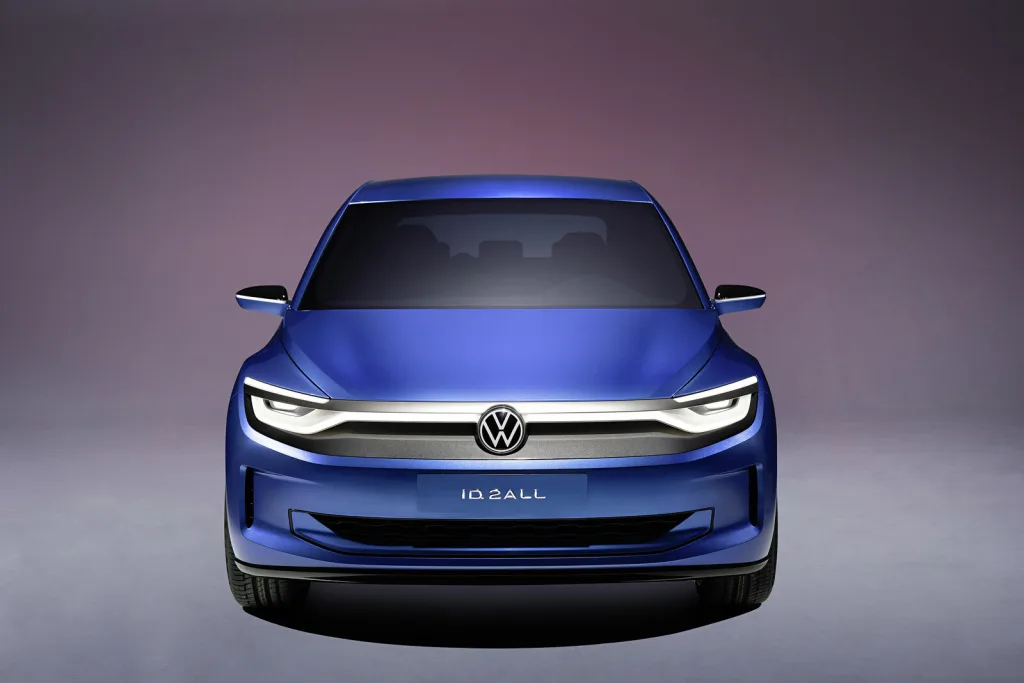
The ID.2 launch represents just the beginning of Volkswagen’s compact EV strategy. The company is also developing the ID.2 X, a more robust crossover variant expected to replace the T-Cross in 2026 or 2027. This expanded lineup will provide consumers with multiple electric options in the compact segment.
Impact on the Traditional Lineup
This electric transition signals significant changes for Volkswagen’s traditional models. The Golf, a longtime stalwart of the VW lineup, is being phased out and will be completely replaced by new electric vehicles. This represents one of the most dramatic shifts in Volkswagen’s modern history.
Market Timing and Competition
The 2026 launch timeline positions Volkswagen strategically in the growing compact EV market. With European regulations increasingly favoring electric vehicles and consumer demand shifting toward sustainable mobility, the ID.2 arrives at an optimal moment.
The combination of Polo-like dimensions, 400km range capability, and competitive pricing could make the ID.2 a game-changer in the compact electric vehicle segment, potentially setting new standards for affordable electric mobility.
Looking Ahead
As Volkswagen prepares to unveil the ID.2 later this year or early next year, the automotive industry watches closely. This model could prove instrumental in accelerating mass-market electric vehicle adoption, particularly in Europe where compact cars remain extremely popular.
The ID.2 represents more than just another electric car—it’s Volkswagen’s vision of making electric mobility accessible, practical, and affordable for everyday drivers transitioning from traditional combustion engines.

